


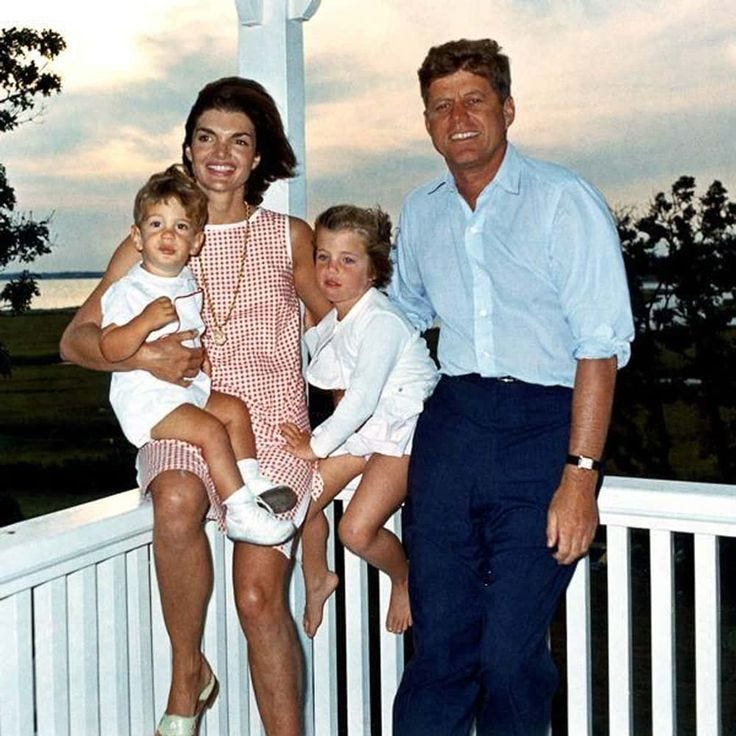
John F. Kennedy is one of the most famous American style icons. Tied in popularity only with characters like James Bond and Indiana Jones, JFK stands apart primarily for being a real person.
It’s easy enough to curate a style and uniform for a character who only has to appear for 120 minutes in a film, but what JFK did was far more impressive. He consistently met and exceeded style standards in an era when the current dominant casual norms were starting to gain ground.
According to those who knew him, Kennedy’s style wasn’t carefully planned or considered. Kennedy family insider William vanden Heuvel said: “He didn’t spend any time trying to figure out [his appearance], but he had it naturally.” Kennedy had the quiet, understated confidence one would expect of a man of his stature. Whether JFK’s style was planned, natural, or the natural result of the culture he was raised in, there are many lessons you can learn from studying his look.
When you look at photos of the late president, there are consistent features across his outfits. They are conservative, generally in color and cut. They are sufficiently modest and formal, but he always looks cool and effortlessly confident.
But how can you replicate these feelings and attributes without looking like a schoolboy or overly anachronistic? That’s exactly what we dive into today, as we examine some of the standout characteristics of JFK’s wardrobe, and how you can incorporate them into your own.
Less is More
JFK’s style stands out in its simplicity. Rarely is a style so iconic with so few colors and accessories. This becomes especially clear when you look at his formal wear. As President, he wore suits only in blue and grey. In his casual outfits, he would branch out into shades of khaki and, even more rarely, brown.
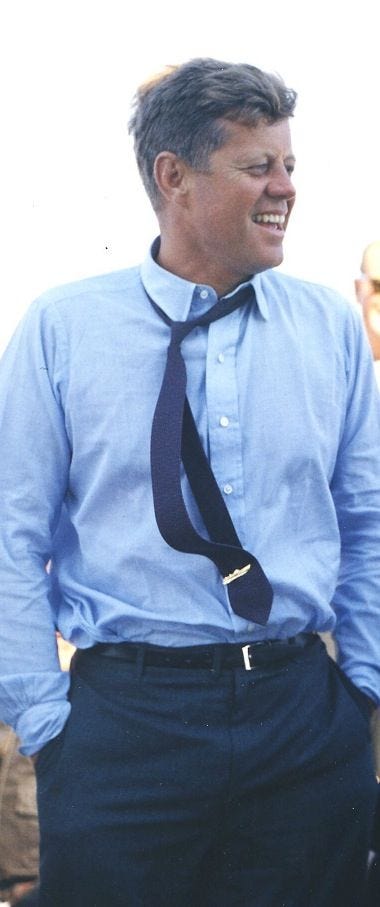
A closet full of a wide range of colors can benefit a man with a particular flair or confidence. Average men are often better suited to a limited color palette. Personally, I prefer a variety of earth tones and tonal blues. Sometimes I wear an outfit entirely composed of complementary shades of indigo.
Kennedy’s style was an extension of his personality as a man. His clothes were a complement and a support to his actions. This is a boon for men who want to communicate a clear message with their style and clothes. In serious moments, his solid dark suits said, “I am ready.”In lighter moments, out on the ocean yachting, a light colored outfit says, “I too am ready… for fun.”
Don’t Be Afraid of Trends
The monoculture of the past is dead, and with it also died our innocent love of trends. In the past, hating the mainstream was the domain of the rejects or those who chose to live on the margins. But today, nothing is as cool as being different from everyone else.
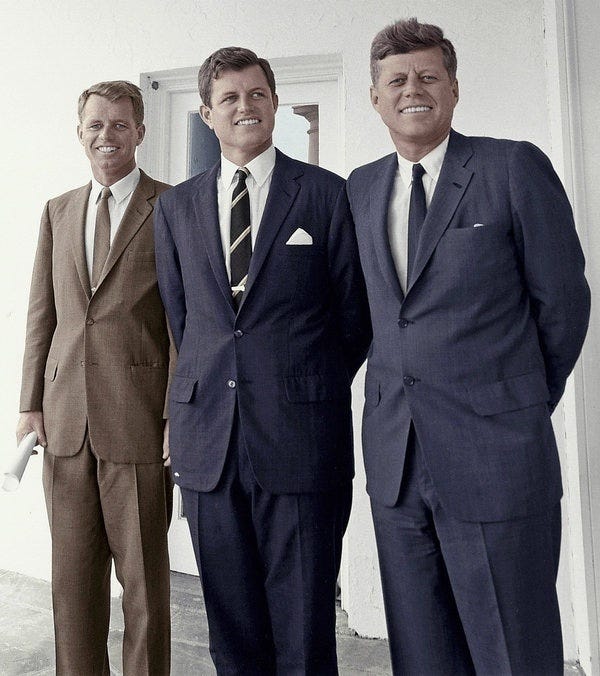
It’s interesting how much everyone loves JFK’s style today, considering he was the figurehead for many of the biggest trends of his age. JFK is praised more for his casual fashion than his suits, and that’s a shame. An assessment of Kennedy’s style is incomplete without an overview of his personal take on formal style. His suits were emblematic of the era in which he lived.
Leaving the 1950s behind, the designers at Brooks Brothers noticed that the generous fit common to that decade wasn’t suited for Kennedy’s slim frame. Brooks Brothers took action by making a slimmer cut available to fit his frame better. This pivot towards slimmer cuts, lapels, and ties would be emblematic of the mainstream style of the 1960s, and Kennedy led the way.
It’s interesting to note, however, that he never went too extreme in the slimness of any piece. If you look at his suits, they are always cut with enough room in the chest and throughout the leg. In some ways, Kennedy was a leader and also a participant in the defining trend of that decade.
This conservatism was likely a conscious reaction due to his young age in assuming the presidency. The moderate embrace of his era’s trends, while maintaining a fundamentally conservative foundation, allowed JFK to look “cool” while still looking serious and respectable.
This is a lesson in how to authentically embrace a trend. The slimming of suits in the 60s wasn’t just a fad for Kennedy. It was a style that better suited his trim build, and it was a symbol of his youth. Slimmer tailoring leaves less room for a sloppy physique, and Kennedy’s active lifestyle made him the perfect figurehead for the 1960s slim trend. With all the changes in popular style in the last 60 years, JFK’s slimmer suits still look timeless.
Ivy Never Dies
JFK is the Ivy League president. By that, I’m not only referring to the fact that he and his family were perhaps the quintessential Harvard men. In an aesthetic sense, his style was defined by the casual sports-influenced culture of the Ivy League campus that would influence the man he became. JFK was known for being active. He participated in sailing and often played golf. This preference was apparent in the clothing he wore.
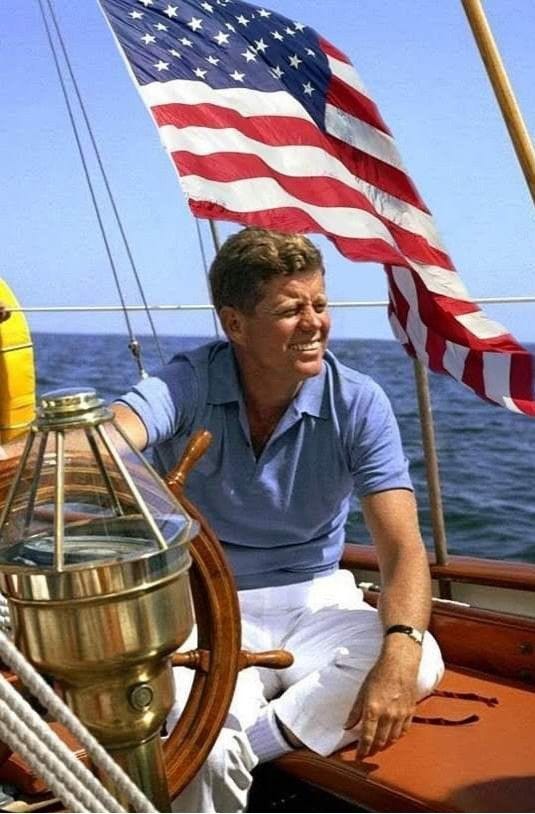
Oxford Cloth Button Downs, Polo shirts, chinos, and canvas deck shoes often appeared when JFK went away for a weekend. He was not afraid to fully embrace the sporty casual climate of his preferred activities. It’s important to notice that even in these less formal environments, he always maintained a basic level of formality and decency.
Rarely did he default to the T-shirt and jeans that were becoming ever more popular in the 1960’s. Instead, he would choose a polo or an OCBD without a tie and white canvas pants. This dignified sporty aesthetic is one of the pillars of Ivy League style.
Another interesting detail to note is that he maintained his limited color palette even in his more casual ensembles. Ivy League style is often known for embracing bright colors, especially in its later iterations in the 20th century. But Kennedy maintained his limited palette, whether in a formal or casual environment. Blue, grey, white, and khaki were the foundational colors in every outfit he wore. This made his wardrobe very flexible and versatile.
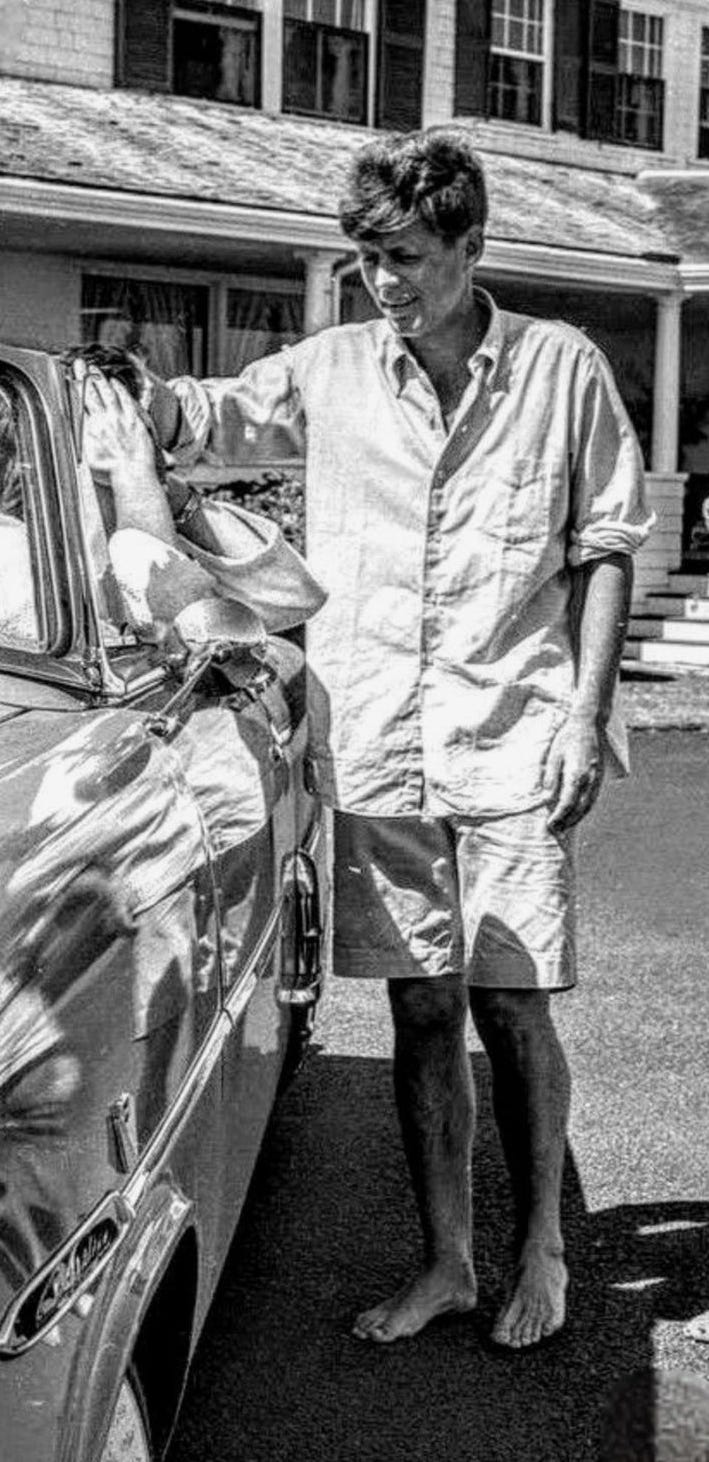
JFK embodied Ivy beyond specific items like the sack suit, slim tie, and button-down shirt. He embodied its ethos. He lived the life of an educated, hardworking, yet playful aristocrat. He wore his clothes often, and it showed in how naturally each item complemented his body and lifestyle. Clothes showed signs of wear but were neither sloppy nor disheveled.
In the current menswear conversation, men love to talk about how not to look like a try-hard, LARPer, or poser. Everyone wants to cultivate sprezzatura. But back then, JFK had the secret knowledge, and he lived it every day: simply buy clothes that fit your lifestyle, and wear them often.
JFK’s style was an outward sign of who he was and the life he lived. The real value of his style cannot be summed up solely in his embrace of the Ivy League Culture or his limited color palette. The most unique aspects of his style run much deeper than that.
His time as in the United States Navy left a major impact on his personal style, but he never got too bogged down in the particularities of any of his influences. He was never just Ivy, just sporty, or just nautical. Instead, He prioritized the classics and made everything his own.
Mastering this balance is what opens up the potential of a true classic wardrobe. Learning to navigate your own influences using JFK’s playbook is the most valuable lesson you can take from his style legacy, for this is where the real magic happens….

