

Razors & Rituals
Shaving as initiation into manhood


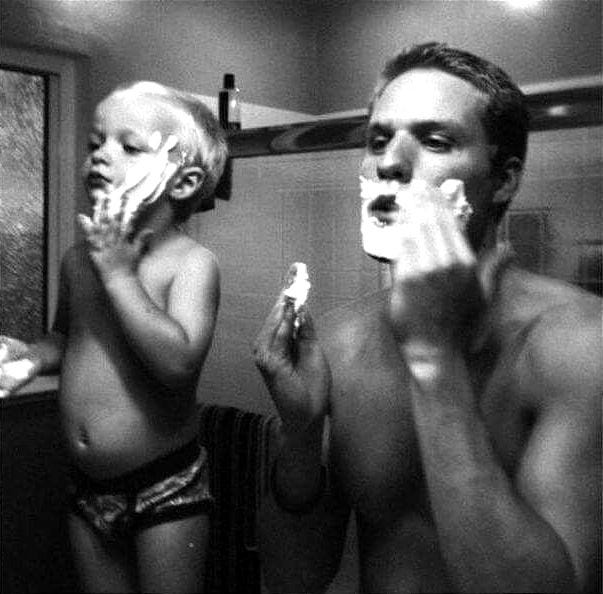
Would it surprise you to learn that there are men online who admit to weeping at a video on how to shave?
It’s easy to forget how imposing it is the first time you bring a razor blade to your own throat and press down at unfamiliar angles, hoping not to draw blood. If you were lucky, someone taught you. But if the millions of views on “how to shave” videos are any indicator, more and more young people are learning how to do this by themselves.
Most people think this is a triviality, or a mere question of learning basic hygiene. What they miss is that it’s actually a symptom of a larger problem of fatherlessness plaguing boys. A crisis of both masculinity and mentorship, distilled into a single ten-minute lesson never taught.
But the first shave also presents an opportunity. It is a chance to reintroduce a male initiation ritual to boys who need it, one that touches on questions of philosophy, identity, and aesthetics.
Today, we’re looking at how boys become men, how a simple shaving lesson can be the most important 10 minutes of their lives, and how you, as a father, mother, uncle, or mentor, can help make a man at the razor’s edge…
Our mission here at Letters from the Old World is to share the secrets of Old World elegance, and our approach is two-fold:
1) Every Wednesday, we send a free article exploring the theology and philosophy of why beauty matters, particularly in regards to decor and dress.
2) Every Friday, we send What’s In a Fit, a members-only article exploring practical tips and guidelines for dressing well.
If this resonates with you, then subscribe below to join the aesthetic renaissance.
The Need for Initiation
Unlike women, there is no clear, biological point at which a boy becomes a man. Where womanhood is a by-product of girls growing up, manhood is constructed.
In Manhood in the Making: Cultural Concepts of Masculinity, author and anthropologist David D. Gilmore examined what it means to be a man across various cultures around the world. What he found surprised him. His study determined that, with a few exceptions, cultures around the world invariably built a concept of masculinity that was more than a natural biological progression. Instead, entering into manhood required boys to struggle against adversarial forces and display the virtues required of men in their communities:
This recurrent notion that manhood is problematic, a critical threshold that boys must pass through testing, is found at all levels of sociocultural development regardless of what other alternative roles are recognized. It is found among the simplest hunters and fishermen, among peasants and sophisticated urbanized peoples; it is found in all continents and environments. It is found among both warrior peoples and those who have never killed in anger.
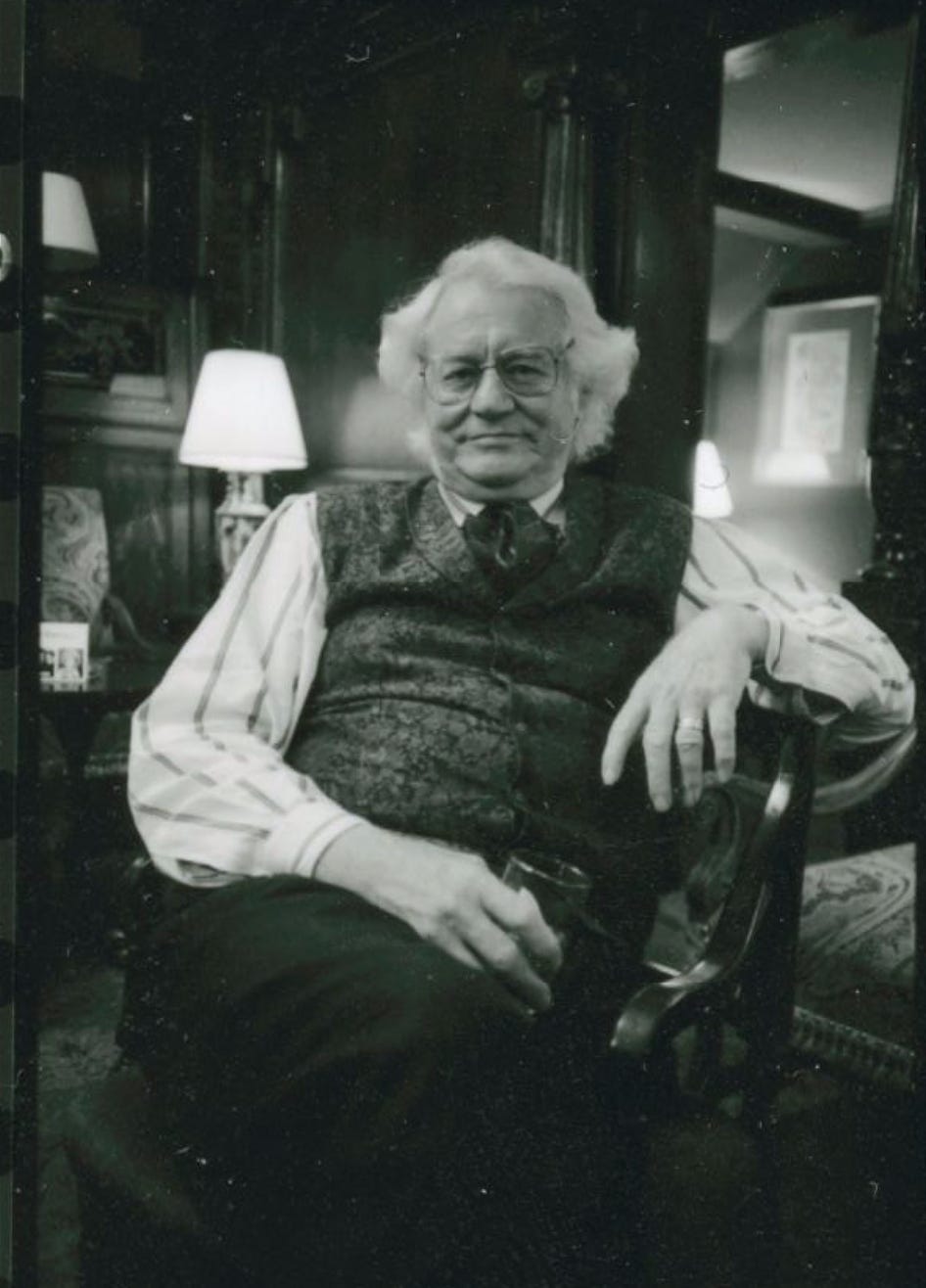
And yet Western culture has a dearth of initiation rituals, and this has been true for a while. Back in the 1980s, author and poet Robert Bly identified a crisis in Western men, namely that they had lost any positive image of masculinity, and that the initiatory rituals that once led men into manhood had disappeared.
“In our culture there is no such [ritual]”, he writes in his book Iron John. “The boys in our culture have a continuing need for initiation into male spirit, but old men in general don’t offer it.” Written in 1990, Iron John critiqued the lack of ability to enact male initiation. But decades later, the problem has taken on new facets; it’s not just the lack of older male ability, it’s the absence of older males as well.
Fatherlessness and its Fallout
No civilization has survived if the elders did not see their task as passing on the fruit of their experience to the young through some kind of initiation rite. We, however, look forward to old age so we can retire and move to Florida.
–Richard Rohr
There’s a YouTube Channel called “Dad, how do I?” that consists of videos instructing the audience in things that their father should have taught them: how to tie a tie, how to change a tire, how to iron a shirt, etc. Rob Kenney, the man behind the channel, grew up without a father himself, and wanted to help fill the gap that fatherlessness creates by teaching the next generation.
One of his most popular videos is “how to shave your face correctly”. Of the more than 3 million people who have watched it, around 8,500 left comments. While they are overwhelmingly grateful, many also mention how emotional the video made them:
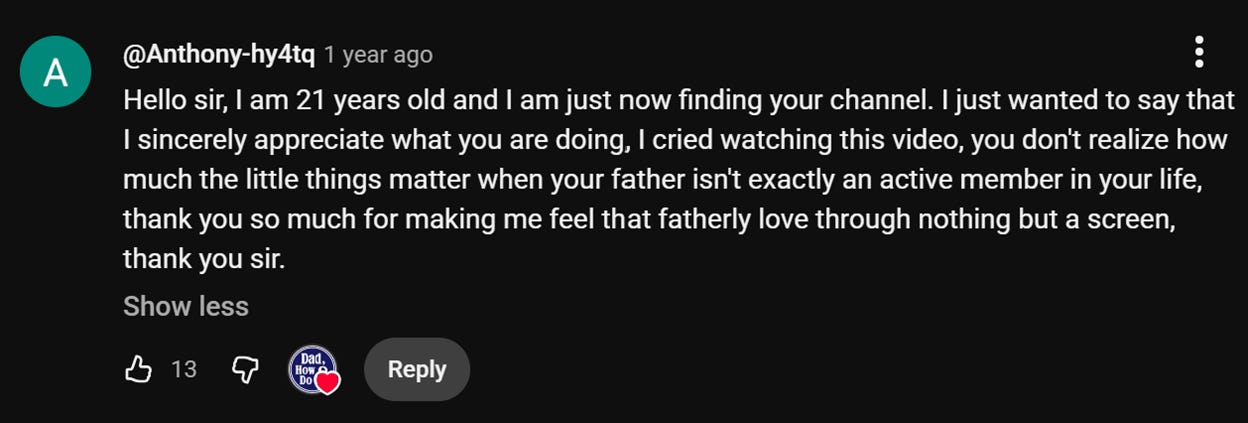
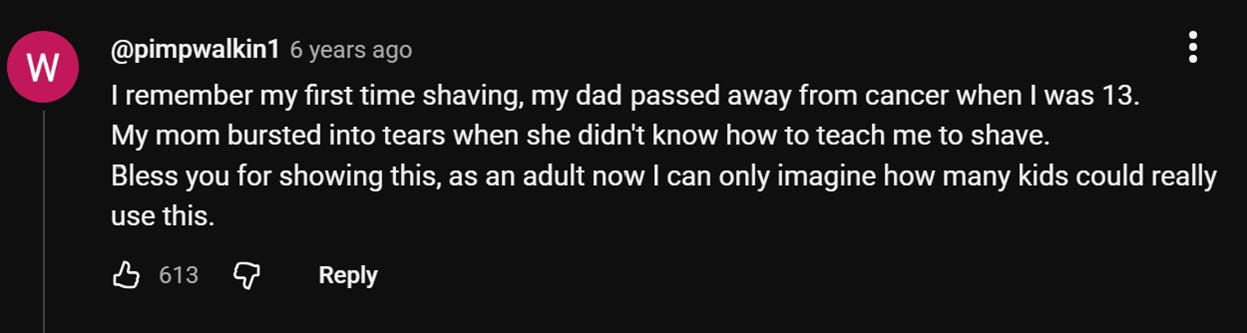
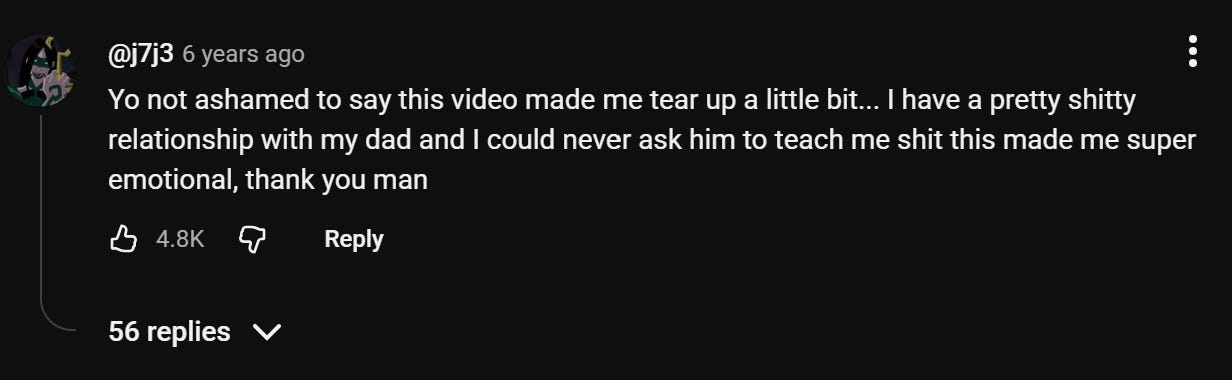

All this from a simple video on how to shave.
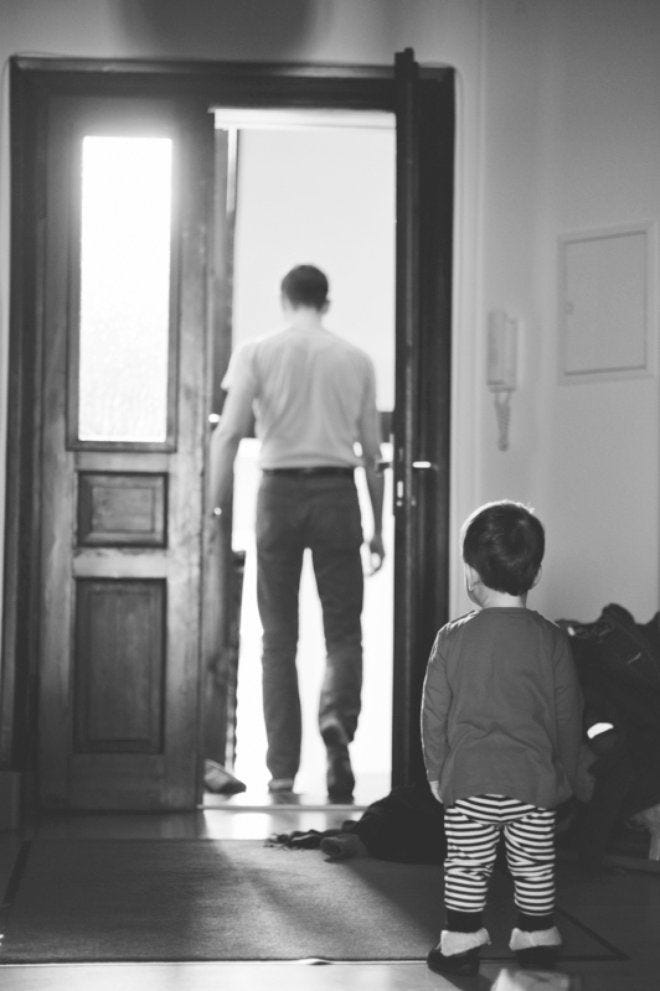
The reason boys and men break down in tears watching a digital version of a father teaching them a basic life skill is because they know they shouldn’t have to do it this way. Whether its because their fathers are distant, absent or departed, they all speak to how deeply that absence is felt in this small slice of life that should be a bonding moment between father and son.
According to US census data, more than 18 million children, roughly 1 in 4, live without any kind of father in the home (biological, adoptive or stepfather). We know from multiple studies that the absence of fathers in the home also comes with a host of issues too long to mention. For instance, according to the Institute for Family Studies, men who grow up without a father in the home are significantly more likely to be idle in their twenties, less likely to graduate from college by their late twenties, and twice as likely to have spent time in jail by the age of 30.
What’s worse, the problem is self-perpetuating: one study from 2012 found that “men whose fathers were absent when they were children were more likely to become absent fathers” themselves.
This means that the longer we delay in filling the fatherlessness gap, the worse the problem becomes. But why would shaving be part of the solution?
How a First Shave Saves
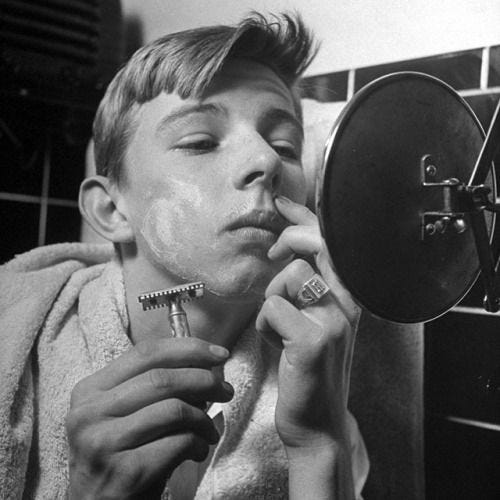
And he shall turn the heart of the fathers to the children, and the heart of the children to their fathers.
–Malachi 4:6
Shaving makes for an ideal initiation ritual for young men for a number of reasons. Its necessity arrives in the early teens when many boys start to grow facial hair with the advent of puberty, tying it to a natural process. It eventually becomes a daily event, repeated forever, which makes the initial lessons like the pebble thrown in a pond, whose ripples extend far beyond the initial impact.
Though it can be taught virtually, the lesson, to be done properly, requires a real, physical presence. The boy, looking up at the man as he lathers or shows the right way to angle the blade, has the felt experience that he is being brought into something special, something that will help him become like the men he admires.
By teaching a boy the proper use of shaving tools, you are not only teaching him a necessary skill, but you’re also providing a lesson in the importance of maintaining his appearance. You show that hygiene and taking care of yourself are not feminine values but human ones and, as studies show, prerequisites for proper self-regard. Teenage boys are not known for their impeccable grooming habits, so nipping some of those bad habits in the bud is great for everyone around you, not just your student.
As Aristotle wrote in the Nicomachean Ethics, virtue is a habit acquired through practice. It’s been demonstrated that habits engender a great range of benefits to those who hold to them, improving efficiency, time management and reducing stress. Often the most difficult part of a habit is to start, so to be that catalyst, ensuring the habit is taken up properly, is a real gift to your mentee.
If done intentionally, this can also be a spiritual opportunity as well. The Catechism of the Catholic Church teaches that we are all made in the in imago Dei, and that implies responsibilities of care and maintenance towards that image. In 1 Corinthians, Paul teaches that our bodies are temples of the Holy Spirit, and we should honor God with our bodies. To maintain a respectable appearance, then, is to demonstrate gratitude for the body gifted to you, and shaving is one opportunity for fathers to convey such teachings.
Hard to believe that all these benefits and more can be transmitted for the price of a disposable razor and a whisper of shaving cream…
A Note on Choice of Implements
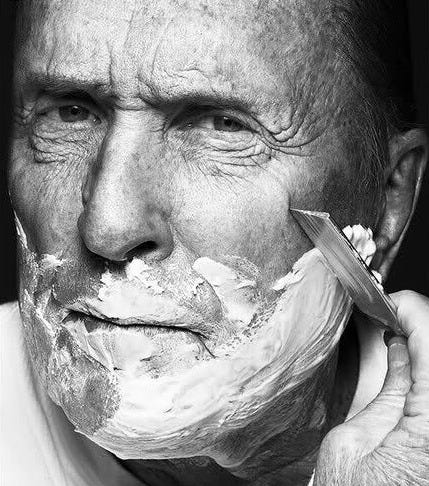
But while any implement can provide a clean-shaven appearance, not all are created equal. If you can only obtain or afford disposable razors and spray foam, that’s fine. The important part is the transmitting of knowledge and providing a stepping stone into adulthood.
Having said that, there are many benefits, practically and symbolically, to opt for straight razors, safety razors, shaving brushes, and shaving soap. While the easy-use, disposable options are good in a pinch, they cost more in the long run, as you have to buy them more frequently. They also make for an inferior quality of shave. Choosing the more labour-intensive methods involves multiple steps – everything from learning to sharpen a blade on a strop to how to prep your brush and soap before a lather – which make the teaching process a lesson in multiple skills.
Symbolically, learning to use a real razor, brush and soap, the kind that men have shaved with for generations, serves as a connection back to a long history from which western boys often feel alienated. Real razors also carry an introductory amount of real danger and power; giving a young man such an implement is to entrust him with responsibility to use this power appropriately.
Aesthetically, straight razors in particular can be real works of art, requiring a neophyte shaver to learn to take care of and maintain not just the blade but the handle as well. Learning to take care of the things that take care of you is a vital lesson for any aspiring young man to learn, after all.
Starting a Ritual

When no one is there to help mark the occasions that make a man, boys may never feel like they’ve truly reached manhood, and the downstream effects are devastating. You’ve read the data: boys who miss out on being guided to manhood have worse outcomes across the board. So if you have someone in mind for whom you’d like to make a difference, no matter what your role in their lives, be assured that you can.
If you are a father with a son coming of age, pay attention and ask questions to make sure you notice when those first juvenile hairs begin to sprout. Don’t miss your chance to offer to initiate him because there’s yet to be a full beard or mustache. Offer at the first sign and tell them this is something important to be celebrated.
If you are a mother without a father in your child’s life, this goes beyond just the shave; actively look for male mentors who could develop rapport with your son. Your brothers, your father, even your child’s older cousins could be appropriate. The point is to recognize that there are some things that boys must learn from men, and plan ahead for when the time comes. If you’d like to see your boy thrive, finding men who can provide that initiatory element of masculinity is vital.
Likewise, if you are a man without children of your own, statistically you are surrounded by boys with absent fathers. If you have the capacity, taking one of them under your wing is one of the greatest acts of love and charity you can perform. You only need to read the comments on the videos of men teaching their audience how to shave to see just how big your impact could be on their lives.
The act of shaving on its own does not make someone a man. That process is ongoing and requires care and attention from mentors, as well as effort and risk from the boy in question. But if you can spare just the ten minutes it takes to show a kid how to shave, you’re preserving (or rebuilding) an important link between fathers and sons going back generations.
The best lessons, like the best memories, are built from the moments we decide are important to us. You have the power to decide whether that lesson will come through a parasocial relationship, or from a real, loving parent.
At present, the idea of a man offering a gentle hand and teaching a younger man to shave or tie a tie— is the most romantic thing I can imagine.
Beautifully said. Thank you.