



Humans are storytelling creatures. We tell stories with language, music, dance, art, architecture, and more. Is it any wonder, then, that we tell stories with our clothes, too?
At first glance, this might seem ridiculous: what do your clothes have to do with storytelling? But upon closer inspection, it’s easy to see that clothing actually has deep symbolic value, so powerful and universal that it shows up across all times, places, cultures, and disciplines.
Sadly, most are completely unaware of the symbolic power of clothing. But go down the rabbit hole, and you will find your clothes have the ability to influence people’s psychology, initiate you into new worlds, and so much more.
Today, we explore the symbolism of dress: from its impact on behavioral psychology to its deeper roots in ancient spirituality. Most importantly, we’ll look at what this knowledge can teach you, and how you can leverage the symbolic power of clothing in your everyday life.
But first, we have to examine how we got here in the first place…
Our mission here at Letters from the Old World is to share the secrets of Old World elegance, and our approach is two-fold:
1) Every Wednesday, we send a free article exploring the theology and philosophy of why beauty matters, particularly in regards to decor and dress.
2) Every Friday, we send What’s In a Fit, a members-only article exploring practical tips and guidelines for dressing well.
If this resonates with you, then subscribe below to join the aesthetic renaissance.
Modern Denial of the Symbolic

Because clothes speak, it follows that they constitute a sort of grammar — a set of rules that channel the vast possibilities of the language into meaningful, intelligible messages. Yet somehow, despite the obviousness of clothing as a tool of communication, we tend to take its grammar for granted or even to deny its very existence.
–G. Bruce Boyer, True Style: The History and Principles of Classic Menswear
From fast fashion to a lowering of social expectations, the increasing proclivity towards casual dress tempts you to abandon the symbolic power of what you wear. This is a mistake. More than that, it’s a misunderstanding. You can’t “abandon” the symbolic power of clothing even if you try. What many do, then, is deny that their clothing holds symbolic weight, in order to excuse themselves from thinking about it.
Fashion consultant Tim Gunn places the blame for this lackadaisical attitude at the foot of Casual Fridays. The idea of casual Fridays started in 1991 as Casual Day, a fundraising event where employees could purchase the right to dress casually for a day at their office with the money going to charity. So popular was this event that businesses increasingly adopted the trend. Fast forward a few decades and people are now asking if they can wear pajamas to work.
For Gunn, the loss of understanding of what clothing signals is more than mere aesthetic faux pas, it leads some genuinely hurtful incidents: “I have heard from brides that they feel disrespected by guests who show up in tracksuits, or by the bereaved when their friends show up tieless and jacketless at the funeral home.”
When clothing is mere necessity, it loses its potency. This is because the wearer abandons the deeper layer of “what does this communicate” to remain in the superficial “I’m expected to put something on, I guess.” It’s the difference between sincere prayer and vain repetition made manifest on your body: they may appear similar, but sincerity and intentionality set them apart.
But just what are clothes trying to tell you?
Clothing as Initiation

Have you ever noticed how true is that old phrase, clothed and in his right mind (Mk 5:15)? Man is not in his right mind when he is not clothed with the symbols of his social dignity. Humanity is not even human when it is naked.
–G.K. Chesterton, The Shadow of the Shark
If you want to learn one of the biggest stories clothing can tell, look no further than the biblical narrative. When Adam and Eve were tricked into knowledge of good and evil, they then hid their nakedness. They recognized that their appearance held a moral dimension, one to which clothing was vital. The way they presented themselves was not morally neutral. This story shows us the move from innocence and nakedness to consciousness and the need to clothe oneself.
However, when Adam and Eve do so by sewing fig leaves together, it is insufficient. This is why God makes for them more substantial garments of skins. Symbolically, it’s not enough to cover up: the coverings themselves should align with the dignity of the body which they are meant to preserve.
What we also find in this narrative is a recurring pattern of clothing as initiation, a crossing of thresholds. Clothing permits you to move from one state of existence to another, just as Adam and Eve passed from the garden into the wider world and thus required clothing appropriate to their new lives.
In his book Christianity and Symbolism, FW Dickson writes that life often means movement from one state to another; life at home versus life outside, life as a student vs that of a master, a life without meaning vs a life with meaning, etc. The importance of these dichotomies in society meant that it was necessary to signal when you had moved through them. As Dickson puts it:
When such pairs of conditions exist alongside one another in the social order, the need becomes urgent for a symbolic form to provide the dramatic externalisation of the passage from one condition into the other.
This was often done through clothing. For instance, soldiers, monks, priests, police and judges all “transform” into their profession in part through donning their uniforms. This transformation often signals traits vital to their roles like authority, status and competence. So important are these uniforms that it is sometimes illegal to even wear them if you are not of that profession; they are symbols that are too powerful to be treated lightly.
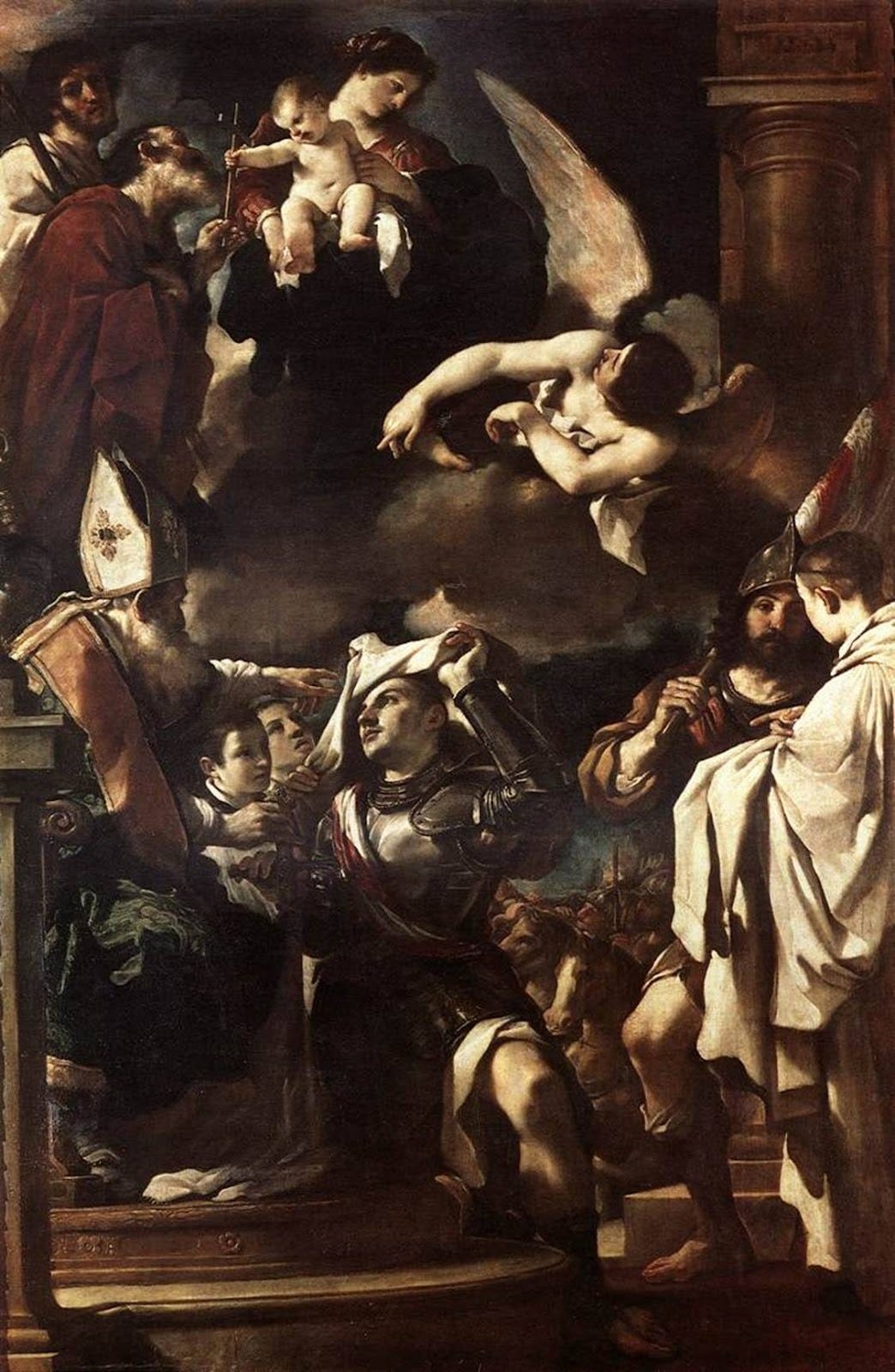
Unfortunately, such direct signaling is becoming rarer as fewer spaces maintain dress codes, and communities devolve into individual preference of comfort over communication. According to Dickson, “a change of clothes, which at certain periods of history has marked a decisive movement into a new condition of life, no longer carries any special significance except in very limited circles.”
In this way, even clothes have become part of the disenchantment of the world, as the transformative rituals once attached to them slowly dissipate.
But just because the world wants to ignore the reality of the symbolic doesn’t mean that you should. In fact, modern research not only confirms the power of symbolic clothing, it even shows you how to use it to your advantage…
Symbolically Shaping Yourself

The idea of Beauty that a man forms is impressed on all his clothing, it rumples or irons his suit, rounds or stiffens his gestures and it even finds its subtle way, in the long run, into his features. Man ends up resembling what he would like to be.
–Charles Baudelaire, The Painter of Modern Life
One of the great secrets of your dress is that it isn’t just signaling to others, it’s talking to you too. Every time you look in the mirror, you take stock of who you appear to be. As Baudelaire rightly points out, with enough repetition, how you present yourself inevitably becomes who you are. But this isn’t just an idea by some poetic Frenchman. Thanks to studies on the subject, we know that the clothes we wear symbolically shape us in profound ways.
This isn’t just romantic notions, either. Research on enclothed cognition, the persistent influence of clothing on a wearer’s psychology, found that said influence depends on two factors: the physical experience and the symbolic meaning of wearing clothing.
One series of experiments gave participants lab coats that were described as either doctor’s coats or painter’s coats and instructed to complete visual search tasks. The participants who were told they wore doctor’s coats performed better at their task than those wearing painter’s coat, despite the coats being exactly the same. Another finding was that actually wearing the coat had a greater impact than merely seeing the coat nearby while performing tasks.
If clothes actually do make the man (at least, in part), then what does that mean for you?
Symbolic Awareness is the Key
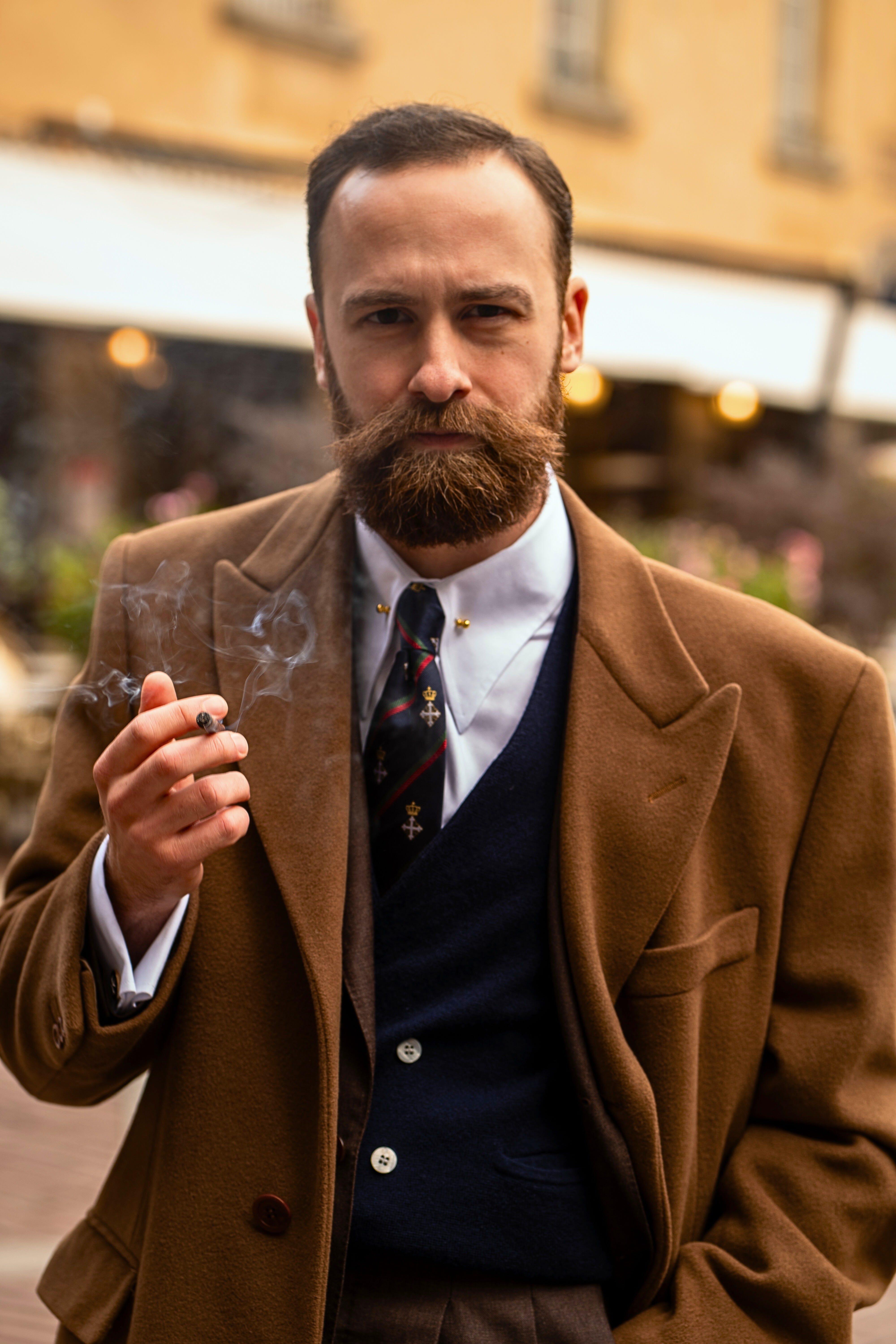
When you recognize the symbolic power of an article of clothing, you can literally wear that power and take it with you. So whether you wear clothes that make you feel like a warrior, a leader, a poet or a prude, you’ll carry that interpretation into everything you do.
When you combine the idea of clothes as a threshold between states of being with enclothed cognition, you can see how formative your morning closet rummaging can be. What you wear isn’t just some fabric, it’s the new you, worn in recognition of entering a particular role or community and recognizing its demands.
By reserving certain clothes for certain times and places, you respect the dichotomies that were once self-evident, ones which set healthy boundaries between the different spheres of life. When your work clothes are different from your worship clothes or your sportswear, for instance, you recognize that you cross into different worlds which require different virtues of you. To achieve said virtues, you can also dress for the part, knowing that the meaning you place on your clothes has a direct effect on you.
Dressing so the grammar of your outfit matches the language of your location ensures your outfits speak respectfully, knowledgeably, and fluently. What you want them to say is up to you to discern, of course. But just remember that the symbolic language of clothes is too powerful to be ignored.
Excellent.
Concerning attitude, I think there’s a proper humility that goes with the symbolism: May I live up to the best that the uniform, the professional attire, or the jersey conveys!
Example: There are circumstances where a hat is still worn. (As an old dude without much hair, I need something.)
Someone has said, For a hat to work, you have to have more character than the hat!
I aspire.
I thoroughly enjoy your posts. Does anyone know of a similar Substack for women’s clothing?