




Photos of the Kayan women of Myanmar always make an impression.
Their culture coils brass rings around the necks of girls at a young age, replacing them as the girls grow. The result is that their women have the appearance of an elongated neck, which is a sign of beauty and femininity within their culture.
What they’re actually doing though, is not elongating their necks, but pushing their collarbones and ribcages downward, which results in reduced pulmonary function and higher cortisol, among other issues. In so doing, they are, knowingly or unknowingly, sacrificing parts of themselves at an altar of beauty.
While their example seems extreme in a Western context, the truth is we are all doing some version of this. The things you wear are rife with articles that demand trade-offs, small sacrifices that seem normal because everyone is doing it, but actually have real consequences.
That’s why today, we look at the accessories that are eroding your health, the difference between right and wrong bodily sacrifice, and why you are called to something greater than what the world expects.
Our mission here at Letters from the Old World is to share the secrets of Old World elegance, and our approach is two-fold:
1) Every Wednesday, we send a free article exploring the theology and philosophy of why beauty matters, particularly in regards to decor and dress.
2) Every Friday, we send What’s In a Fit, a members-only article exploring practical tips and guidelines for dressing well.
If this resonates with you, then subscribe below to join the aesthetic renaissance.
What Are The Problems?
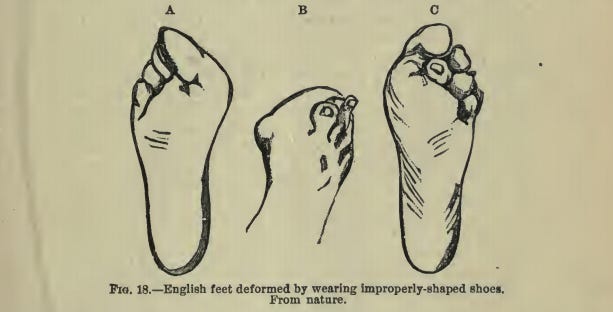
Cutting straight to the chase: a lot of what you wear causes you health issues and deformities. The issues with your shoes alone could be their own article. The shoe has a 50,000 year history of shaping feet, so its unsurprising that modern shoes draw their design from ancient forms whose benefits are lost, yet whose trade-offs remain.
Consider that the tapering of shoes today stems from a combination of ancient European preferences for pointed shoes, and the benefits of tapered points to horse riders wanting to easily slide into stirrups. Neither of these considerations are alive to you today, yet their influence is still squeezing your feet into too-tapered shapes that are painful, unnatural, and cause weakness and deformity. Elevated heels, an innovation meant for stabilizing horse archers as they shot from the saddle, today are responsible for changing the pelvic tilt and spine of their wearers, causing back pain, and placing additional stain on knee and hip joints.
If you wear heels for long enough, they’ll even shorten your calves and Achilles tendon, making it painful to walk without them. It’s no exaggeration to say these ancient preferences are causing millions of hammertoes, bunions, and chronic pain conditions that could have been prevented if we’d only update our shoe preferences.
This isn’t limited to shoes, though. A preference for tight bras or corset-like wear creates indents in the skin, prevents lymphatic drainage (which helps rid the body of toxins) and compromises your ability to breath properly. The skinny jeans trend, though now thankfully behind us, left a trail of damaged nerves, numbness and pain in its wake, albeit temporarily. Studies show the preference for cheaper synthetic fabrics in the late 80s and 90s may have caused lowered sperm counts and shrunken testicles, an issues that becomes increasingly important as fertility rates continue to plummet worldwide. Tight rings can lead to embedded ring syndrome, constricting nerves, damaging tissues and at its worst causing necrosis.
The list goes on and on, but the takeaway remains the same: you are likely wearing something that trades your health for looks.
But your body was not meant to traded off piecemeal like this. It has a greater purpose.
Your Body: Tribute or Temple?
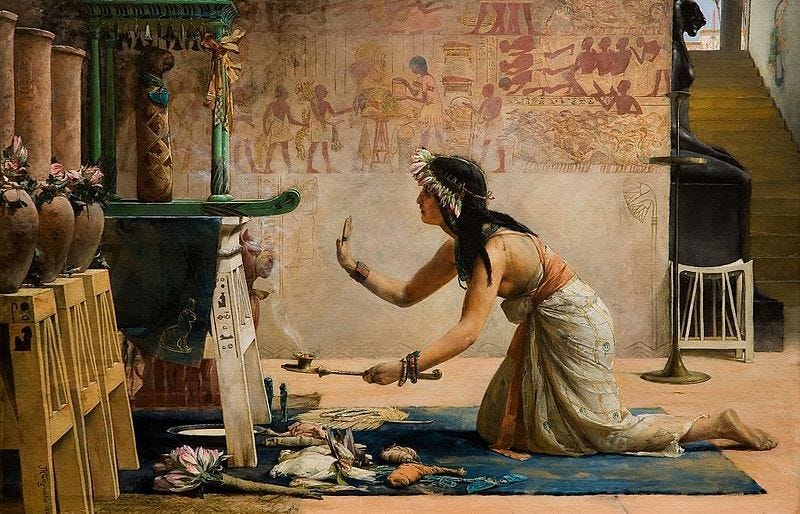
In his first letter to the Corinthians, St. Paul warns the church there that their bodies are temples of the Holy Spirit, given by God, and that they should honor God with their bodies. Your body, in other words, is not a series of objects to be molded and transformed by the whims of culture. It’s the greatest gift you’ve received, a hallowed space in direct connection with the divine.
Just as you shouldn’t alter a church for the sake of cultural trends that will soon fade, neither should you trade the natural beauty of the human form for masks that not only hide this beauty, but deform it into something no longer fit for purpose.
By the time your calf muscles shorten from wearing heels everyday, for example, you have made a permanent change to your temple for the sake of appearances. Rather than a home for the Holy Spirit, you make it a home for the spirit of vanity instead, because that is who is receiving your bodily sacrifice, your worship, day in and day out. Whereas typical clothing only layers on top of the body and is mere addition that can be removed without consequences, restrictive pieces that cause both temporary and long term discomfort subtract from the body. The result? “Offerings” of health and mobility, a modern take on an ancient form of worship, one that mortifies the flesh in exchange for favors. Or in this case, trading a God-given gift for a short term aesthetic improvement.
But a sacrifice, and worship, implies a recipient. Who – or what—is accepting these offerings of flesh and life?
Idolatry of Our Age
A great many Chinese monks right down to the middle of the twentieth century followed the practice of burning off one or more of their fingers as a sign of dedication and devotion.
–The Stories of the Lotus Sutra, p 243-244
Worship in the sense used in this piece doesn’t need a rigid set of rituals or rules to exist. It only needs to continuously demand a cost of you, one paid without hesitation when asked for. Daily, unexamined repetition is the key, and the object of worship need not even be consciously named.
Likewise, idolatry is not limited to tree worship of golden calves. It is a misdirection of worship, attributing to something unworthy the reverence reserved for God, and reshaping your life towards that thing. Even within religious devotion, we find this genre of sacrifice. Some Hindu ascetics practice devotion by raising their arms to the point that they atrophy, a sacrifice to Shiva. The cult of Cybele had priests who would ritually castrate themselves for their goddess in emulation of the fertility god Attis.
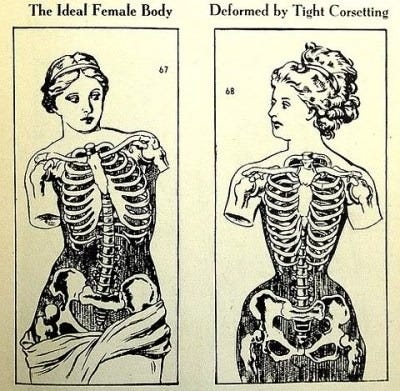
Grim as these examples are, at the very least they were done with an idea of pleasing their conception of the divine or the highest good. When 19th century women mutilated their bodies with corsets, something which anthropological studies suggest caused lasting skeletal deformations, that sacrifice was done at a lesser altar, to a false god they did not recognize they were worshipping.
This is because it is an idol that hides its cult within culture. Its rituals are “just what people wear” or “what everyone does.” This makes its worship all the more insidious, because it never asks you to name it, only to pay your daily tithe of flesh or bone to it. This is the difference between properly ordered worship and idolatry; the ascetic names their worshipped god, the idolater does not necessarily even know their idol exists.
There is, of course, a difference in scale and kind between castrating clergymen and constricting corsets, but both ultimately engage in a kind of bodily trade for something for which they are willing to suffer. This is not to say, however, that all such suffering is bad…
Sacrifice: the Good, the Bad and the Ugly
As with other religious practices mentioned above, Christian tradition has its share of ascetics, people who welcomed discomfort for the sake of piety through self-denial, mortification or fasting. The difference here is both the sufficiency of Christ’s sacrifice, as no person’s blood can atone for sin the way His did, and the direction of personal suffering towards a God worthy of receiving any sacrifice for His sake.
By contrast, even something as simple as slinging your backpack over one shoulder because it’s cooler can affect musculoskeletal health and ultimately trades well-being for style.
When you allow your body to gradually misshape itself over time, ask yourself if you would do the same for a higher purpose than vanity? If not, why not? The point is not necessarily to encourage your ascent to asceticism, but to have you consider how you treat or mistreat your body, why you make the choices you do, and what they say about your values.
Consideration as the Core of Care
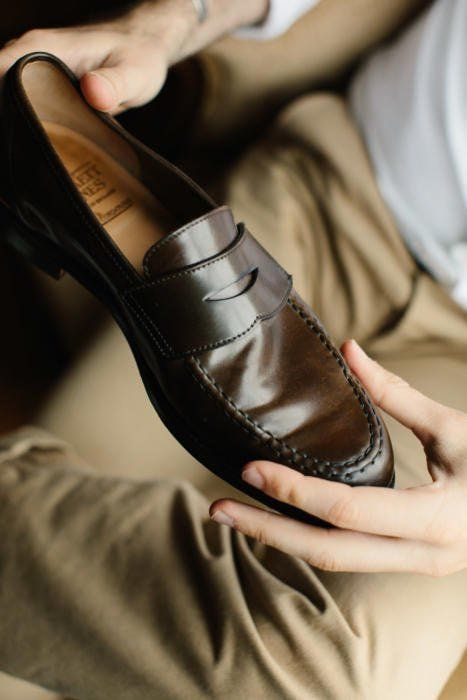
For some of these issues, there are quick fixes. Making sure your clothes aren’t restricting your body, fashion be damned, is an easy first step. Fixing feet that have spent a lifetime being mishappen by bad shoes is another endeavor. There are practical steps, of course. You can look into foot-shaped shoes, go barefoot more often, and do strengthening exercise.
You might even decide that the foot pain is worth it to wear your heels every once so often, while still looking to minimize the negative side effects. Whatever you do, the important part is that you make it a conscious choice.
Perhaps more important than practical changes is to rethink your relationship with your body. Once you decide that a healthy functional body takes priority - both metaphysically and literally - over the cause of looking good, the other decisions become easier by virtue of this guiding principle. A temple, after all, should be maintained and kept beautiful, not sold off piecemeal for lesser idols.
When you consider what to wear or what you have worn up until now, ask whether you are or have been a good steward. In this way, consideration is the great act of care and worship that you can offer in day-to-day dress. What you decide to worship with that act is up to you.
Thought provoking! I’m struck by the idea of “worshipping idols” like vanity without even realizing it. Thank you for writing this.
Great article, as usual. A thought: despite what you say, I haven’t seen either of the authors wearing barefoot or ergonomic shoes in any of the pictures shown on the blog. To be honest, I don’t either, mostly due to aesthetic concerns and partly because of professional standards. It’s a thorny issue I haven’t found an answer to, and I have yet to see barefoot shoes that aren’t repulsive to the (modern) eye.