

What’s Wrong with Your Face?
George Orwell & the spiritual consequences of “perfection”


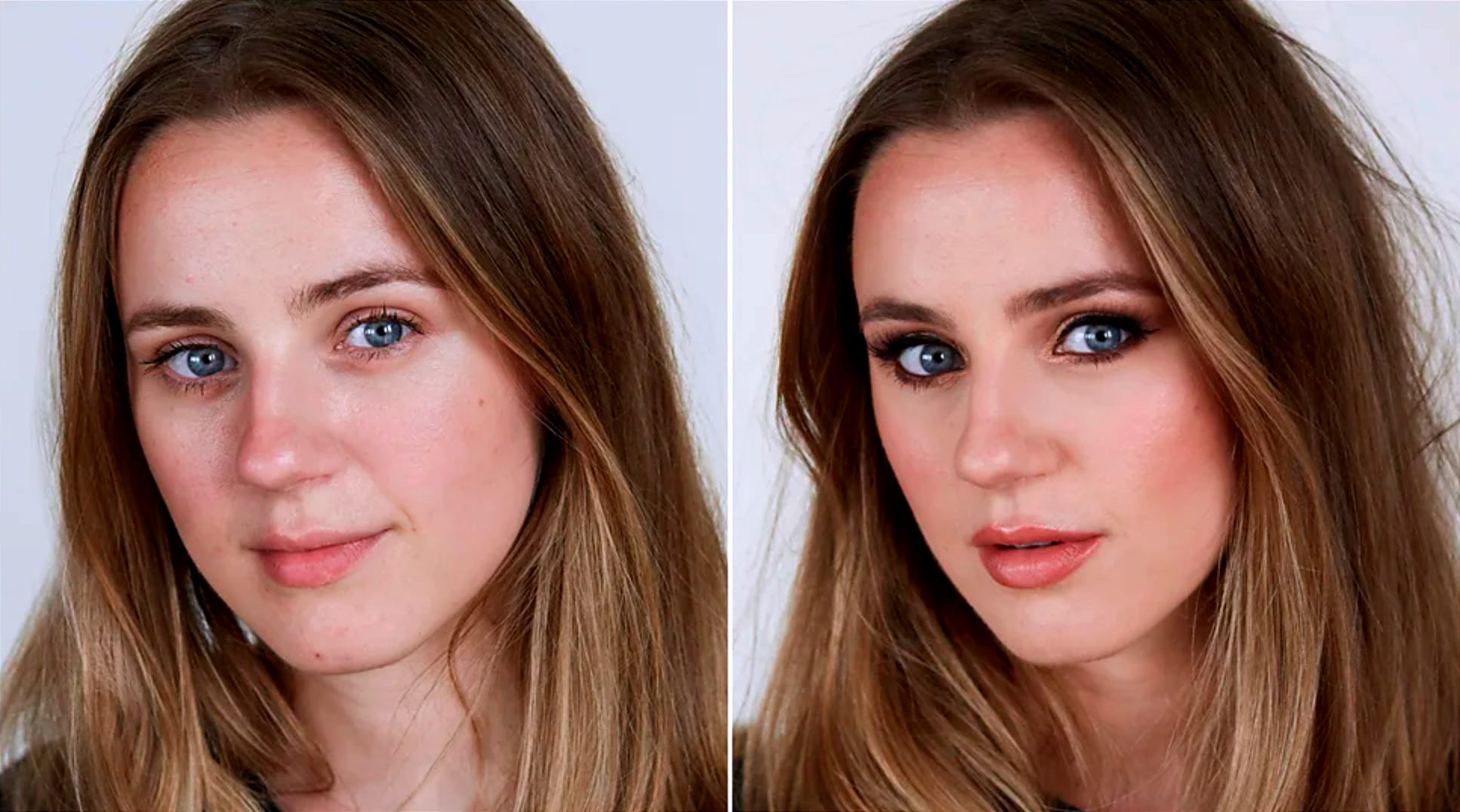
For the better part of a decade, the human face has been subject to a disturbing trend. Prominent pouts, chiseled jaws, cheekbones so sharp they could cut glass; more and more, both people are beginning to converge on a type of facial ideal. The trend is so pronounced that people are now wondering: are we all going to end up with the same face?
This isn’t limited to the chronically online, those getting plastic surgery, or people using social media filters. This has real health and spiritual consequences, not to mention the stifling image of “beauty” we are creating for ourselves. At its worst, the pursuit of the perfect face leaves some unable to feel anything at all.
Ignoring the problems won’t make them go away, but there are things you can do to push back against a trend that seeks to erase your individuality. Today, we look at why this is happening, what George Orwell can teach you about it, and the physical and spiritual consequences of an unattainable ideal.
What are the best methods to fight back against the pressure to conform to a standard set by algorithms? Let’s find out…
Our mission here at Letters from the Old World is to share the secrets of Old World elegance, and our approach is two-fold:
1) Every Wednesday, we send a free article exploring the theology and philosophy of why beauty matters, particularly in regards to decor and dress.
2) Every Friday, we send What’s In a Fit, a members-only article exploring practical tips and guidelines for dressing well.
If this resonates with you, then subscribe below to join the aesthetic renaissance.
Where Did This “One Face” Come From?
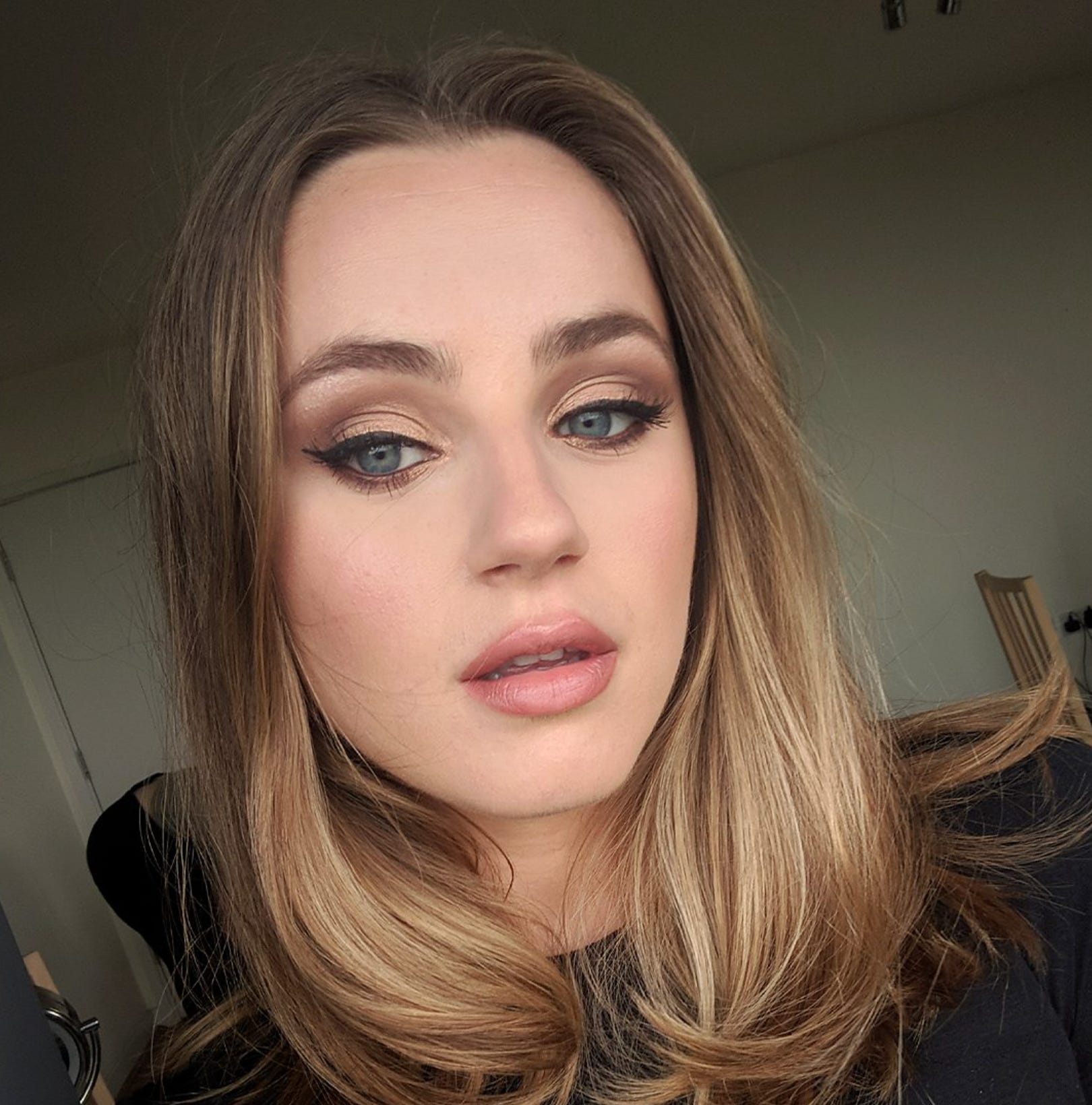
In 2019, an article by Jia Tolentino made the rounds where the author investigated what was then called “Instagram face.” The piece’s subtitle, How social media, FaceTune, and plastic surgery created a single, cyborgian look, alludes to the quasi-transhumanist nature of the trend; when your perception of your self feels “realer” or “truer” in its filtered form, a part of “you” needs the technology to change your face (at least until you can afford surgeries to make the change permanent).
In her article, Tolentino went to the heart of the phenomenon, Los Angeles, and asked people working in the beauty industry about what they were seeing. The trend for women, they told her, was towards a unified type of face, a Kim Kardashian or Bella Hadid look — features like a small nose, full lips, high cheekbones and zero visible pores – which an interviewee called Instagram face. The term can refer to both the type of face that worked best for engagement on social media, but also the one beauty filters and apps, like Facetune, were optimized to create.
The homogenizing effect of filters isn’t just speculation; one 2025 study went through 225 beautifying Instagram filters and found there was indeed a “digital beauty template”, a hegemonic style of digital facial modification that repeatedly opted for the same features. As one researcher put it, the digital beauty template, though containing underlying European beauty standards, was still “highly unattainable to all users – certain ‘ethnic’ features are selectively appropriated whilst others are erased, producing a filtered appearance that is ambiguously ‘exotic.’”
These findings mirror what one makeup artist from Tolentino’s article said, that the Instagram “look” combined influences from South Asian, African American, Caucasian, Native American and Middle Eastern faces into an appearance of “rootless exoticism.”
In other words, the face that everyone is striving towards, the face that algorithms, filters, and celebrities promote, truly belongs to no one and nowhere. It’s an illusion, and one that’s causing real-world harm.
The Consequences of Having “Inferior Faces”
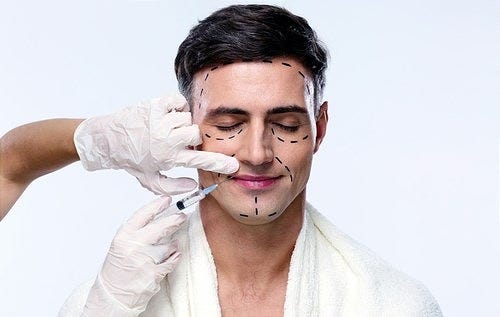
Young girls are now bringing up photos of themselves on apps with the filters applied and asking cosmetic surgeons to make them look like their filtered selves. Its so common that the surgeons refer to it as “Snapchat dysmorphia.” The correlation between constant exposure to impossible beauty and feelings of inferiority are so strong as to be undeniable. One 2025 study from Stanford found that adults with significantly higher time spent on social media were far more likely to have body dysmorphia, while another study found that while text-based social media saw no effect, image-based social media platforms in particular were “significantly and positively associated with body dysmorphic symptoms.”
And while the facial convergence you’re seeing with some women isn’t happening to men yet, there’s an argument that they’re just catching up to where women are. According to one recent study, 70 percent of young adult women are unhappy with their bodies, but 60 percent of men are as well. In fact, there’s plenty of evidence that feelings of looking inferior to an idealized self aren’t gender specific. For instance more men than ever are now seeking plastic surgery, and the male looksmaxxing subculture is producing men who obsess over jaw width and facial proportions to an unhealthy degree, to the point that it will inevitably create its own version of the “perfect” male face convergence.
Regardless of which gender does it, the pursuit of the perfect face runs the risk of eliminating the thing that made faces truly worth looking at.
Expression as Identity
Then God said, “Let us make mankind in our image, in our likeness.”
–Genesis 1:26
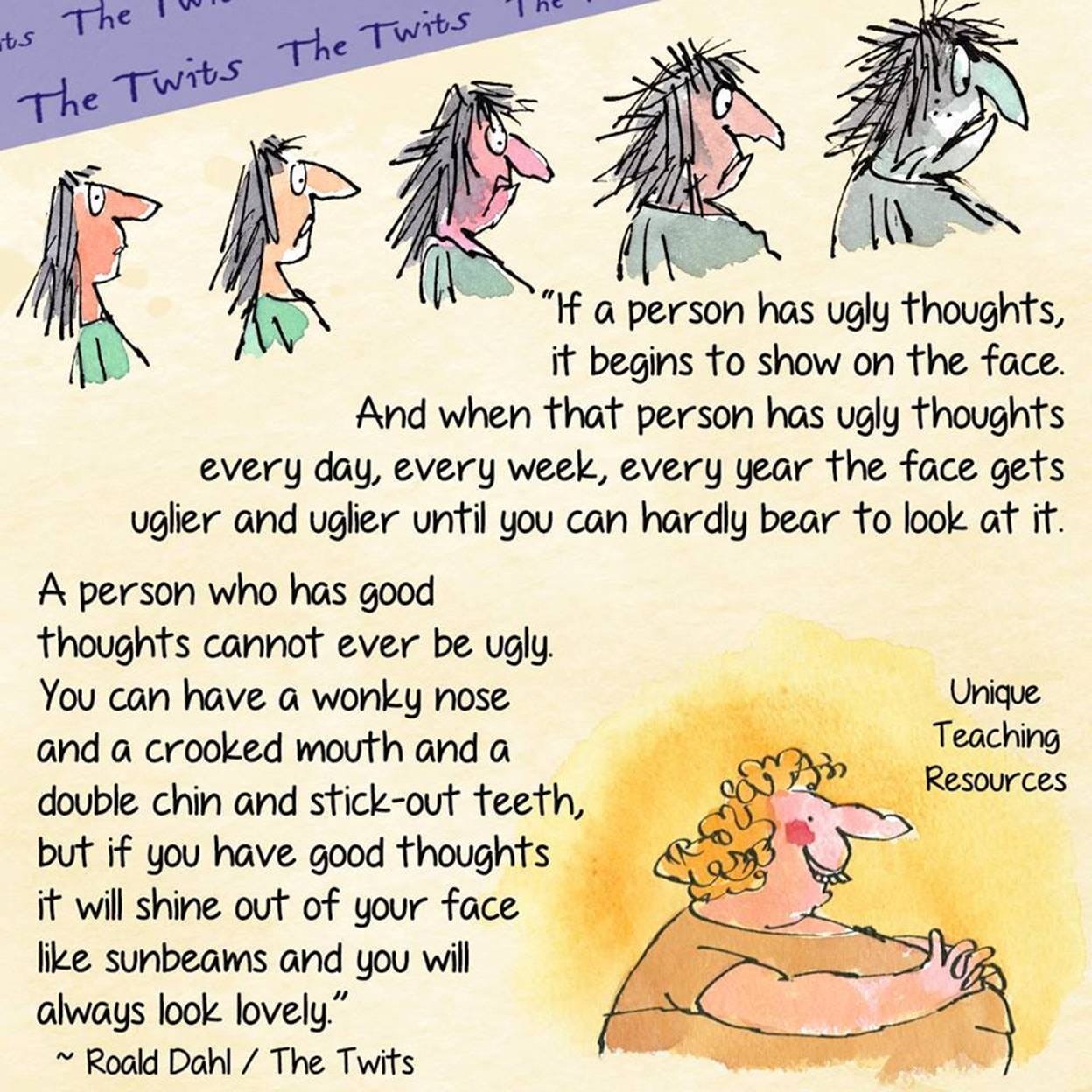
Viewing your face, or any part of your body, as an object to be modified changes your relationship to it in a way that rejects its God-given nature. Every person is made in the image of God in their own way, and to reject that through radical intervention is a refusal to accept a gift of God. The Vatican’s International Theological Commission recently published a document, Quo Vadis, Humanitas?, addressing this issue head on:
Once modified, often with relentless frenzy, the body becomes a body-object in which the person-subject mirrors themselves, creating a relationship in which the person is no longer his or her body but ‘owns’ a body, from which arises the search for a ‘borrowed’ identity. In this dynamic, it is no longer necessary to accept one’s own body in order to realise one’s identity. It can be transformed according to the tastes of the moment.
A curious situation is created: the ideal body is exalted, sought after and cultivated, while the real body is not truly loved, being a source of limitations, fatigue and aging. One desires a perfect body, while dreaming of escaping from one’s own concrete body and its limitations.
Escaping from your real face in this way also leaves behind a fundamental aspect of who you are. In his essay, Aesthetic Significance of the Face, sociologist George Simmel wrote that the face takes on the lion’s share of conveying your personality through expression, but also through the record it keeps of your actions:
In the face, […] the emotions typical of the individual – hate or timorousness, a gentle smile or a restless espying of advantage, and innumerable others – leave lasting traces. In the face alone, emotion first expressed in movement is deposited as the expression of permanent character. By virtue of this singular malleability, only the face becomes the geometric locus, as it were, of the inner personality, to the degree that it is perceptible.
Simmel also credits this “location” of personality in your face to Christianity, which he writes had a tendency to cover the body, making a person’s face the sole representative of his appearance. This can be seen in the story of the garden of eden, where Adam and Eve feel shame on realizing their nakedness and cover themselves, or passages like 1 Timothy 1:29 which says women should “adorn themselves with proper clothing, modestly and discreetly.” This religious connection to the prominence of the face in beauty is more than incidental, however.
Philosopher Dietrich Von Hildebrand writes that the human face was created for expression, and it is in making expressions that you find the union of “physiological process with inner psychic and spiritual processes,” meaning the face displays things that otherwise only exist at the level of the mind or the soul. The human face is uniquely capable of transmitting the world of the invisible to the visible, to take your inner sentiment, your inner self, and manifest it outwardly. This is the true key to what can make any face beautiful.
Of course, there are faces that are naturally beautiful through their symmetrical form, the proportions between eyes, nose, mouth, chin, etc. These parts form a whole that is beautiful regardless of the expression on that face. But there is another path to a beautiful face, even for those who lack this formal beauty, those which are beautiful through expressions of goodness, purity, or intellectual statue. As Hildebrand says: “A look from eyes in which playful charm is linked to kindness and purity can possess a high degree of aesthetic value.”
Naturally, the question that arises with all this information is: what happens to identity when you change its most prominent physical feature?
A Permanent Mask
In the face […] there is always an expression of the personality; if it were devoid of all expression, it would be a mask.
–Dietrich von Hildebrand, Aesthetics, Vol. I.
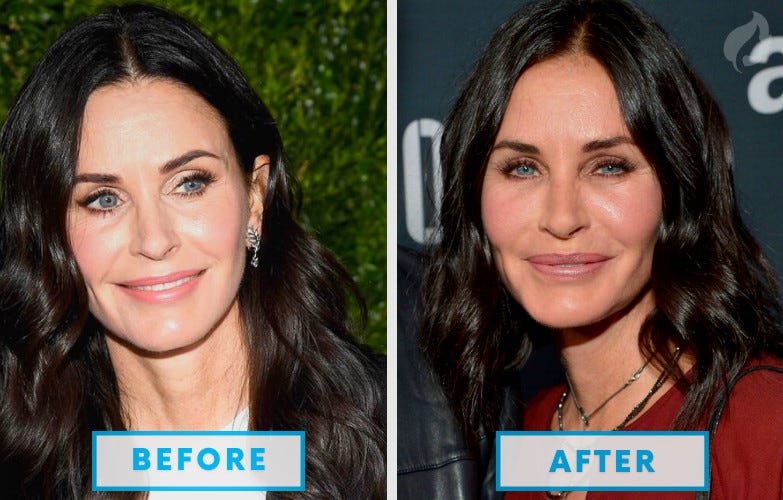
Most “influenced” people do their best without drastic surgeries, relying on makeup, constant filter use, easy Botox or the occasional face hammering . But the closer you are to the limelight – or the more you want to be– the more likely you are to want that unnatural perfection. This desire makes perfect sense when you consider the origins of Instagram face; the onslaught of too-perfect content on social media and the pressure felt by those at the centre of the digital panopticon to look a certain way.
Though you might not think George Orwell would have insight into this, one of his short stories discusses this tension decades before the first smartphone. In Shooting an Elephant, George Orwell recounts an incident during his time as a British police officer in Burma where he had to put down a rampaging elephant in front of a crowd. He describes the tension between being seen as the person in control and yet feeling trapped into performing that role for onlookers.
Despite his purported position of control as a representative of colonial power, he felt like a puppet, made to act, a “hollow, posing dummy” who spent his time trying to impress the expectant crowd:
Here was I, the white man with his gun, standing in front of the unarmed native crowd – seemingly the leading actor of the piece; but in reality I was only an absurd puppet pushed to and fro by the will of those yellow faces behind. […] For it is the condition of [the white man’s] rule that he shall spend his life in trying to impress the “natives,” and so in every crisis he has got to do what the “natives” expect of him. He wears a mask, and his face grows to fit it. The crowd would laugh at me. And my whole life, every white man’s life in the East, was one long struggle not to be laughed at.

Orwell felt that pressure in one striking incident and had to write it out for catharsis’ sake. In his performance of “the man in charge,” which he felt was demanded by the literal crowd around him, Orwell resemble the modern day beauty influencer, who has no choice but to act out what is expected of them. And that expectation is often to be the most beautiful, the most desirable, the most flawless they can be. Imagine how Orwell would have felt had his expectant crowd followed him everywhere he went for his whole life, like those on social media do now?
In a world where privacy is rapidly becoming a luxury good, the only defense is that of the zebra; blend in with the herd, look like your peers – or who social media says are your peers — as any anomaly will allow the lions to target you. People are rightly terrified of exposing themselves to the great eye of the internet mob, a false, fickle god who loves one day and destroys the next, as it’s a god whose worship ultimately destroys you.
Author Claire Raymond explains how this happens in her book The Selfie, Temporality, and Contemporary Photography. Raymond writes that “Instagram face” is essentially a mask, and in more ways than one. Not only does it hide the person who has adopted it through plastic surgery but the subdermal injections and other procedures necessary to attain it have likely numbed their face to the point it feels and acts like a mask as well; less able to feel, less able to show emotion. “Numbness is the central feature of the experience for the woman who gets Instagram Face through cosmetic procedures. Others may see her more, but she feels less and less.” In this way, adopting this impossible face offers a trade off; you are flattening one part of your identity and protecting another.
For those of you who understandably would rather not live in a world where this trade-off is seen as a good one, what can be done?
The Fix
The good news is that there are some concrete steps you can take to combat this phenomenon. Kids are especially impressionable when it comes to visual media, but talking to them and making them aware of both the issue and their social media diet can mitigate the damage. Studies have shown that cutting social media use in half for a few weeks goes a long way to improving a person’s body image. Likewise, making your social media text-based (*cough* Substack *cough*) as opposed to visual based has a noticeable effect.
If you do have visual-media based accounts, next time you are doomscrolling, take a minute and audit how you feel when looking at different health, fitness, or beauty accounts. If they inspire you to work on yourself, that’s one thing, but if instead they create a sense of despair, of impossibility, you’re looking at something you’re better off unfollowing.
Finally, and perhaps most importantly, reconsider your relationship with your face. As Hildebrand, Simmel and others have shown, your face is where who you are is made apparent to the world. To wish it to be someone else’s is in part to will the erasure of your self. Part of being human is living with flaws, and when you smooth them out, you erase what makes you, you. Every smile, every frown, every smirk is like water over river rocks, slowly, imperceptibly changing your face into something that reflects your disposition.
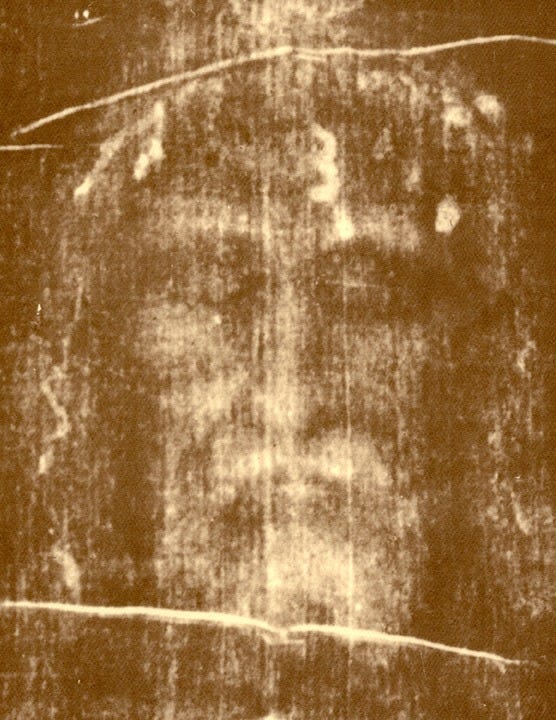
It follows then that being conscious about the expressions you wear gives you control about the lasting message your face will communicate to the world. Ask yourself: what do you want your face to say about you?
When influencers and celebrities decide that one face is best, they are admitting a deep insecurity about themselves and their place in the world. But as we’ve seen, that “ambiguously exotic” look is exotic to everyone precisely because it doesn’t belong anywhere, or to anyone. But adopting alien features is, by definition, alienating. Instead, when you learn to love and accept your face, the one made in the image of God, it will be beautiful no matter how it looks, and you’ll know where you belong.
Great stuff. It’s striking to me how different the ideal female face is depending on the audience - the ones shown in this article are the ideal, in the eyes of other women, rather than the ideal to men. I straight-up don’t think most men like this look, just like how most men prefer simple, short, or minimalist fingernails and don’t care for elaborate knife-fingernails. The girls trying to maximize their appeal to men have their own ideal template that seems to be descended from Belle Delphine and that OK Boomer girl. But really, I don’t think most guys are real hard to please - that girl on the left side of the thumbnail would be considered Plenty Attractive Enough by like, I dunno, 98% of all guys.
This is making me wonder: has anybody really identified the disparity between the face men want to impress other men, vs. the face women actually find most attractive? I’m guessing there’s less of a gap in that case, even if the looksmaxxing cultists are pursuing an obvious exaggerated ideal. Back when I was a young dude in the mid-late 2000s, the ideal to me seemed to be “could pass for Final Fantasy protagonist with big fluffy hair and soft androgynous facial features,” and often felt I looked ugly compared to this abstract subcultural ideal. Now at 38, I’m more pleased with my appearance than ever, despite having less hair, due to embracing my natural suburban cowboy aesthetic.
Wow - this was a fantastic article, well worth the read. For a short time in my life, I worked part time as a makeup artist for Estee Lauder (Origins) cosmetics. Oftentimes we were entirely converting/covering the face with the latest products and colors - ever changing, of course, with each new season and trend. After 20 minutes in a chair, women would leave looking entirely unlike themselves - in the most artificial ways - and spend hundreds of dollars in the process. Origins catered to a crowd wanting a more "natural" look, but other lines went all out on artificial colors and contours -