




It’s spring, which in many parts of the world means that the flowers are in bloom. You may have noticed them on your way to something or other, but did you follow the old advice to stop and smell the roses?
Most people think they don’t have time for it, but the truth is worse: they couldn’t do it if they tried.
The fracturing of your attention into bits of data to be bought and sold means there are predatory incentives to suck up every scrap of your time. You are flooded with more information in a day than your ancestors saw their entire lives, and each new piece takes a sliver of your attention with it.
Like a river over a rock, this modern sensory overload from the noise and stimulation of technology slowly destroys your sense of perception, and with it, your ability to truly experience wonder. Even when surrounded by beauty, you’re too fried to notice or appreciate it. You look at things, but you can’t really see them.
The consequences of this are far reaching and have dire physical, moral, and theological repercussions. But fortunately, there is a time-proven path back to sanity. Today, then, we look at how technology destroys your ability to see beauty, why attention is a form of prayer, and what toads can teach you about turning your soul back towards the good, true, and beautiful…
Our mission here at Letters from the Old World is to share the secrets of Old World elegance, and our approach is two-fold:
1) Every Wednesday, we send a free article exploring the theology and philosophy of why beauty matters, particularly in regards to decor and dress.
2) Every Friday, we send What’s In a Fit, a members-only article exploring practical tips and guidelines for dressing well.
If this resonates with you, then subscribe below to join the aesthetic renaissance.
The Problem

Depending on your sources, the average person spends anywhere between 5 to 7 hours a day on screens of some kind. So it won’t be news to anyone that of course they’re a big part of the problem.
In 2004, Gloria Mark, a professor of informatics and author of Attention Span: A Groundbreaking Way to Restore Balance, Happiness, and Productivity, began shadowing people, stopwatch in hand, and timing how long they spent on different tasks throughout the day. At the time, the average attention span on any screen was roughly two and a half minutes. Soon a trend emerged, as attention spans on screens had shortened year after year, to the point that people averaged about 75 seconds of attention on a screen by 2012. In the last few years, it’s dropped again to around 47 seconds.
A 2019 study from the University of Chicago found that the omnipresence of smartphones in your daily life comes with real drawbacks. Most notably, the study says that the mere presence of your phone near you showed evidence of what the researchers called “brain drain” a lowering of both available working memory capacity and functional fluid intelligence. Put simply, your brain spends additional energy trying to fight off temptation when it knows your phone is around, making it harder for it to do the primary task it’s been assigned.
Studies on individuals with Internet addiction show they have reduced levels of dopamine D2 receptor availability. In other words, their brains were so overstimulated by the internet that they produced fewer dopamine receptors to deal with the flood of easy dopamine. The result? They were less able to feel good or satisfied about anything, and thus kept looking for their next, stronger “hit.”
One paper on technological overstimulation, defined as “being stimulated mentally or physiologically to an excessive degree by an excess of information”, wrote that the overstimulation provided by phones clearly results in a decrease in attention span. The need to constantly check your phone is akin to your brain being unaccustomed to focusing intently for long periods without immediate dopaminergic rewards. The author of the paper equated this to society having developed a phobia of being bored.
Another study from 2022 by King’s College London found that half of all adults said they were not able to stop from checking their phones, even when they were trying to focus. So even if you wanted to pay attention to something, odds are you can’t. Scariest of all, this draining of your attention is robbing you of the essential skill you need to truly encounter the beauty around you.
The Solution: A Toad’s Eye?
Joys that may wait for centuries,
And light at last on Socrates,
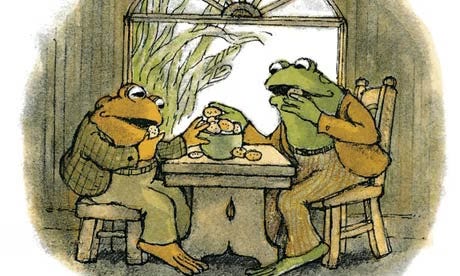
Or on the frog, whose eyes
You may have noticed full of bright surprise—
Or have you not ? Ah, then
You only think of men !-T.E.Brown, Respondet Demiurgos
To better understand why attention is a precondition for beauty and wonder, look no further than your front yard. That’s what George Orwell did in 1946 when, as Spring returned to England, a pensive Orwell wrote an essay titled Some Thoughts On The Common Toad.
A meditation on the renewal that Spring brought to his dingy corner of London, the essay wants you to take a second look at the cityscape around you to see the beauty that blooms there. The pleasures of spring, he writes, are everywhere, and cost nothing to enjoy. The beauty of the season infiltrates even the gloomiest of spaces, if we only take the time to notice:
Even in the most sordid street the coming of spring will register itself by some sign or other, if it is only a brighter blue between the chimney pots or the vivid green of an elder sprouting on a blitzed site.
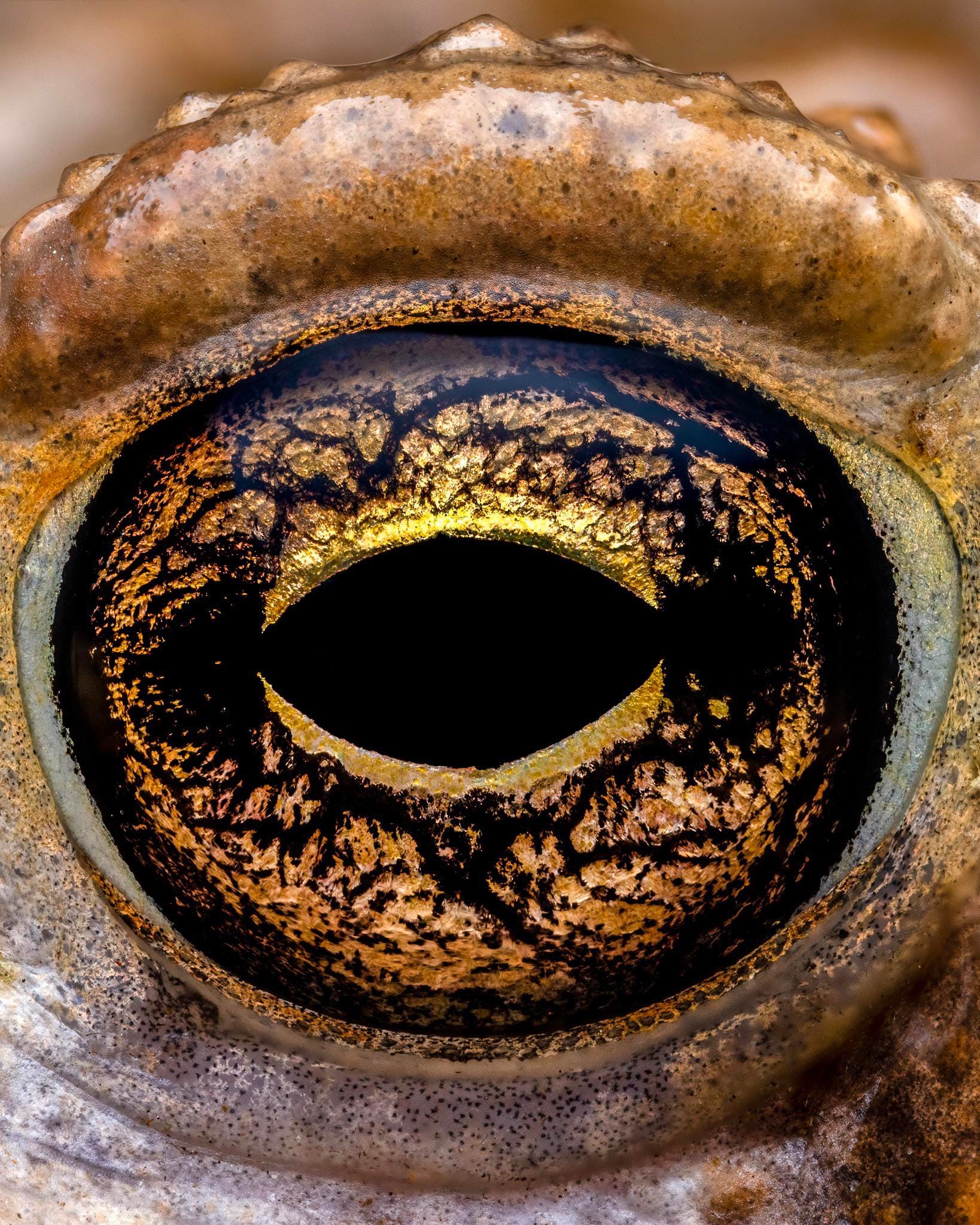
Most memorably, he draws your attention to the common toad, a tiny creature born in the muck and mire, and much ignored by the poets. And yet, in the spring, as it emerges from its winter fast, shrunken and wiry, the toad’s eyes bulge out. This abnormal largeness allows you not just to look at them, but to see their eyes. When you do, you’ll notice that:
a toad has about the most beautiful eye of any living creature […] like gold, or more exactly it is like the golden-coloured semi-precious stone which one sometimes sees in signet rings.
Think about how much attention this one statement requires. By being conscious of the world around him, Orwell noticed that these tiny brown bodies changed with the seasons, which in turn meant their eyes appeared larger. And on closer inspection of this otherwise neglected creature, Orwell found the most beautiful eyes he’d ever seen.
It’s a microcosm of what awaits anyone willing to pay attention; the treasures hidden everywhere in plain sight, for those willing to observe the rhythms set by nature.
A similar point is made by American scientist Samuel Scudder in his essay Take this Fish and Look at it. The piece recounts his introduction to Harvard Professor Louis Agassiz upon enrolling as a student of natural history. On hearing Scudder’s enthusiasm to get started, the professor obliges and pulls out a fish specimen, asking him to study it and share his findings when he returns from his other duties.
Scudder dutifully examines the fish for ten minutes before thinking he’d seen all he needed to see, but, informed his professor would be gone several hours, and with no other task before him, he returns to his specimen. Hours of looking at it from all angles, and he still finds it ghastly and hideous.
On Agassiz’ return, Scudder dutifully shares his findings, telling him of “the fringed gill arches and movable operculum; the pores of the head, fleshy lips and lidless eyes; the lateral line, the spinous fins, and forked tail; the compressed and arched body.” Thinking his examination exhaustive, Scudder is mortified to hear Agassiz say “You have not looked very carefully, why you haven’t even seen one of the most conspicuous feature of the animal which is plainly before your eyes as the fish itself; look again, look again!”
By the end of the afternoon, he was convinced he’d seen every inch of that fish but couldn’t figure out what feature his professor had meant, and went home to think more on his subject. Fearing that he would forget the things he would have to recount the next day, he spent the evening walking by a river in reflection on what he’d learned. The next morning, thinking he’d solved the riddle, he shared his thoughts only to be tasked another day with the fish:
“That is good, that is good!” [Agassiz] repeated; “but that is not all; go on”; and so for three long days he placed that fish before my eyes, forbidding me to look at anything else, or to use any artificial aid. “Look, look, look,” was his repeated injunction.
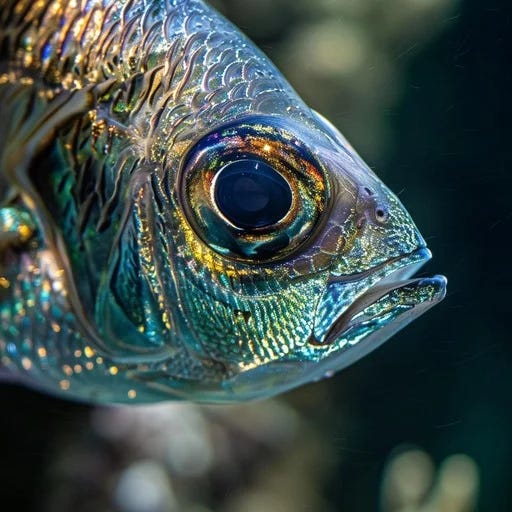
At the end of the ordeal, Scudder writes that this was the single best lesson he’d received “a legacy the Professor had left to me […] of inestimable value, which we could not buy, with which we cannot part.”
That legacy is the gift of real, sustained attention. It was only in exhaustive contemplation that Scudder could really see the part of his subject that were of value. By overcoming that initial belief that he had seen what there was to see, he was able to truly find what was so remarkable about the thing in front of him. The idea is simply this; everything can be an object of fascination, an object of wonder, if only we are able to spend the time and attention required.
Nice as these stories are, don’t make the mistake of thinking the ability to pay attention is purely a question of aesthetics. Orwell believed that the ability to pay attention to things like trees, fish, butterflies or toads, would lead to a more peaceful and decent future.
This is because the alternative, as he saw it, was focusing on the “steel and concrete” of the world which “merely makes it a little surer that human beings will have no outlet for their surplus energy except in hatred and leader worship.” But politics are not all that’s at stake, and there are great philosophical reasons this should worry you.
Encountering the “Unself”
Philosopher Iris Murdoch believed that what keeps you from acting ethically is not a desire to do evil, but a lack of attentiveness. We look at – but do not see – others, nature or the world, and that lack of perceiving those things as they are, rather than as mere elements within our own lives, is how we allow ourselves to act selfishly.
In her 1970 book The Sovereignty of Good, she describes the concept of “unselfing” a process of forgetting yourself as you pay attention to the beauty in the world around you. From her book:
Beauty is the convenient and traditional name of something which art and nature share, and which gives a fairly clear sense to the idea of quality of experience and change of consciousness. I am looking out of my window in an anxious and resentful state of mind, oblivious of my surroundings, brooding perhaps on some damage done to my prestige.
Then suddenly I observe a hovering kestrel. In a moment everything is altered. The brooding self with its hurt vanity has disappeared. There is nothing now but kestrel. And when I return to thinking of the other matter it seems less important. And of course this is something which we may also do deliberately: give attention to nature in order to clear our minds of selfish care.
In Murdoch’s philosophy, unselfing is seeing beauty as it pulls you out of yourself. You then look past what she called the “fat, relentless ego” and towards reality. It thus engages you in an authentic way that both calms and comforts.

French Catholic philosopher Simone Weil came to a similar conclusion regarding attention. For Weil, attention meant an openness to the world as it is, without the distraction of the self. In her posthumous book Gravity and Grace, she writes:
Attention, taken to its highest degree, is the same thing as prayer. It presupposes faith and love.
Absolutely unmixed attention is prayer.
If we turn our mind toward the good, it is impossible that little by little the whole soul will not be attracted thereto in spite of itself.
Understood this way, the perception of beauty isn’t a passive act, but an active discipline that must be practiced before it is done well. For both Murdoch and Weil, attention, and especially attention to beauty, holds great insight for those willing to engage with it.
This is why the weakening of that attention is a problem. It’s not just that it limits your appreciation of beauty, but that it limits the transformative effects beauty can have on you when contemplated with the whole of your being.
Though Weil does touch on the spiritual nature of this, there’s much more to be said about how fragmented attention affects your relationship with the divine.
Distraction Against the Divine

Beauty captivates the flesh in order to obtain permission to pass right to the soul.
–Simone Weil, Awaiting God
This is an especially pressing question for Christians. A traditional understanding of beauty in the church is that it has ontological significance. St. Thomas Aquinas lists beauty as one of the transcendentals alongside others like truth and goodness. And where you find one, you find the others. If truth and goodness accompany beauty, then to the extent that your perception of beauty is impaired, so too will your connection to truth and goodness be limited.
According to Aquinas, in order to understand beauty, you need to perceive it with your senses, which then transmits this to the intellect for interpretation. This process allows you to appreciate beauty both in itself aesthetically and also as a connection to its greater, divine source, God, from whom all beauty comes. So whether you’re looking at toads or fish, Aquinas writes: “The beauty of the creature is nothing else than the likeness of the divine beauty participated in things.”
So, if the perception of beauty allows you to get closer to God, then the consequences of a dulling of that perception are both obvious, and worrying. A narrowing of your appreciation of beauty is a limitation placed on your ability to perceive the divine. As Simone Weil said, “The beauty of this world is Christ’s tender smile coming to us through matter.” If your senses are too fragmented, if you aren’t able to focus on beauty that deserves it, you will miss this tender missive God meant for all of us.
Fortunately, there are ways to make visible the invisible for those with the conviction to do so.
What’s the Fix?

If you like the ideas you’ve encountered today but aren’t sure how to start seeing rather than looking, just do what Orwell and Scudder did; pick something mundane and examine it until you’ve found one thing that is truly wonderful about it. Go to a local park, sit down with an everyday object, or lock yourself in a bare room if you have to, just focus your attention on one simple thing until you find something beautiful about whatever you’re looking at. You’ll find it’s harder than you think, but also far more rewarding.
And if you aren’t sure you can give up your screens, the 2019 study from the University of Chicago mentioned previously has some encouraging news. It found that the harder it is to give up, the better the results: “those who depend most on their devices suffer the most from their salience, and benefit the most from their absence.” In layman’s terms, the more addicted you are to your devices, the greater the benefit from chucking them in another room or leaving them at home. The study suggests that “defined and protected” periods of separation, i.e. a set time where your tech gets locked up, allows not only for fewer distractions, but also frees up mental space otherwise preoccupied with your screens.
An easy way to start this habit, and perhaps the best way, is when you wake up in the morning, do nothing. Don’t look at your phone, no podcasts, no music, no running through a checklist of to-do’s. The benefits of silent moments are pronounced, and having that mental space free can make the difference between a day of obligations and one with that notices the small bits of beauty sprinkled throughout your day.
As Weil points out, attention and prayer are kin to one another. Taking time to pray or meditate is an excellent and time-honored way of entering contemplation. It’s spending time directing your intention towards something greater than yourself, and when done right, can also be an act of “unselfing.” It’s so simple as to almost not be worth mentioning, but it’s so beneficial that it can’t be omitted, either.
A Final Thought on Orwell’s Toad
Orwell ends his essay conveying the sense of worry that hung thick over his nation at the time of writing “The atom bombs are piling up in the factories, the police are prowling through the cities, the lies are streaming from the loudspeakers,” he writes, “but the earth is still going round the sun.” Despite the reasons for worry, his optimism, his belief in the wonder found in every day, remains.
Likewise, in the midst of an all out assault on your senses, under the shadow of the massive colossus of screens and stimulation made to harvest your eyeballs, you can still turn to the beauty of the everyday. Take back control of your attention, and you’ll see your relationship with beauty transformed. The world is filled with small wonders and beauty reserved for those willing (and able) to pay attention. Living in the blue light of your phone is sapping your ability to see the light of the divine that surrounds you.
The beauty is there, waiting, in the eye of a toad. The question is: will you – can you – take the time to look?
It amazes and saddens me how many Christians are so wrapped up in bemoaning the despair in the world that they forget, or are willfully ignorant of, the fact that we are the Earth's stewards, and that it is worth defending physically, mentally and spiritually.
Attention is a form of prayer! Absolutely this.