

You Should Spend More on Clothes
But not for the reasons you think


The world is set up to ensure you continue to consume beyond your needs. In many sectors, the very economic model depends on continuous, unsustainable levels of product churn. This poses a problem for Christians in particular, who are warned against the love of wealth and material things.
It seems reasonable then that to spend as little as possible is a good way to avoid being materialistic. But what many miss is that this assumption often leads to a cycle of wastefulness and disappointment with your clothes, rather than lasting contentment.
Paradoxically, when you’re willing to spend a bit more on your wardrobe, you not only save money in the long run, but also exit a pernicious system designed to keep you chasing your next purchase. As uncomfortable as it is, the most practical way out of fast fashion is to spend more money on your clothes, though not in the way the industry would want you to.
Today, we look at how the fashion industry is designed for you to fail, what that means for you, and what you can do to resist it.
Our mission here at Letters from the Old World is to share the secrets of Old World elegance, and our approach is two-fold:
1) Every Wednesday, we send a free article exploring the theology and philosophy of why beauty matters, particularly in regards to decor and dress.
2) Every Friday, we send What’s In a Fit, a members-only article exploring practical tips and guidelines for dressing well.
If this resonates with you, then subscribe below to join the aesthetic renaissance.
How the System Sets You Up for Failure

Christ warns in Luke 12 that you should “[b]e on your guard against all kinds of greed; life does not consist in an abundance of possessions.” Yet an abundance of possessions is exactly what the world wants for you. Fast fashion by design needs you discontented and buying more for their business model to work.
In clothing, you can see this through two methods of obsolescence.
The first, planned obsolescence, is the policy of designing products with artificially shortened lifespans in order to encourage new purchases, and is undeniably present in today’s clothing. You can see this in the use of single stitch seams instead of double or chain-stitching, as well as in the choice of low-quality fabrics that pill or lose their shape.
The second way you’re made to keep buying is perceived obsolescence, which encourages new purchases through changes in style and trends, rendering older garments dated and unfashionable. For an easy example of this, look no further than the recent generational shift away from the timeless classic cut of trousers to the popular trend of skinny jeans. This temporary fashion then moved on to today’s baggy, wide-legged overcorrections, rendering most millennial hipster closets instantly ‘uncool’ in the process.
While these kinds of soon-dead-by-design attitudes are found everywhere, nowhere are they more blatant than in the realm of clothing. As one group of fashion researchers put it:
“Fashion, more than any other industry in the world, embraces obsolescence as a primary goal; fast fashion simply raises the stakes.”
As underhanded as this is, it’s still effective. One study on buying behaviors and planned obsolescence in the fashion industry found that “the majority of respondents buy new fashion products every month or every six months.”
For the conscious Christian, the incentives to conspicuous consumption run contrary to what we are called to do. As Paul writes in 1 Timothy “godliness with contentment is great gain. For we brought nothing into the world, and we can take nothing out of it. But if we have food and clothing, we will be content with that.” In other words, being satisfied with what we have is the goal.
But when you consider that, on average, a garment is worn less than ten times before it’s discarded, it’s clear that the system is not designed for you to be content with the clothing you own. And with fast fashion producing 50% more clothing now than it did in 2000, that trend has only been getting worse.
This is how the fast fashion machine operates. Buying less within it can’t free you from it.
So how can you escape?
Why Buying Better Means Buying Less
When shopping, the temptation to scrimp on more practical items is ever present. Please, please resist. […] By choosing to spend less on an item you wear all the time, you will ultimately end up spending more as your cheap item requires repairs or replacement. Instead, make your rallying cry ‘Buying well means buying once!’
–Tim Gunn, A Guide to Quality, Taste & Style
It’s evident that you should stay away from a system that is built to encourage overconsumption. But what are you to do when, their very design, most modern clothing is meant to deteriorate and keep you buying?
The fact is, escaping the endless cycle that is most modern retail clothing requires a higher investment than what you may be used to. At least, initially. That’s because buying durable, quality clothing that lasts is how you buy your freedom from planned obsolescence. By investing wisely when building (or rebuilding) your wardrobe, you not only get higher quality attire, but you also avoid buying replacements in six months when your cheap acrylic sweater has pilled beyond all recognition.
But don’t mistake an argument for quality as a license to “just buy expensive clothes.”
In fact, doing so is more likely to set you back than anything…
Why Value Matters More Than Price

You should be spending more on your clothes, yes, but that doesn’t mean you should necessarily be buying expensive clothes. The biggest mistake people make when trying to buy better is thinking “expensive” automatically means quality.
The dirty little secret of expensive luxury brands is that, even as their prices continue to skyrocket, their products seem to be getting worse. Some fashion experts are saying what most of us suspected, that “high prices no longer guarantee a certain level of craftsmanship.” As seen in the recent controversy over Chinese manufacturers “exposing” luxury brands’ relatively cheap sourcing, high prices are not always indicative of quality.
So what can you do? The solution is knowledge. Just as you can’t improve your diet without learning what makes food healthy, you can’t improve your closet without learning what makes quality clothing. This doesn’t require becoming an expert, but it does mean learning a few fundamentals, such as the difference between tightly woven and flimsy shirt fabrics, how a well-made dress shoe is attached to its sole, or why some garments hold their shape after years of wear, while others don’t survive a season.
Learning how to spot quality allows you to navigate the marketplace with tactical precision: you get in, take what you need, and leave while avoiding the pitfalls created to sell you cheap stuff.
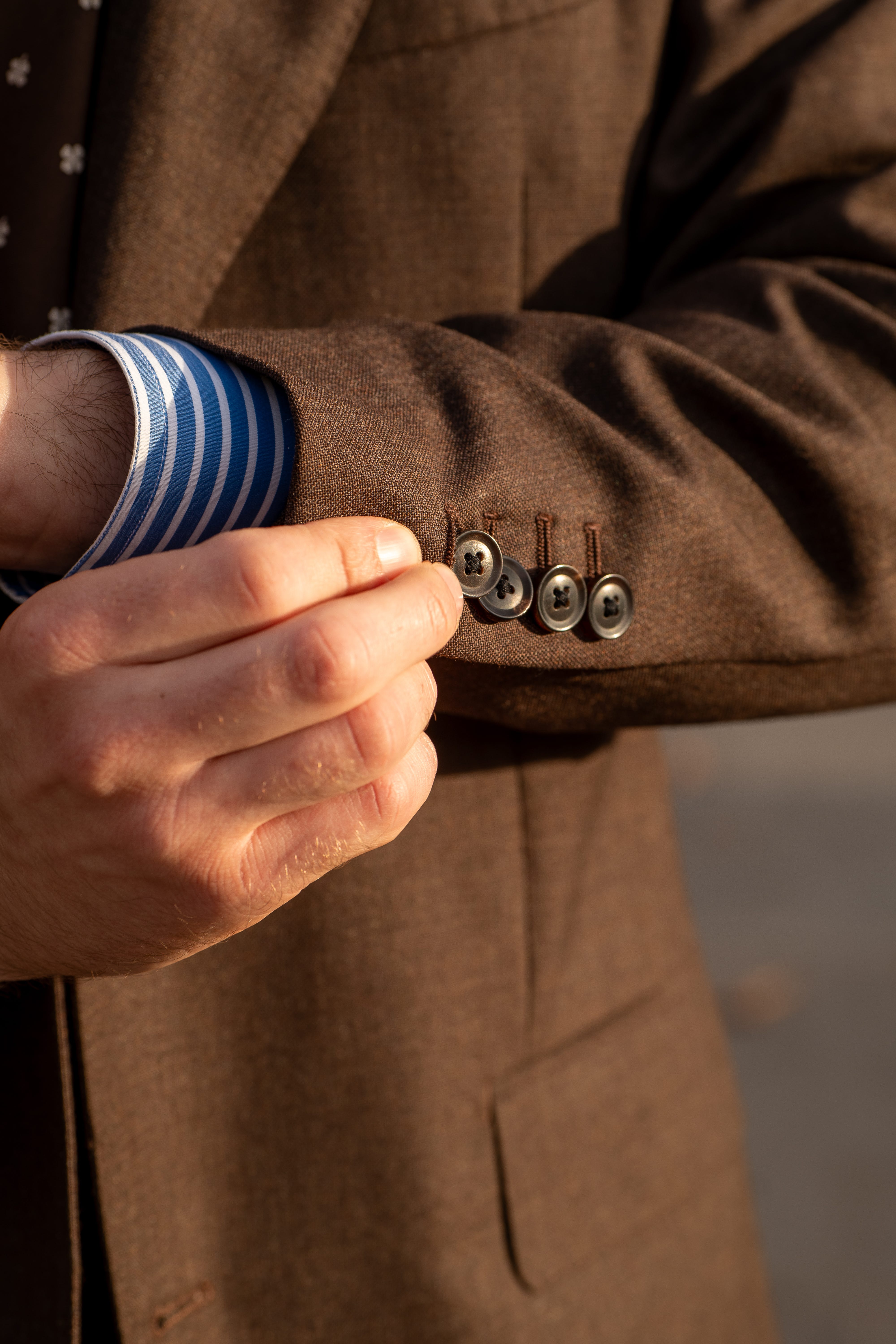
But even if you’re armed with an encyclopedia’s worth of sartorial savvy, getting off the fast-fashion treadmill is going to cost you. Quality items are made from quality materials that are usually more expensive. And if you don’t want sweatshop craftsmanship (which you shouldn’t for a number of reasons), then prepare to pay someone a decent wage.
Though buying made-to-measure, bespoke, or quality goods typically entails a higher price tag, it’s probably not as pricey as you think. You can get a great quality made-to-measure shirt for $150 for example, while an equivalent, off-the-rack shirt from Drakes can easily cost you closer to $300. Popular name brand oxfords can run close to $1,000, but if you know what you’re looking for, you can get the same quality elsewhere for $300.
Not to mention the diamonds in the rough you can find at thrift stores, second hand shops, and online resellers. And besides, as some like Ted Gioia have argued, secondhand is now better than new anyway:
New stuff is so poorly made that I’m now increasingly buying old items for my own use, and not only as gifts. The quality coming from the large online retailers is abysmal, and my safest bet is often secondhand.
In short, investing in a wardrobe that lasts means learning to spot the true markers of quality clothing and being willing to pay for it. Incidentally, if this is something that interests you, you’ll want to join us as we get into the practical side of things each week in our What’s In a Fit Friday articles for paid subscribers.
This may seem overwhelming at first, but don’t worry: you won’t need to buy dozens of new outfits to make the change to quality items. In fact, just the opposite is true.
Less Is More

I love America, and I love American women. But there is one thing that deeply shocks me – American closets. I cannot believe one can dress well when you have so much.
–Andrée Putman, French interior and product designer.
Ironically, spending more on individual items enables you to own fewer things overall. For example, the money you’d spend on ten button-downs from H&M that turn ratty and thin after a year could instead pick up two quality dress shirts that will outlive them all.
This is a great fringe benefit, as part of stewarding the goods that God has given you is knowing when you have enough. When your wardrobe is limited to quality pieces, you need to buy far fewer items overall. This is because as you become more intentional in your choices, you’ll recognize how much you don’t need in your collection.
Just as a good editor knows that long, bloviating paragraphs are inferior to a few perfectly trimmed sentences, so does a keen stylist recognize that a closet stuffed with mediocrity can’t beat one with a few high-quality pieces.
In Conclusion

Let your manners be without covetousness, contented with such things as you have.
–Hebrews 13:5
Unfortunate as it is, being materialistic is the default for our culture, which means your environment has evolved to keep you buying. But, where fast fashion thrives on discontent and consumption, Christianity instead promotes contentment and restraint. If the latter appeals more to you than the former, know that you don’t have to take part in planned obsolescence. You can instead find things that last.
Put in the effort to learn the markers of quality, and you can invest in your wardrobe wisely. While it feels counterintuitive, one of the best ways to do so is by paying more now so you don’t need to pay (almost) ever again.
The call here is not to luxury or excess, but to recognize the importance of value. Whether thrifting or buying off the rack, the point is to find quality items that you can keep for a lifetime so you can spend less of that lifetime shopping.
I love this. Nearly my entire wardrobe is secondhand, and I've found incredible linen, cotton, and wool items, some from major designers, for just a few dollars. My favorite purchases are an authentic leather cross-body bag and an Italian-made pair of Oxfords, for which I paid a total of $16. Amazon could NEVER.
I agree wholeheartedly! And I shared your article to my Facebook account.