

Are You Dressing Your Age?
Fashion and the fountain of youth...



The line between youth and adulthood is blurring. Though puberty and cognitive maturation are happening earlier and earlier, the few markers of adulthood left, like marriage, starting a family or buying a home, occur much later (if at all). Adolescence now extends well into what was formerly considered adulthood.
This dissolution of milestones has unfortunately extended to manners of dress. It is not uncommon today to see some older men wearing the unkempt styles or trendy fashions of youth culture. Though some might shrug this off as personal choice or a lack of maturity, the symbolism behind this rejection is much darker. The adult who refuses to dress like one is caught in an unholy mix of propaganda, the worship of youth, and the existential terror of death.
Today, we look at the origins of the cult of youth, what it reveals about modern society, and what you can do to resist it. The phenomenon of men dressing like boys is indeed a dire one — but luckily, thinkers like Cicero and St. Paul can help you navigate the chaos and live in light of reality…
Our mission here at Letters from the Old World is to share the secrets of Old World elegance, and our approach is two-fold:
1) Every Wednesday, we send a free article exploring the theology and philosophy of why beauty matters, particularly in regards to decor and dress.
2) Every Friday, we send What’s In a Fit, a members-only article exploring practical tips and guidelines for dressing well.
If this resonates with you, then subscribe below to join the aesthetic renaissance.
The Obsession with Youth

The advertising industry…flatters and glorifies youth in the hope of elevating young people to the status of full-fledged consumers in their own right.
–Christopher Lasch, The Culture of Narcissism
Humans have always valued youth to a certain extent. Youth is energy, vitality, physical beauty, legacy, all things society needs to sustain itself. But the superficial obsession with youth and beauty has grown exponentially since the late 19th century, when marketers sold all manner of beauty potions, creams and tonics to distinguished readers looking to maintain a youthful glow. Even in the 1940s, George Orwell wrote of this obsession as a nascent phenomenon in Britain:
The impulse to cling to youth at all costs, to attempt to preserve your sexual attraction, to see even in middle age a future for yourself and not merely for your children, is a thing of recent growth and has only precariously established itself.
By the 60s, youth culture was a veritable phenomenon. Following the baby boom, advertisers saw young people as an increasingly large demographic with disposable income to whom they could sell the world. As the young people became increasingly prominent and ads became more youth-centric, the locus of culture followed. A famous slogan of the time was “Don’t trust anyone over 30”. Rather than assume the mantle of adulthood with all its concomitant duties, people turned on, tuned in and dropped out.
But as time marched on and the hippies grew up and got jobs, the cultural focus on youth remained, which did not bode well for society. By the early 2000s, Roger Scruton observed, youth culture was increasingly promulgating beliefs that were, ironically, damaging to both youth and to culture:
Youth culture is an attempt to make the best of it - to make oneself at home in a world that is not, in any real sense, a home, since it has ceased to dedicate itself, as a home must dedicate itself, to the task of reproduction. Home, after all, is the place where parents are. The world displayed in the “culture of youth” is a world from which the parents have absconded - as these days they generally do. This culture aims to present youth as the goal and fulfilment of human life, rather than a transitional phase which must be cast off as an impediment once mature commitment calls.
–Roger Scruton, An Intelligent Person’s Guide to Modern Culture [Emphasis added]
Is it any wonder that people would simulate youth’s style and appearance as much as possible when culture implies that old age cannot be fulfilling? The logic underlying this is that maturity means your best years are behind you. You overshot the goal and are no longer relevant, desired, or considered.
When culture equates youth with value, aging can only be a slow transition to death.
All that’s left for you then is…
The Denial of Death

The idea of death, the fear of it, haunts the human animal like nothing else; it is a mainspring of human activity—activity designed largely to avoid the fatality of death, to overcome it by denying in some way that it is the final destiny for man.
–Ernst Becker, The Denial of Death
Ernst Becker in his book The Denial of Death posits that much of human activity is designed around avoiding the reality that you will one day die. For Becker, humans avoid reckoning with death by pursuing something heroic, which he calls an “immortality project.”
These projects reconcile humans with their mortality by creating meaning via things which will outlast them, like having children, writing a novel or following a religion. But in a culture that rejects children, doesn’t read and isn’t religious, there are fewer viable strategies for coping with mortality.

Becker writes that, in the absence of meaning:
Modern man is drinking and drugging himself out of awareness, or he spends his time shopping, which is the same thing. As awareness calls for types of heroic dedication that his culture no longer provides for him, society contrives to help him forget.
Similarly, Christopher Lasch in The Culture of Narcissism writes that, though the fear of death is not new, it has taken on a new dimension since society is increasingly incapable of providing meaningful escape:
Obviously men have always feared death and longed to live forever. Yet the fear of death takes on new intensity in a society that has deprived itself of religion and shows little interest in posterity.
In the breakdown of sources of meaning, all that is left to overcome the terror of death is superficial hedonism. It is no coincidence that this maps onto youth culture, with its sense of immediacy and ignorance of death. Faced with the prospect of a death without meaning, to pretend to youth by borrowing its customs and appearance is an understandable reaction, especially when the alternative is staring into the abyss.
Unfortunately, even if you wanted to keep pretending, it still won’t do you any good, because…
Dressing “Young” Doesn’t Work

One fellow, in a bright yellow summer suit of ultra-fashionable cut, with a red necktie, and a rakishly tilted panama, surpassed all the others in his crowing good humour. But as soon as Aschenbach looked at him a bit more carefully, he discovered with a kind of horror that the youth was a cheat.
He was old, that was unquestionable. There were wrinkles around his eyes and mouth. The faint crimson of the cheeks was paint, the hair under his brilliantly decorated straw hat was a wig; his neck was hollow and stringy, his turned-up moustache and the imperial on his chin were dyed; the full set of yellow teeth which he displayed when he laughed, a cheap artificial plate; and his hands, with signet rings on both index fingers, were those of an old man.
–Thomas Mann, Death in Venice
What is unsettling about the old dressing as the young is the contradiction in which the body asserts one thing that the costume tries to contradict. Such mixed messages are difficult to parse, and thus unpleasant on both symbolic and aesthetic levels.
Fashion, after all, is a language. And like a language, different strata of society have different vernacular. When someone from one strata attempts to co-opt the style of speech of another, it rarely goes well. Younger generations ridicule older ones for attempting to use and understand their slang and be cool, just as mature people can tell when younger people use big words to seem smart.
In short, people can spot a fake from a mile away. Dressing like the youth doesn’t make you look young. Instead, it creates dissonance for those around you. When they see your neon colored sweatshirt or hoodie paired with a face that clearly aged out of high school, it feels uncanny. As the Thomas Mann quote at the beginning of this section shows, wearing the ultra-trendy cuts of the day may mask your age momentarily, but the contradiction comes through eventually.
If you’re an adult, dressing like a teen will not de-age you in the way you’d hope. If anything, it draws attention to your age, because all the other fresh faces wearing the latest trends will stand in sharp contrast with your more distinguished mien.
If you really want to look good, there are more fitting ways to do so.
What to Do Instead
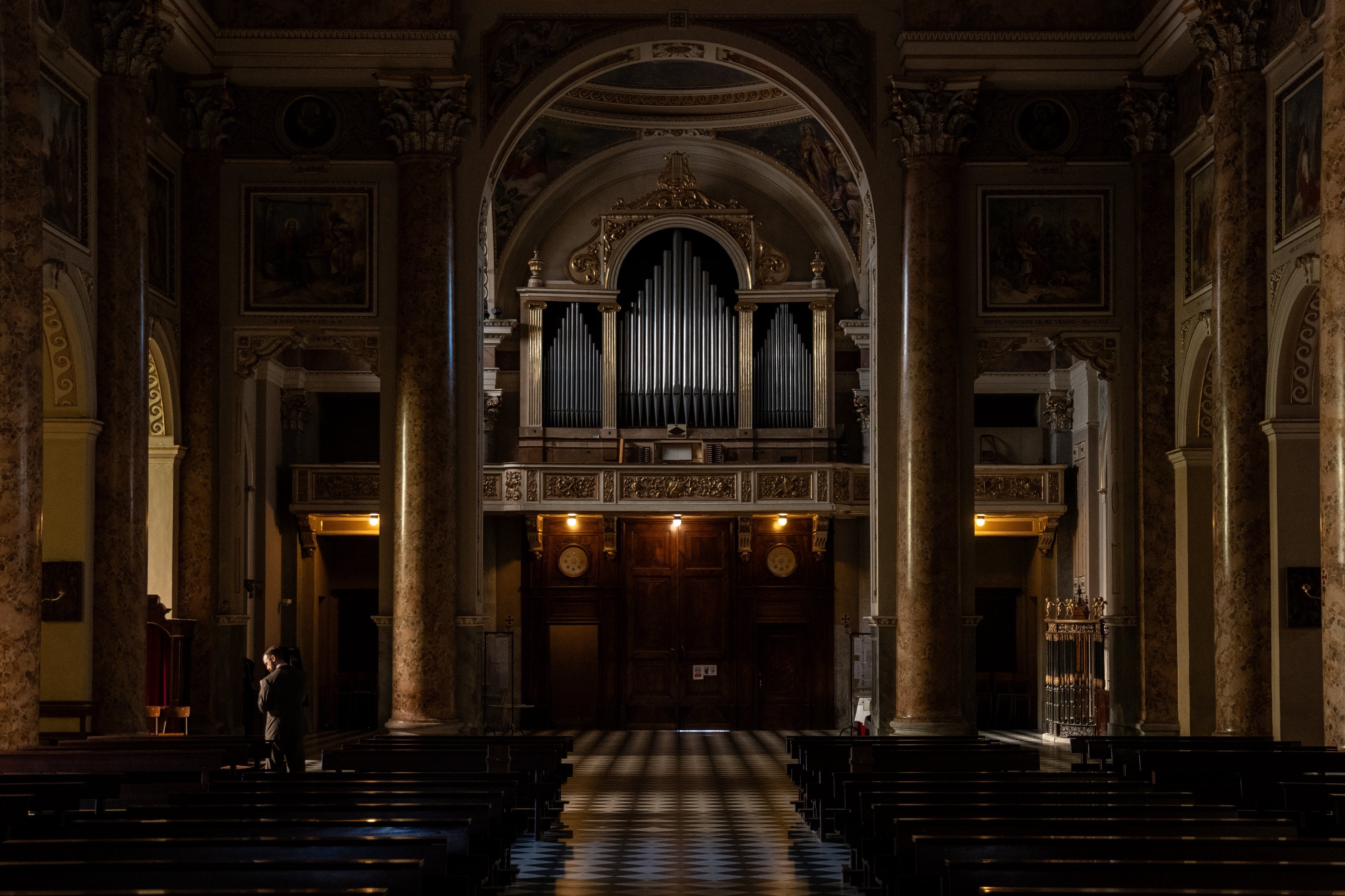
To everything there is a season, a time for every purpose under heaven.
–Ecclesiastes 3:1
The co-opting of youth customs and dress by adults offers two insufficient methods of escapism. The first is a way to ignore your fading social relevancy in a culture obsessed with youth. The second allows you to engage in a type of Peter Pan syndrome, where you can pretend you will not grow old and die. The fetishization of youth culture by adults, at its heart, is a rejection of truth and reality.
The problem goes beyond just aesthetics, then, as the desire to escape reality is ultimately a product of the crisis of meaning. The solution to it must therefore be grounded in a morality that addresses that crisis.
The most productive counter is to embrace the reality of hierarchy, duty, and mortality that escapism eschews. By doing so, you reassert truth in a childish culture. When you reject the trendy clothes of youth in favor of the dignified dress befitting an adult, you not only respect your own worth, but you also act as a guide for those coming of age.
As Cicero wrote in De Officiis: “the inexperience of youth requires the practical wisdom of age to strengthen and direct it.” In a time where the adults in the room certainly aren’t acting like it, do not contribute to the blurring of social roles. Let the young people find their way through the mire of youth trends if they want, but do not participate yourself once you have grown past them. Do not take part in an increasingly absurd marketing experiment where the semblance of youth is sought to the detriment of dignity.
Instead, dress to fit the role appropriate to your age, and do it well. If you don’t know how, invest the time to learn. You don’t have to master everything all at once, but even a small step away from fashion and towards fittingness is a step in the right direction.
Most of all, accept that there is no going back, no matter how badly the world wants to tell you there is. To everything there is a season. To pretend otherwise is to refuse what you are called to do. As St. Paul wrote:
When I was a child, I talked like a child, I thought like a child, I reasoned like a child. When I became a man, I put the ways of childhood behind me.
–1 Corinthians 13:11
The English have a marvelous phrase to describe this - “mutton dressed as lamb.”
Reminds me of a comment when Reagan was debating Mondale (I think it was that debate). Mondale tried to hit Reagan with an accusatory question, paraphrasing, "don't you think you're too old to be president." Reagan's rejoinder, said with characteristic good humor was, paraphrasing, "I'm fine and I won't hold your youth an inexperience against you."
Settled the issue and done the way it's supposed to be done, regardless of one's politics.
Regarding dress style as we age, it's all in the execution. The details. Can you pull off what you wear? Is it natural or are you trying too hard? As we get older the familiar list of what works shrinks but a new list is written which includes a few points of the old one and a number of cool new things too.
We (should) adapt but not lose the essence of our signature. Life is organic. Great post!