

How to Cultivate Your Public Persona
Living with integrity in life's different domains...


Last week, we shared an article about the nature of feminine elegance. In it, we explored the idea that elegance is “not merely a question of appearance, but the outward expression of an inner order.”
This inner order is principally established by living in harmony with the three main parts of your being: body, mind, and soul. But, of course, harmony isn’t limited to the interior life. No less important to cultivating elegance is living with consistency across the different aspects of your “exterior” life.
Today, we explore the three main elements of your public persona, which aspects of American culture make it difficult to live a harmonious public life, and the role of clothing in helping you cultivate both interior and exterior elegance…
Our mission here at Letters from the Old World is to share the secrets of Old World elegance, and our approach is two-fold:
1) Every Wednesday, we send a free article exploring the theology and philosophy of why beauty matters, particularly in regards to decor and dress.
2) Every Friday, we send What’s In a Fit, a members-only article exploring practical tips and guidelines for dressing well.
If this resonates with you, then subscribe below to join the aesthetic renaissance.
Specific vs. Diffuse Cultures

In 1993, Dutch organizational theorist Fons Trompenaars published his landmark book Riding the Waves of Culture, in which he introduced a model of seven cultural dimensions for understanding how societies differ. Building on earlier work in cross-cultural studies, Trompenaars argued that nations and peoples can be understood according to where they fall along these seven dimensions, offering a practical framework for interpreting differences in values, relationships, and social behavior.
One of these dimensions is Specific vs. Diffuse, which describes the extent to which people either compartmentalize or integrate the different spheres of their lives.
In a “specific” culture like the United States, a doctor is expected to be a doctor at the hospital, but simply another person at the grocery store, the gym, or a neighborhood barbecue. In a more “diffuse” culture such as Germany, the status, authority, and expectations associated with being a doctor tend to extend beyond the workplace. These shape not only how others relate to the doctor, but also how the doctor comports himself across a much wider range of social settings.
All of this results in the fact that, generally speaking, an American is more comfortable with being a different person in different scenarios. What’s more, he often takes pride in it. Many a university professor, crossing paths with a student at a barbecue, would secretly be flattered if the student went back to report how cool and laid back — practically a different person! — the professor is outside of the classroom.
That is not to say there is no virtue in cultures that are more “specific” than “diffuse”. But at the very least, having an awareness of your default position within this cultural dimension can provide you the opportunity to ask: what if you are too specific in how you present yourself? And what good might come of being more diffuse?
A Leader On & Off the Clock
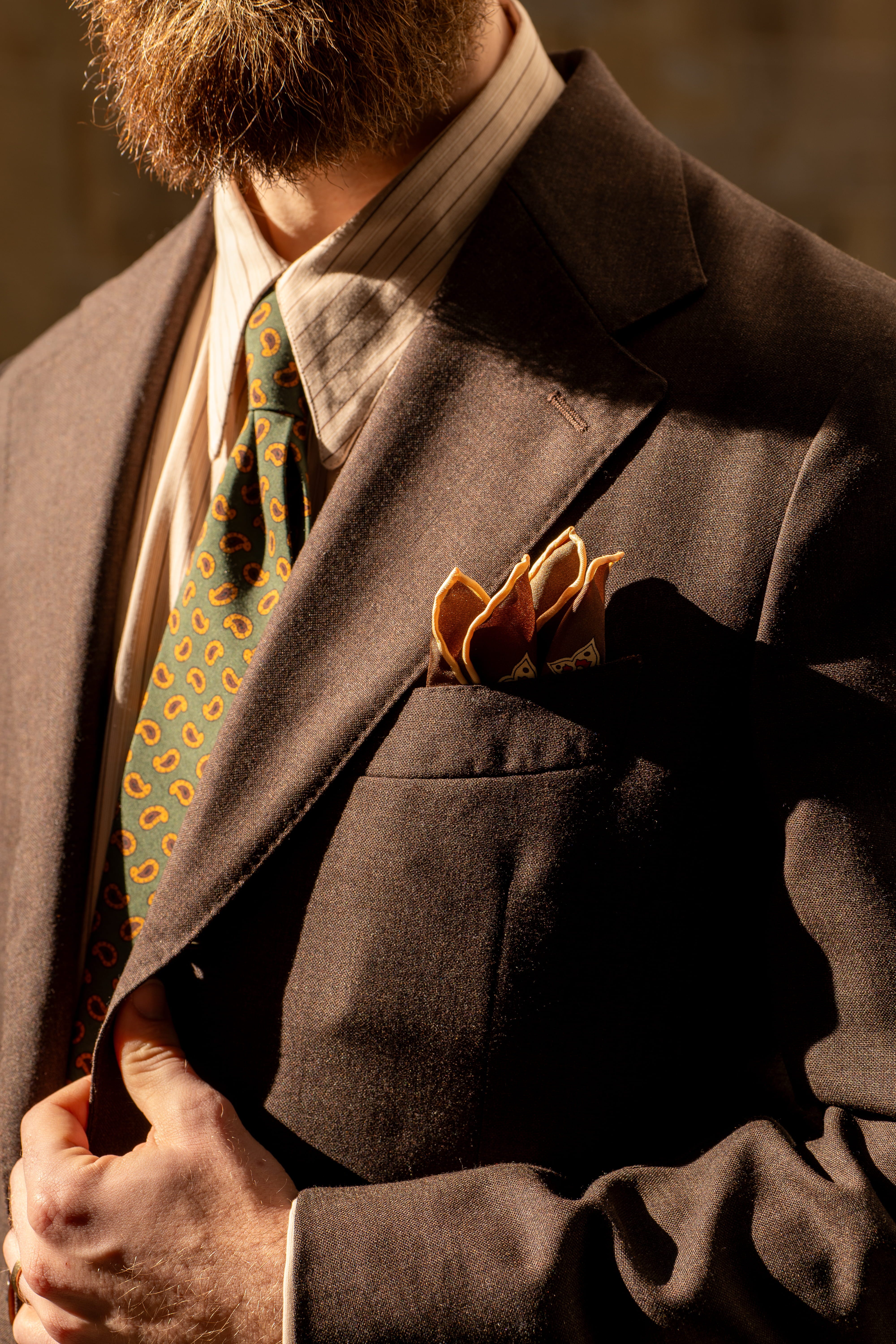
For many people, the act of pushing themselves to be more consistent in their public persona often facilitates a major leap forward in personal growth. It is easy to be the leader at work or the pious man at church — but what does it look like to be those things at the gym, the barbeque, or the football stadium?
Living with consistency across all domains of your life can best be achieved by focusing on three things: harmony in your speech, action, and appearance. Let us look first at speech and action, and then return to the topic of appearance.
George Orwell wrote that “if thought corrupts language, language can also corrupt thought”. Previously, we wrote about the importance of beautiful speech in our article about why language is one of the most profound ways of shaping yourself. When you seek to be consistent with how you speak in diverse social circles, you directly reinforce the integrity of your public persona, and thus live in greater harmony with yourself.
But while consistency of speech is relatively straightforward, consistency of action is much harder to master. For starters, it appears to be an impossible task: how are you supposed to act the same when your status and authority are directly conditioned by your environment? A surgeon might call the shots in the operating room, but he’s a nobody in a professional kitchen.
Upon reflection, what soon becomes clear is that harmony of action has much more to do with internal disposition and locus of control than it does about visible hierarchy and chain of command. A high-agency leader should be able to apply his initiative to whatever situation in which he finds himself, not just when he’s making decisions in the boardroom. “If you love those who love you, what credit is that to you?”, asks Christ. He could just as well have asked, “if you lead when leadership is easy, or if you act when action is easy, what credit is that to you”?
All this said, it is easy to comprehend the importance of being “diffuse” in your actions and words. But your appearance? Why such an emphasis on this?
A Conduit to Character
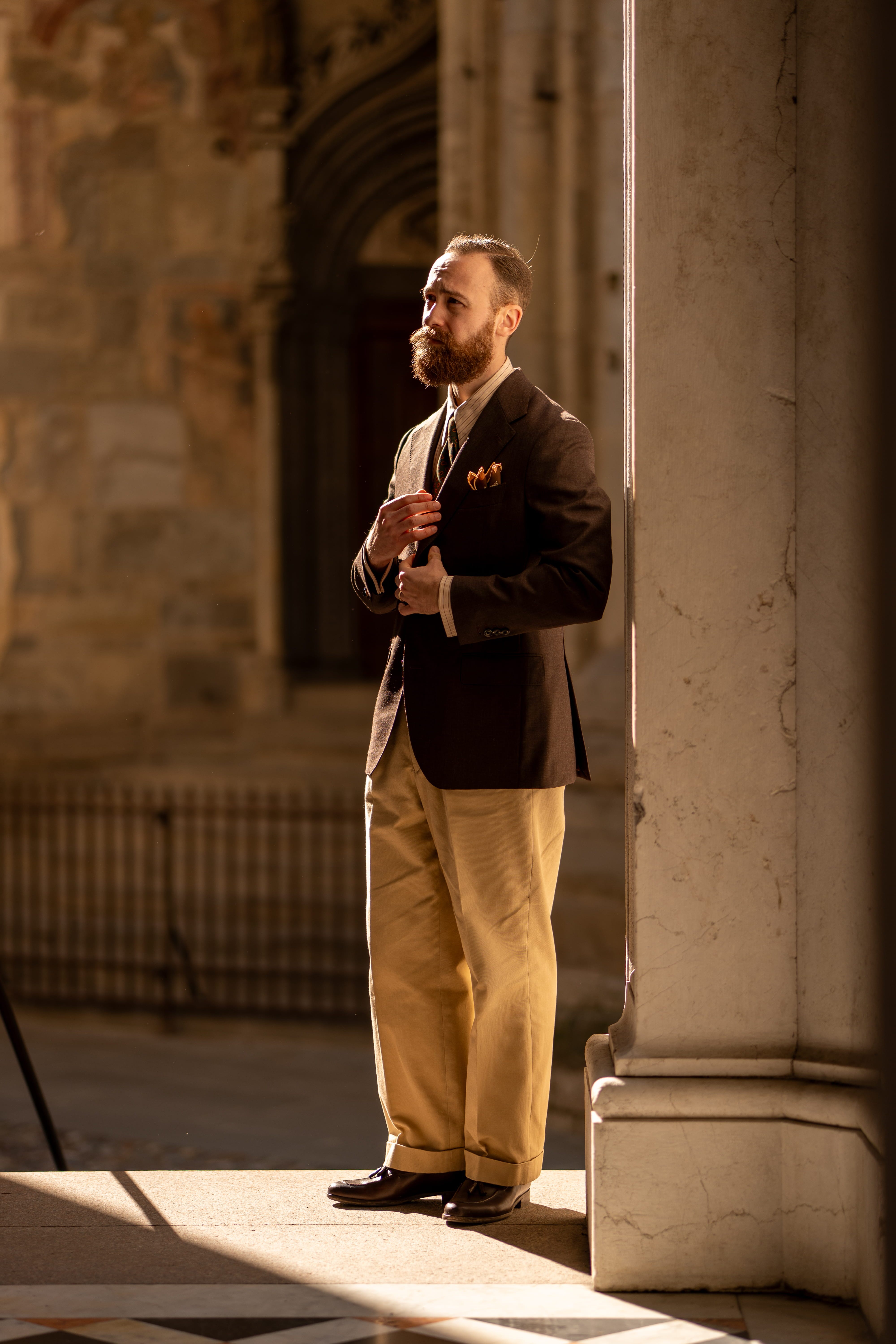
While everyone agrees that dress is not a substitute for character, few acknowledge the degree to which it can be a channel to it.
Anecdotally speaking, when I consider my career up to this point, I realize that many of my greatest leaps forward came when I began to take how I dressed seriously. But that success didn’t come simply because I impressed a wealthy businessman with my outfit. Instead, it came because I started A) dressing like the man I wanted to become, and B) challenging myself to live up to that man’s standard.
Baldassarre Castiglione, in his 16th century Book of the Courtier, discusses precisely this, and he elaborates on the powerful influence of clothing on both wearer and observer. My friend James once summarized it as such:
[Clothing] has the power to draw and to avert the eye, and subconsciously shape our fundamental assumptions of the wearer, from their social standing and wealth to their competence, regardless of the truth.
This point, “regardless of the truth”, is a double-edged sword. Clothing can be used to deceive, but how and who you deceive makes all the difference. Deceiving others is certainly immoral, but deceiving yourself? Now here’s an idea that can lead to virtue!
This is the secret that Baldassare, writing nearly 500 years later, knew long before it was confirmed by science. As we wrote in our article on the symbolic power of clothing, “enclothed cognition” — the persistent influence of clothing on a wearer’s psychology — can be used to influence not just others, but yourself:
One series of experiments gave participants lab coats that were described as either doctor’s coats or painter’s coats, and instructed them to complete visual search tasks. The participants who were told they wore doctor’s coats performed better at their task than those wearing painter’s coat, despite the coats being exactly the same. Another finding was that actually wearing the coat had a greater impact than merely seeing the coat nearby while performing tasks.
Intentionality in what you wear can bear major fruit in your life, as your clothes help you become the man or woman you want to be. Of course, this isn’t to say that a nice suit or dress keeps you from being a jerk. But when you intentionally dress as a gentleman or a lady, the disparity between your appearance and your words/actions becomes more obvious when it is violated. In other words, your dress allows you to better self-police.
For this reason, the clothes you wear have a disproportionate impact on how you live with integrity and consistency in your public persona. If to be elegant means to cultivate an interior harmony in mind, body, and soul, as well as an exterior harmony in speech, actions, and appearance, then a thoughtful approach to what you wear can work wonders in helping you become the person you want to be.
Your dress, after all, doesn’t have to be an impediment to your pursuit of virtue. When considered carefully, it can indeed be a powerful tool in cultivating it.
My family moved to Dallas for a short time in the early 80s. I was so little, I don't really remember much, but my mother tells a story of when she went to the grocery store there for the first time: She was still unpacking, and with so many little kids at home, she made a dash to the grocery store for some items, but hadn't unpacked her "going out" clothes. So she made the trip in early 80s 'round-the-house fare, some tan slacks and a button-down blouse. She said later she'd never been so mortified and humiliated in her life. This is a woman who, born in the early '50s, didn't begin wearing pants - on her parents' FARM - until college. She got her first pair of jeans, in college. She wore them on the mountain where her father and brothers herded sheep.
In Dallas, every woman at the grocery store was wearing a dress and heels. Now, as a teen I scoffed at this story. As an adult, I absolutely get it. We act differently based on how we are dressed.
Beautiful