

How to Dress Like the Landed Gentry
Your ultimate guide to outdoor style

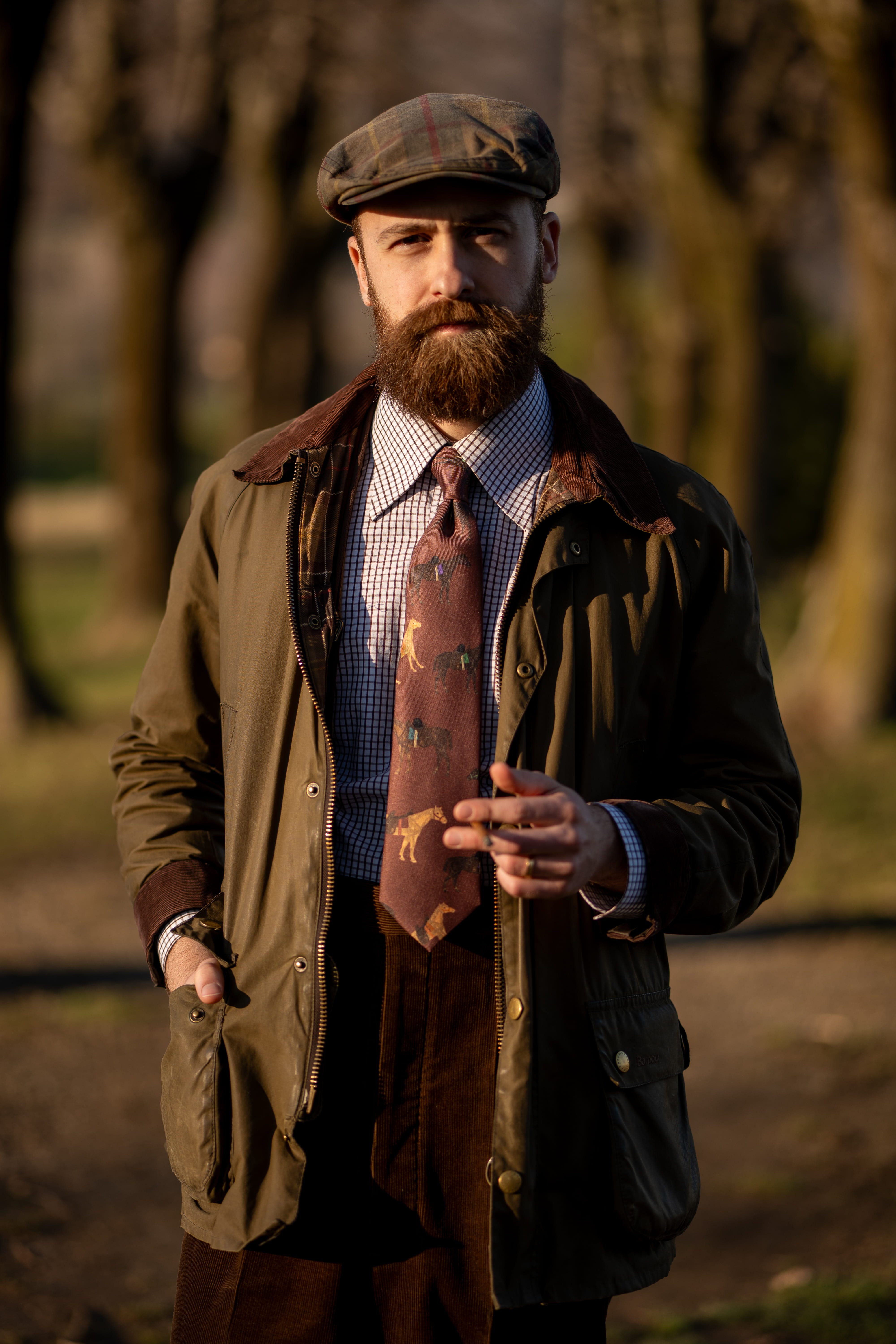
I’ll be honest with you: I’m not a country boy.
That said, I do love the outdoors. As an Eagle Scout, I spent many a weekend camping in the Appalachian mountains, and, on one particularly memorable occasion, sailing up and down the Atlantic coast while spending the nights on the beaches of North Carolina’s outer banks.
But now I live in Italy, a place where nature is far more bucolic than it is wild. Thousands of years of continued inhabitance have made it so that most places, even the most “remote” ones, are never that far from civilization. Even in the mountain valleys leading up through the Alps or the Dolomites, it can be near impossible to find a plot of land that is so remote you can’t see any other houses from it.
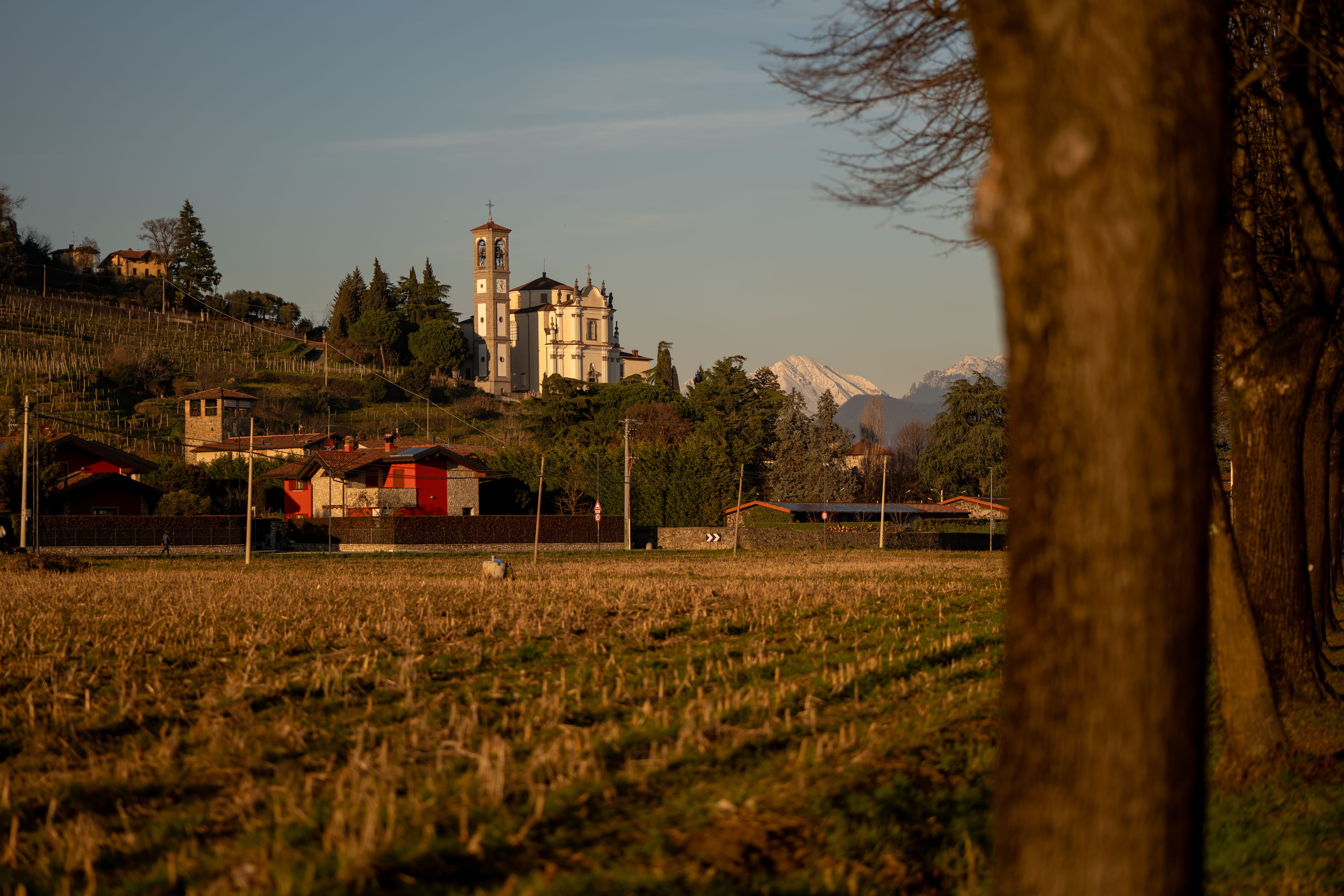
Your environment, of course, can’t help but influence you, which is the reason for this intro and disclaimer. I’d be lying to you if I told you I knew how to dress like a farmer or a cattle rancher, as that is simply not the case.
In today’s email, then, I’ll talk to what I do know: how someone who lives in a relatively urban environment can dress for incursions into the outdoors, whether that be for a stroll in the countryside, a rustic weekend retreat, or day’s shooting.
Fortunately, our culture has a rich tradition of this back-and-forth between city life and the countryside. This is no more evident, of course, than in the lives and lifestyle of the English aristocracy. In today’s article, I’ll pull from their example to show how to balance practicality with elegance in rural environments, as well as share the history of why certain patterns and fabrics read as more “outdoorsy” than others.
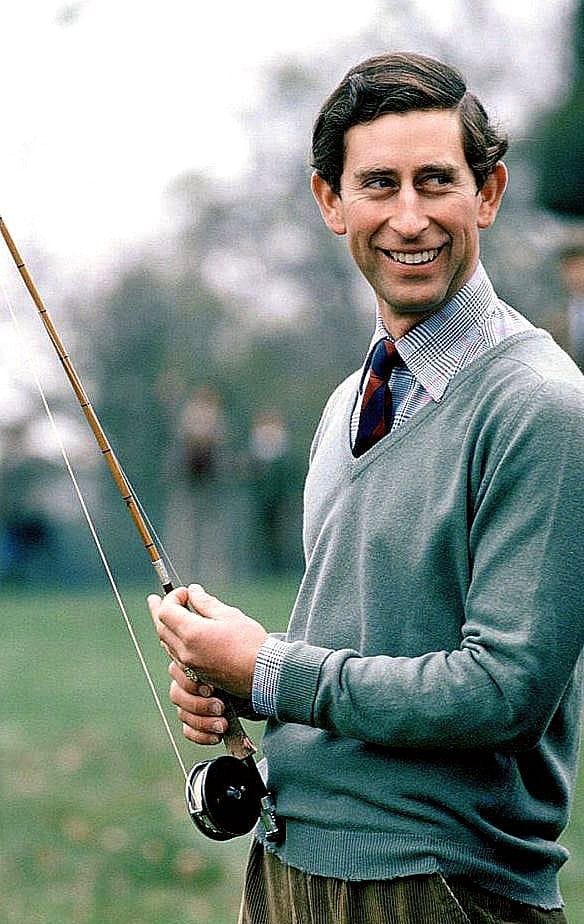
We’ll look at the three main categories that define the nature of dressing for the outdoors, and how you can master each one. Once you learn these secrets, there will be nothing stopping you from stepping out into the countryside with the rustic grace of the landed gentry…
Our mission here at Letters from the Old World is to share the secrets of Old World elegance, and our approach is two-fold:
1) Every Wednesday, we send a free article exploring the theology and philosophy of why beauty matters, particularly in regards to decor and dress.
2) Every Friday, we send What’s In a Fit, a members-only article exploring practical tips and guidelines for dressing well.
If this resonates with you, then subscribe below to join the aesthetic renaissance.
1) Fit & Function
When it comes to dressing for the outdoors, nothing is more important than fit and function. Everything in the countryside originates with doing: from chopping wood to walking through a muddied hollow. As such, the mobility and functionality of what you wear should be prized above all else.
This does not, however, mean that elegance gets thrown out the door in favor of baggy jeans, sweatshirts, and sneakers. As we’ll see in the next sections, the five steps to dressing well still apply to outdoor wear, as do the rules of visual proportion. There are some caveats to these though, which we’ll cover in the final section of this article.
In the meantime, one of the best places to start is with your trousers. They should be cut wide through the leg for maximum mobility, allowing you to bend, kneel, and sit with ease. Ideally, all your trousers should afford you this degree of mobility. My corduroys, for example, are cut with the same width through the legs as my suit trousers, and both pairs allow me to crouch down like this with ease:
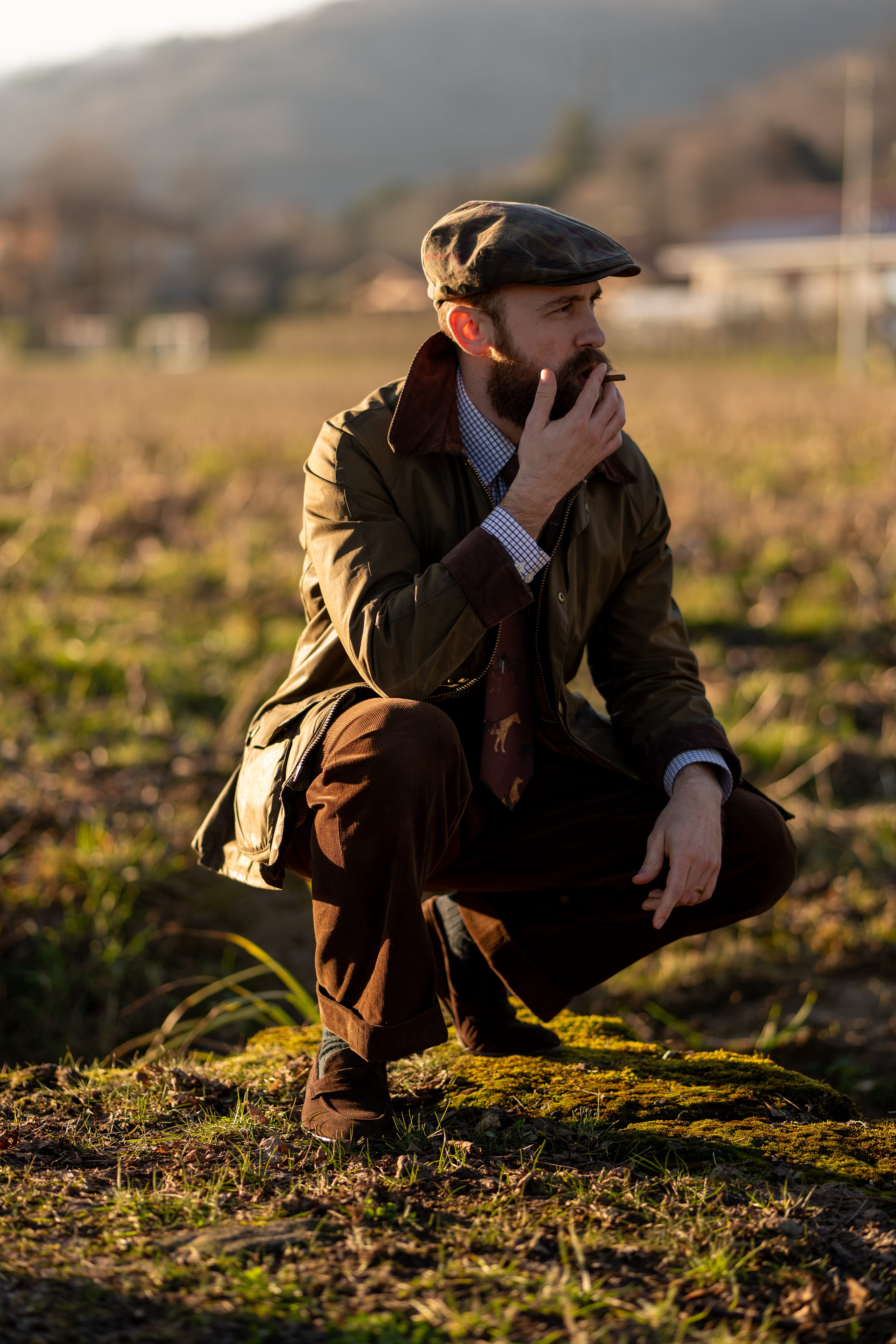
If you’re investing in made-to-measure (MTM) trousers, this is easy to accomplish. But if you’re buying a pair off the rack, try getting a size or two up: since most trousers run pretty slim through the leg these days, the trade off of getting more leg room and deeper pockets is well worth the small hassle of wearing a belt or going to a tailor to get the waist taken in.
Fit and function inform all aspects of outdoor wear, especially your shoes and jacket (more on these later). But crucially, they also distinguish the authentic from the fake.
To show one such example of this, take the interview that Letters from the Old World reader Raising Dragon Slayers shared in our subscriber chat this week. In it, the Financial Times interviews a costume designer for the television industry, who (as should be expected), correctly interprets the hidden meaning that authentic outdoor-wear communicates:
Financial Times: How did you research the costumes?
Laura: I visited the areas of London with a high concentration of financial institutions going from Bishopsgate, Spitalfields Market, Leadenhall, Poultry, Bank, the Gherkin to Canary Wharf and Mayfair, and looked at how people dressed.
I looked at where people might shop on their lunch breaks or what they might see and want. Clothes and accessories are subtle passports into places and acceptance. They are about showing that you have taste, certainty and confidence.
Financial Times: What are some of those taste and class markers?
Laura: Take waxed jackets as an example of clothing. In Canary Wharf the waxed jacket is more likely to be navy blue and box fresh, they might be a shorter Ashby style by Barbour. In Mayfair, they will tend to be more broken down and olive green in tone, because they are emblems of a different wealth and have a different type of use. A waxed jacket was designed for field pursuits but is worn on the commute from Shenfield to the city, it is not the same thing as going from the Cotswolds to the city. It’s a world of class coding.
For our non-British readers, the important context here is that Canary Warf is where successful professionals (often of first-generation wealth, such as traders or investment bankers) work. Mayfair, on the other hand, is where many people from landed backgrounds live, and where you’ll find private wealth managers and family offices. Shenfield is an affluent commuter suburb 20 minutes outside of London.
All this to say: when a article of clothing like a waxed jacket is worn for its status rather than its function, it shows. The people who actually spend time in the countryside bear marks of that in the color, texture, and feel of their clothing.
But crucially, the opposite is also true: clothes that don’t have their roots in the organic development of countryside living betray themselves at fake and look out of place in the outdoors. This, perhaps more than anything else, is the key to looking natural in what you wear in more rustic environments.
So how do you tell the difference between the authentic and the fake? That’s exactly what we look at next, by covering everything from fabric to footwear, patterns, jackets, and more. We’ll outline the seven staples in an Englishman’s country wardrobe, break down some of the best examples of aristocrats dressing for the outdoors, and suggest a practical packing list for your next rustic weekend outing.
It’s everything you need to know to look and feel your best next time you take a trip to the country estate…
