



The suit is considered by many to be the ne plus ultra of menswear. It’s elegant, refined, and classic. But for a large majority of men, it’s also impractical. A message I received earlier this week illustrates why:

Since a major part of our mission with Letters from the Old World is to share practical advice on how to dress well, this is a point we absolutely must address. What is the role of the suit in a man’s wardrobe? What if he can’t afford one? What if his vocation doesn’t call for one? How can you dress well without wearing a suit?
Fortunately, the principles of classic menswear remain the same no matter what you wear. That’s why all of the advice I shared in last week’s installment of What’s In a Fit, even though I showcased it while myself wearing a suit, is still universally applicable: not just for non-suit-wearing men, but for women as well.
In many regards, classic style is much like classical architecture. While “Greco-Roman” is likely the first image that pops to mind when you hear that a building is “classical”, all that “classical” really means is that a building follows a series of visual guidelines and time-proven proportions: Art-Deco, Georgian, and Spanish colonial homes can all be designed in the classical style.
This is why “buy a suit” as a blanket solution to dressing well is terrible advice, because if your suit itself doesn’t follow classic menswear proportions (and most off-the-rack ones don’t), then it will still look subpar. The most expensive brand and the best fabrics will never compensate for this. But furthermore, for many men the suit is simply unnecessary: if you adhere to the principles of classic menswear, you can still dress well without ever owning one.
Today, then, I want to provide a practical example of what it looks like to dress simply yet elegantly, working within the framework of classic style. We’ll uncover another major principle of classic menswear, and learn easy tricks to instantly elevate your look is. You’ll be amazed at just how easy it is to do so.
The Face of Elegance

As I mentioned last week, a building’s façade takes its name from the word face. Classic proportions, in menswear just as much as in architecture, are those which follow the proportions of the human face. Beauty, as it turns out, is not subjective: it’s what looks most harmoniously human.
In the image above, there are two main ways of viewing the human face. The white rectangle divides the face into halves, while the orange divides it into thirds. The white parameters feel rote and mechanical, as if they’ve been imposed onto the face. The orange parameters, on the other hand, are rich with information, and appear to genuinely describe the face they’ve been drawn over.
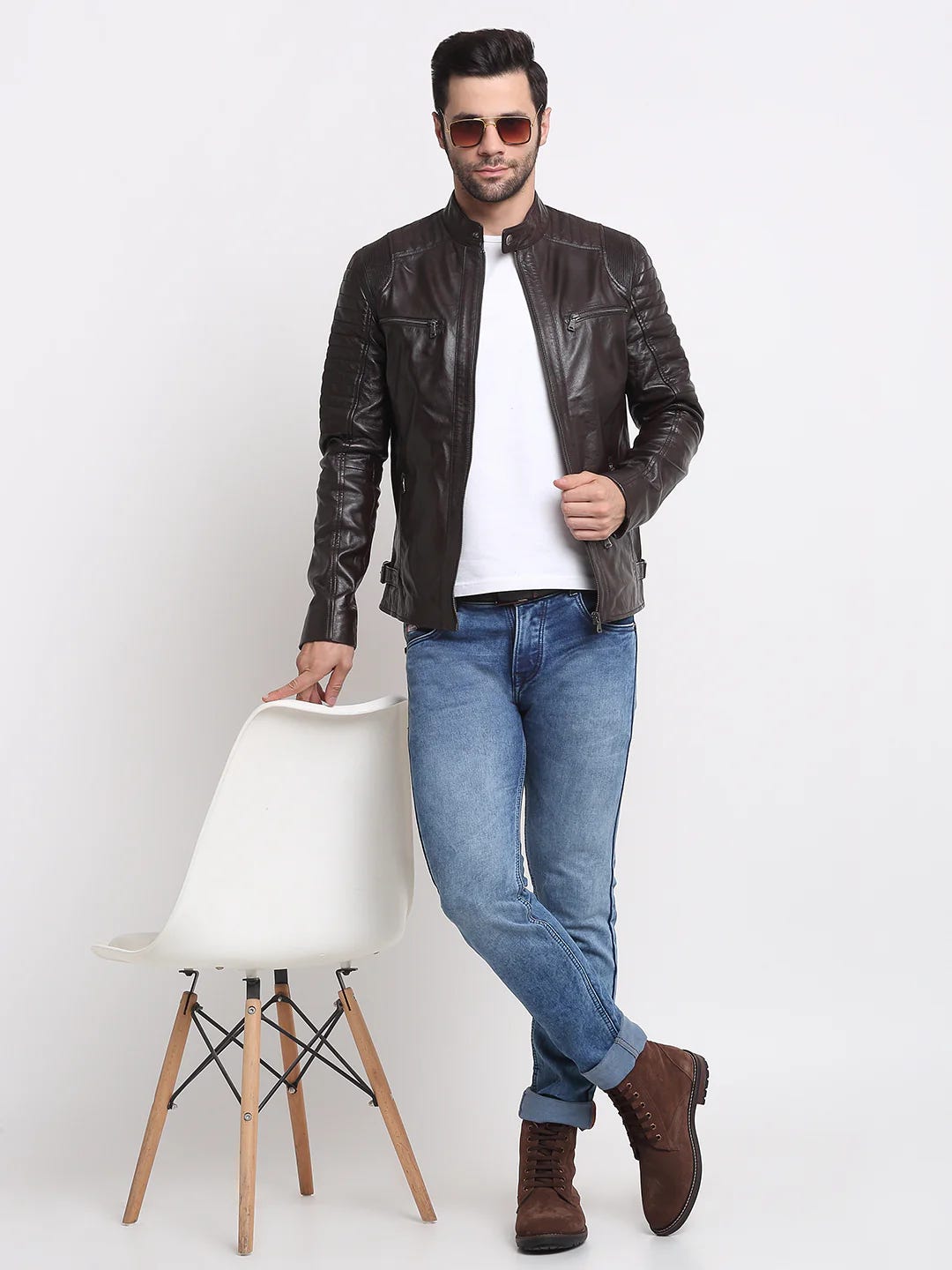
Transposing this to the realm of dress, today most people’s clothes imitate the 50/50 split of the white rectangles: a man’s trousers sit at his waist, halfway up his body. His jacket rarely falls lower than his beltline, and the result is a man split neatly in two halves:
Classic menswear proportions, however, follow the lead of the orange rectangles. They divide the body into thirds, specifically into two sections of roughly 2/3rds each. The first of these runs from your feet up to your natural waist (closer to your navel than your hips), and the second runs from your shoulders down to your knees.
To see what this looks like in practice, note my outfit on the right:
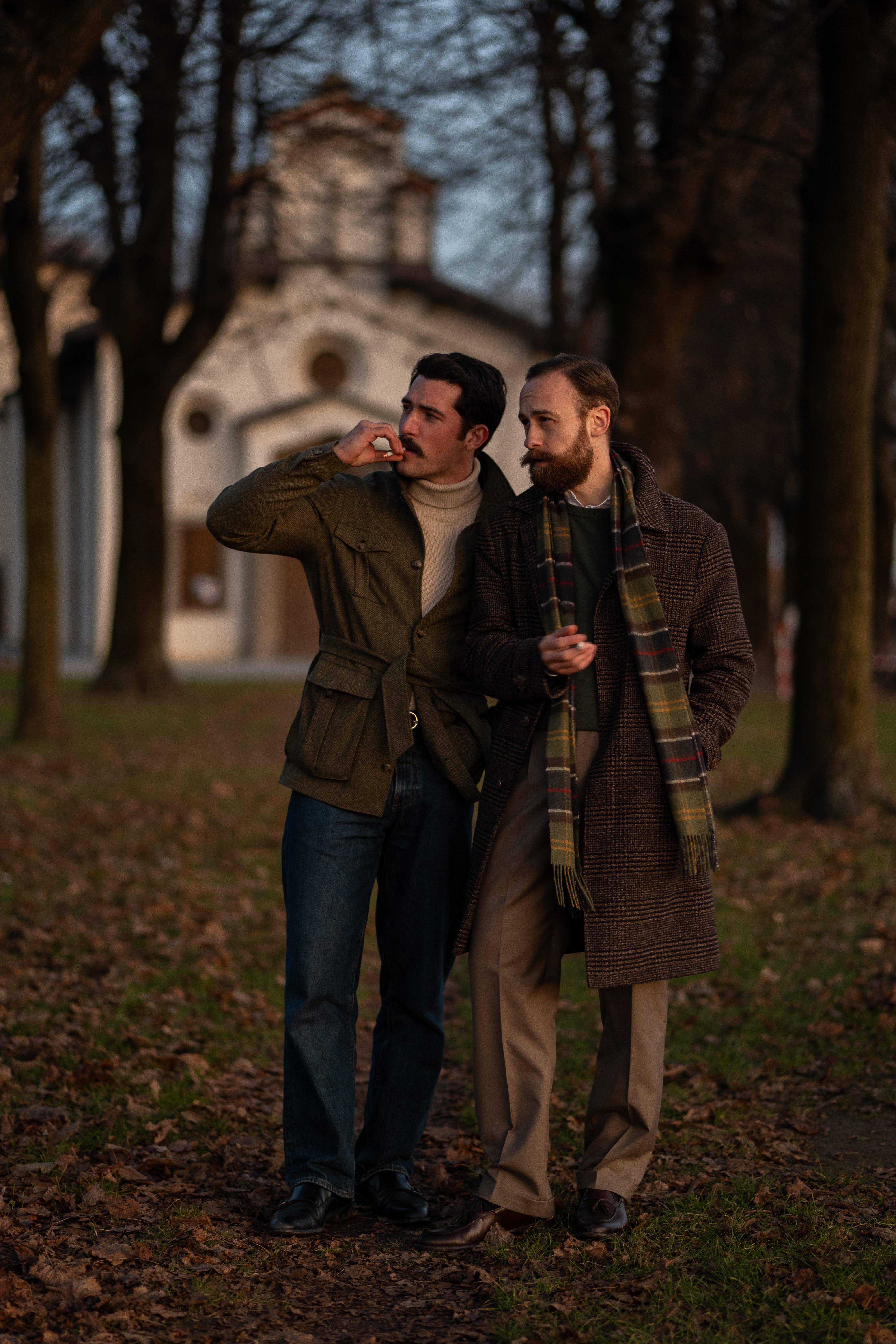
Here, my high-waisted trousers cover the bottom 2/3rds of my frame, and my overcoat the upper 2/3rds. The result is something far closer the the division of the human face: the lower 2/3rds correspond with the space between the chin and the eyebrow, and the upper 2/3rds correspond with that between the hairline and the bottom of the nose (revisit the photo at the top of this section for reference). In classic menswear, magic lies in the overlap between these two main blocks, just as they overlap in the human face.
Now of course, this is not to say that everything that doesn’t fit perfectly into these proportions looks bad. My friend Vincent, standing to the left of me, is wearing a jacket which clearly doesn’t follow this rule of thirds. Yet even here, Vincent’s high-waisted jeans partially compensate for this: if his jeans were to sit at his natural waist, he would look more split in two. But because of the added height of his trousers, the jacket appears to overlap more than it actually does, and thus the unpleasant visual division into halves is mitigated.
Whenever I wear something like my outfit in the photo above, people always assume I’m far more dressed up than I actually am. In reality, though, it’s incredibly simple, and the overall look is far greater than the sum of its parts. In the next two sections, we’ll explore how you can replicate something like it in your own style, and dress with elegance no matter your trade or profession.
