



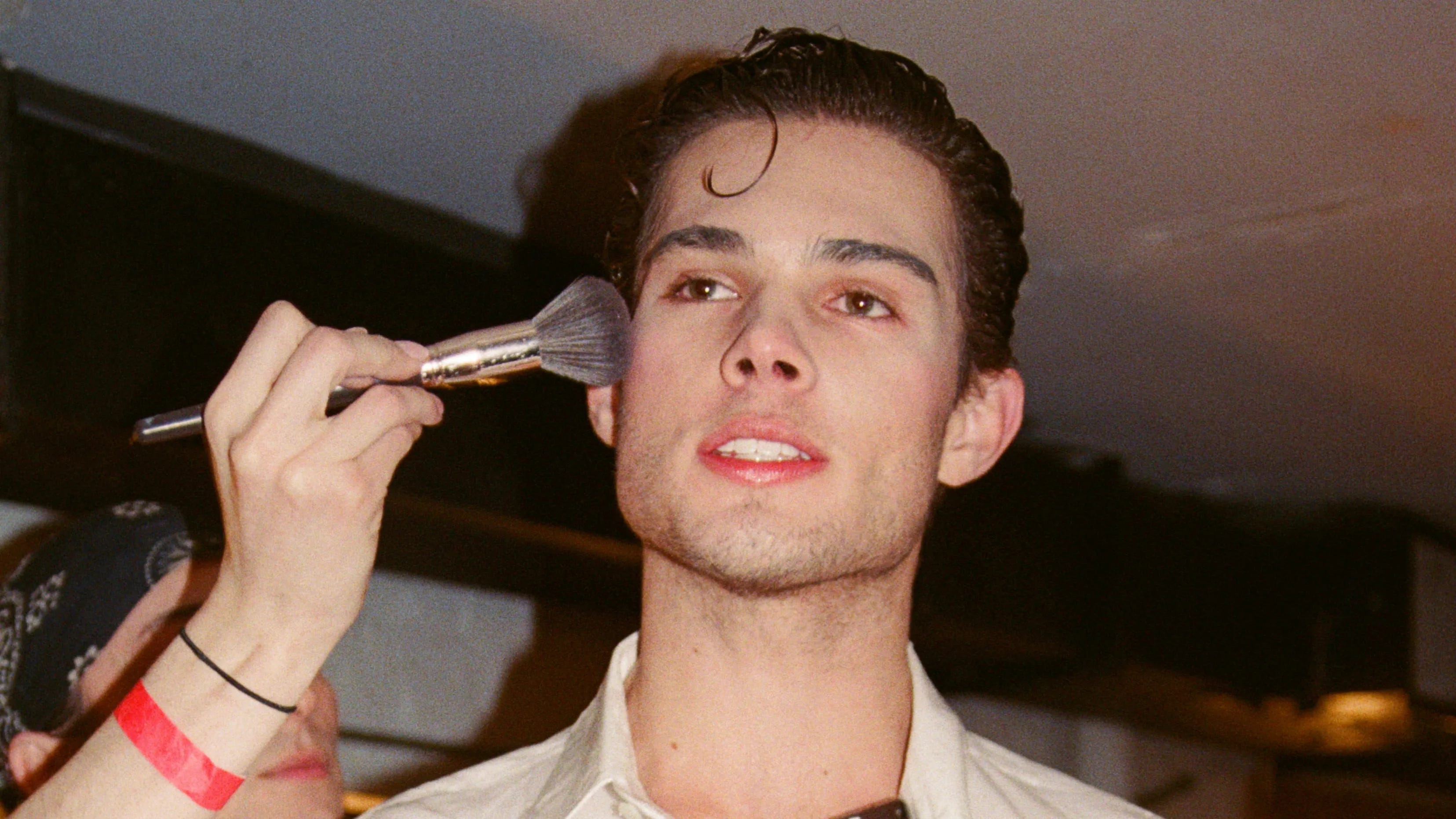
If the body is good, and beauty is good, shouldn’t you want to make your body beautiful?
This seemingly intuitive reasoning is appealing. But if the internet has shown us anything, it’s that we live in a time where every good is taken to excess. It’s unsurprising then that people have morphed proper stewardship of the body and beauty into something grotesque. The looksmaxxer – a man whose goal is maximizing his physical appearance above all else – is the logical result of this cult of beauty.
Though it may seem impossible, there is a rightly ordered way to improve physical beauty, if only you can avoid the many wrong ways encouraged by culture.
Today, we look at the right and wrong way to approach physical beauty, what mice can teach you about how we got here, and how to improve your body without giving in to a culture of narcissism.
Our mission here at Letters from the Old World is to share the secrets of Old World elegance, and our approach is two-fold:
1) Every Wednesday, we send a free article exploring the theology and philosophy of why beauty matters, particularly in regards to decor and dress.
2) Every Friday, we send What’s In a Fit, a members-only article exploring practical tips and guidelines for dressing well.
If this resonates with you, then subscribe below to join the aesthetic renaissance.
A Visit to Mouse Utopia
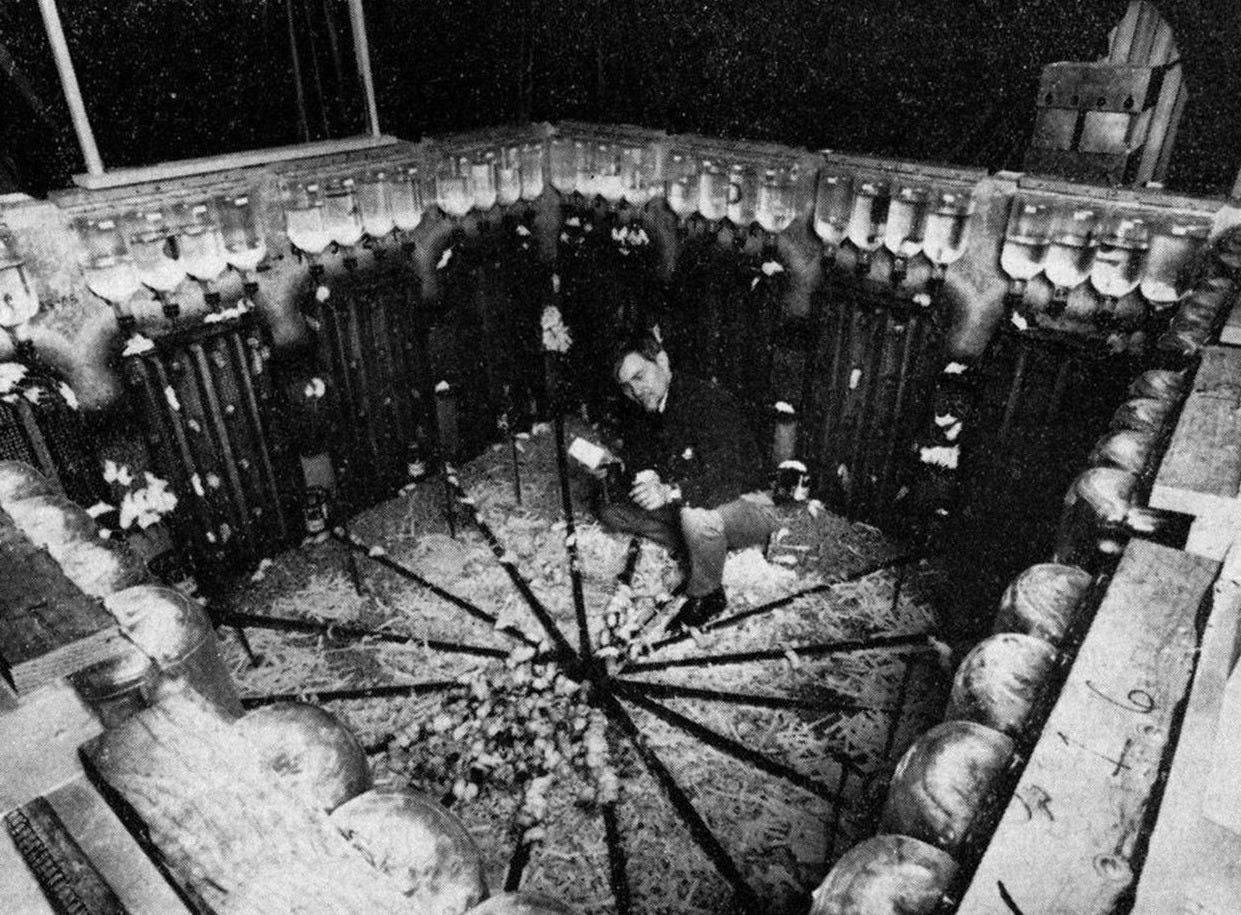
From the 1950s through to the 1970s, researcher John B. Calhoun conducted a series of experiments to determine the effects of population density on behavior. To do this, he created miniature “utopias,” enclosed spaces where either mice or rats were given unlimited food, water, and plenty of space for them to nest and play.
Though his initial trials all ended early, in 1968 his 25th attempt, “Universe 25,” ran long enough to produce horrifying results. Starting with four male and female mice, by day #560 the population exploded to over 2,200 rodents. The mice were shoulder to shoulder everywhere they went, in constant contact to the point that male mice were unable to defend territory and thus abandoned the idea of doing so. The untenable population density had turned a paradise into a hellish experience.
The subsequent social dissolution created an environment where fighting was common, mice weren’t interested in sex, few females carried pregnancies to term, and parents increasingly neglected the offspring they did have. This in turn led to aberrant behaviours in the mice.
Calhoun took special notice of one group of males he dubbed “the beautiful ones.” These mice avoided socializing, approaching females, or fighting, preferring instead to eat, sleep, and obsessively groom themselves. They were healthy in body but socially useless, incapable of parenting or engaging in normal mouse society. Their beauty was maintained, but it was completely severed from its natural purpose.
Humans aren’t mice, of course. But the parallels between these “beautiful ones” and a new type of man, the looksmaxxer, are uncanny.
Of (Utopian) Mice and (Looksmaxxing) Men
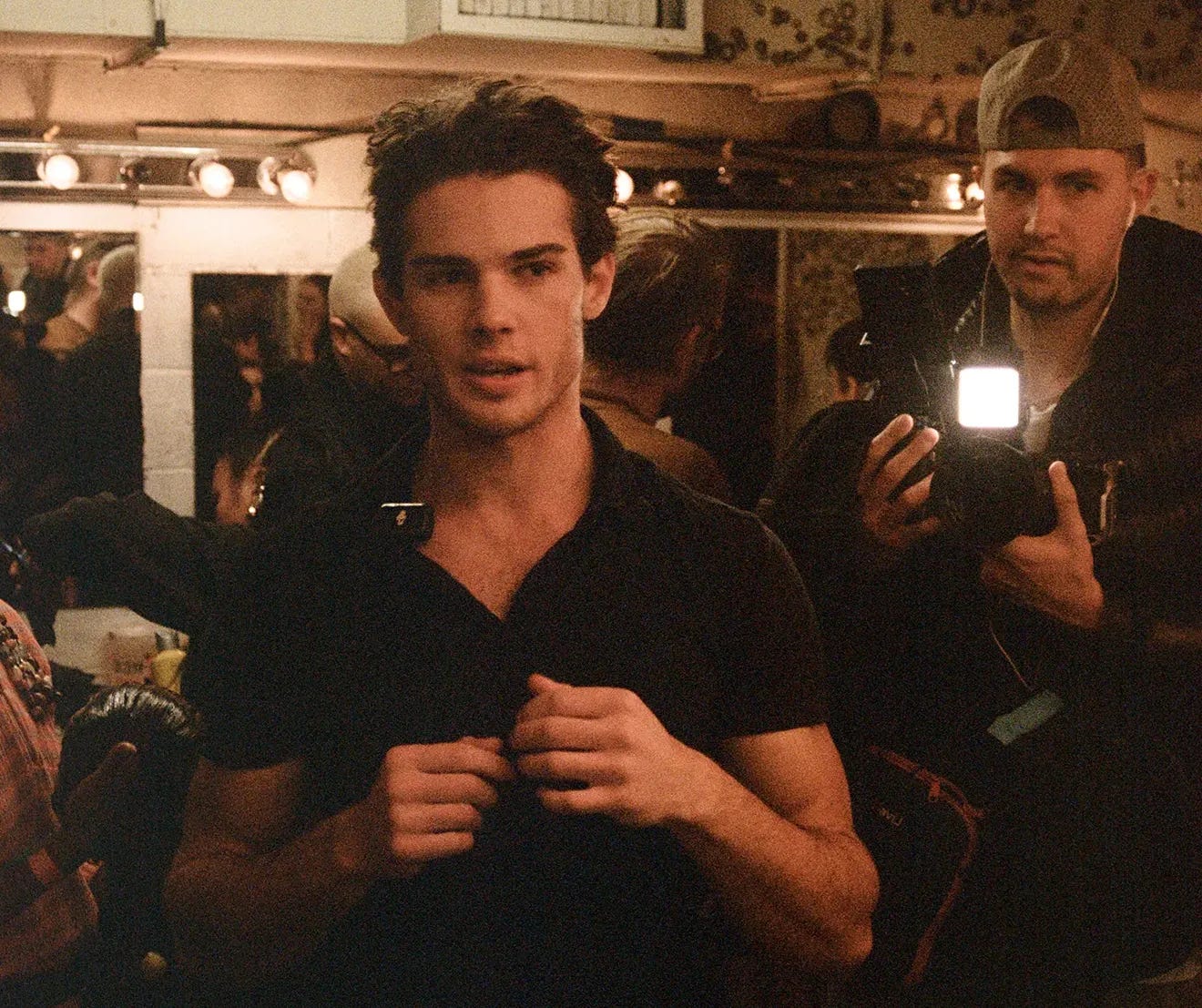
For you fortunate souls who haven’t heard of looksmaxxing, it’s an ideology advocating for the maximization of physical attractiveness, often to the detriment of other considerations. Born on fringe message boards in the 2010s, it entered the broader public discourse in the 2020s thanks to social media influencers. Chief among these is Clavicular, the moniker of a young man notorious for smashing his cheekbones with a hammer to maximize their size, taking meth to stay lean via appetite suppression, and using steroids and testosterone replacement therapy in his early 20s.
In both the mice and men in question, we find untested, unscarred males retreating from normal socialization and responsibility to instead turn inward to focus on grooming themselves beyond all reason. Both are reacting to a world that feels hostile, where the codes of conduct have broken down and social dissolution feels self-evident.
For the looksmaxxer, this absence of transcendent order or purpose leads him to a Darwinian concept of the body: if value is tied to your physical appearance, then maximizing it is only logical.
But strange as it might seem, what they’re doing isn’t entirely wrong.
Disordered Loves

Once modified, often with relentless frenzy, the body becomes a body-object in which the person-subject mirrors themselves, creating a relationship in which the person is no longer his or her body but ‘owns’ a body, from which arises the search for a ‘borrowed’ identity. In this dynamic, it is no longer necessary to accept one’s own body in order to realise one’s identity. It can be transformed according to the tastes of the moment.
A curious situation is created: the ideal body is exalted, sought after and cultivated, while the real body is not truly loved, being a source of limitations, fatigue and aging. One desires a perfect body, while dreaming of escaping from one’s own concrete body and its limitations.
–The International Theological Commission, Quo Vadis, Humanitas?
To give the devil his due – and as we’ve written about before – the human body and its beauty are worthy of recognition and appreciation. Desiring the beautiful is not where looksmaxxing goes wrong. After all, investing time and effort to improve the aesthetics of your life can be a virtuous thing if done with the right intention. So there is some good hidden deep in the hearts of the young men obsessing over appearance.
The real issue is one of order and category. Catholic philosopher Deitrich Von Hildebrand draws a useful distinction between the beauty of the human body and what he calls its “sensual charm”. For him, the true beauty of the human form is present regardless of whether it conforms to current beauty standards.
But for some, Hildebrand writes, this is a difficult dichotomy to apprehend:
For debauched men the beauty of the body is an intensification of sex appeal. But we must affirm very decisively that the beauty which a body can possess is as such completely independent of every kind of sensual charm, and that every attempt to reduce beauty to this charm is utterly absurd. The beauty of the human body is a definite, genuine beauty, a high beauty of eminent aesthetic value.
What Hildebrand is getting at is that the beauty of the human body can be understood and appreciated for its own sake as a Godly creation, rather than as only an object of desire, lust, or envy. To view it only through this lens, and to work on improving the body’s sensual charms in isolation, is therefore to put the cart before the horse.
In this way, Hildebrand recalls Thomas Aquinas’ ideas of rightly ordered love: love of the right things, for the right reasons, and in the right proportion. This concept is one Aquinas’ himself borrowed and refined from St. Augustine, who wrote in the City of God that:
…though [something] is good, it can be loved in the right way or in the wrong way – in the right way, that is, when the proper order is kept, in the wrong way when that order is upset.
Just as pornography displaces the healthy desire to procreate from its natural fulfillment, so too does this “pornography of the self” displace the rightly ordered desire for health, beauty, and fertility from the reality of actually having those qualities. Clavicular is the true embodiment of this, as he has used TRT and medical interventions to optimize for attractiveness and the signifiers of a fertile male, at the cost of actually being fertile. In his excess, Clavicular is living out a bizarre instantiation of C.S. Lewis’ famous admonition that “in a sort of ghastly simplicity we remove the organ and demand the function.”
But thankfully, there is a rightly ordered way to cultivate the body beautifully. And while it has its challenges, it is far less likely to make you sterile.
An Ordered Love of the Body
But the Lord said to Samuel, “Do not look on his appearance or on the height of his stature, because I have rejected him. For the Lord sees not as man sees: man looks on the outward appearance, but the Lord looks on the heart.”
–1 Samuel 16:7
Virtues are the means by which you can seek to achieve sainthood in all facets of your life. It’s no surprise, then, that even with something as basic as the body there are best practices to follow. To start, you must recognize the role for which your body is meant.
When Paul wrote to the Corinthians, he emphasized that your body is meant for the Lord, and that it is a member of Christ himself: “Do you not know that your body is a temple of the Holy Spirit within you, which you have from God? You are not your own, for you were bought with a price. So glorify God in your body.” The body as imago dei thus demands a certain amount of reverence from you. Since your body is not your own, you must treat it as you would any thing over which you were given stewardship.
Do not hate or love your body’s appearance inordinately, but rather appreciate it for the transcendent beauty it represents. For as Pope Francis wrote in Laudato Si, “learning to accept our body, to care for it and to respect its fullest meaning, is an essential element of any genuine human ecology.”
Perhaps the most pertinent passage, however, comes from 1 Timothy 4:8, which says “For while bodily training is of some value, godliness is of value in every way, as it holds promise for the present life and also for the life to come.” This is an excellent biblical guide on balancing the improvement of the body with your faith. It says that to maintain and care for the body of course yields some beneficial results. It allows you to live longer, in better health and do more. After all, a fit person is more physically capable of lending a helping hand than someone who is not. And yet at the same time, the passage states that these concerns will always be secondary to the first and greatest commandment: “Love the Lord your God with all your heart and with all your soul and with all your mind.”
This commandment is what ties Calhoun’s mice to the looksmaxxers. Lacking a transcendent good for whom they could moderate and pursue their efforts, both mice and men slid down the slope from well-ordered love to excess. Their beauty was without direction, and festered as it was forced to turn inward.
So, if you want to know if your actions are rightly ordered, the ultimate question - whether you’re working out, taking supplements, or considering superficial enhancements - is this:
Who are you doing it for?
It's a great article.
The looksmaxxing is a natural response to a world that leaves young boys confused about their place, role, and purpose in society.
As Helen Andrews outlined in her essay The Great Feminization, the Western society (the American culture in particular) got so bullish and determined to elevate and prioritize the female perspective, it left very little room for boys and young men.
We may debate how the pendulum swung towards women and how Girl boss, and Girls in STEM and Future is Female, etc. is expected or natural or whatever but the fact remains that this focus created a vacuum for young men. Being strong and healthy and defending the weak - aka being the good man - disappeared from the culture almost completely. We are celebrating every possible demographic except young men. Teenagers and young men want to thrive, they want to matter, they seek role models, they are hungry for their tribe. The guys who are on social media with big followings because they work out or are just saying 'hey, if you're a young man, you matter, welcome!" then they will flock to that. Because the rest of the world sure isn't telling them any of that. The Andrew Tates or looksmaxxers are just filling the void because as a society, we pretty much abandoned our boys.
Really insightful post. The parallel between the overpopulation and crowding of the Universe 25 experiment and the fact that social media has forced everyone upon everyone all at the same time--too much humanity--is clear. A retreat from the mess is not so much insane as it shows the insanity of the situation.
Great thoughts on beauty as well, like a breath of fresh air after describing the poison we're all swimming in.