


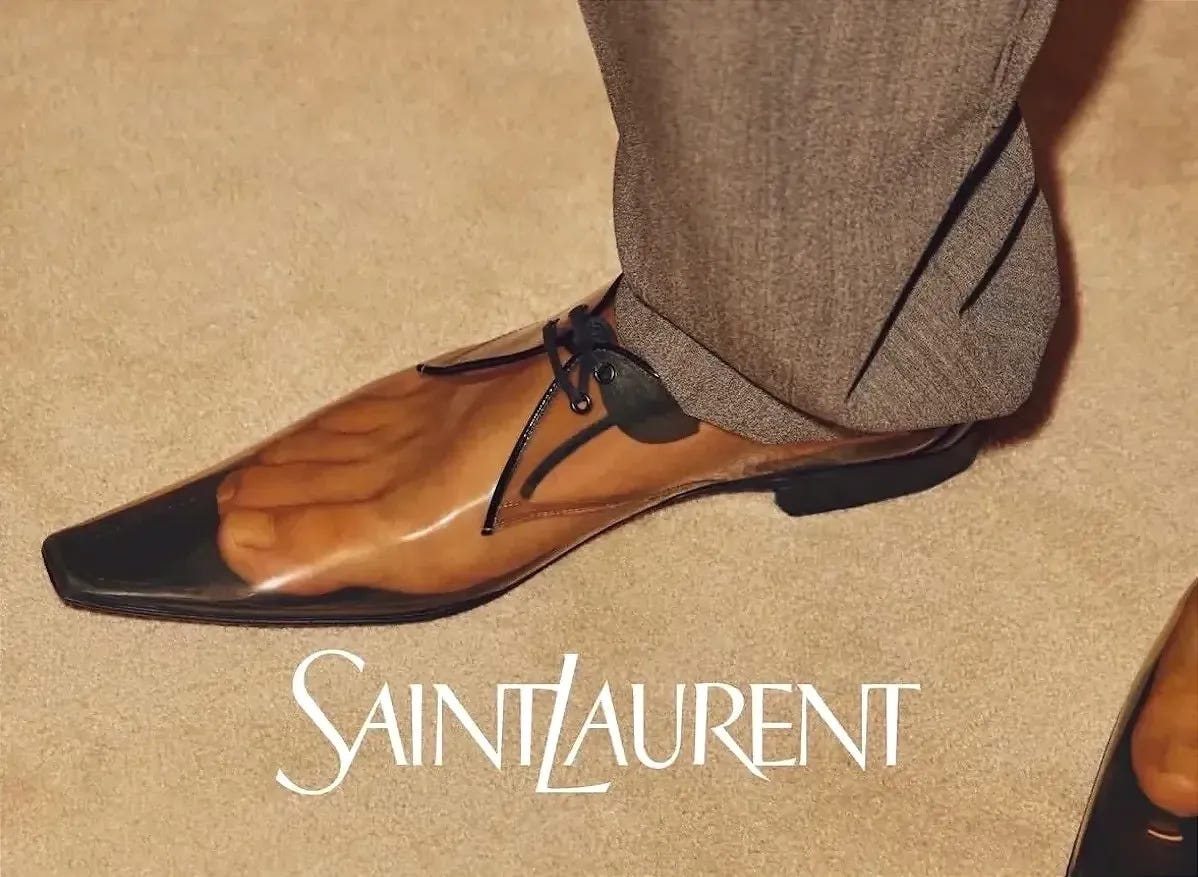
Last week, PJ and I shared an article about trading your body for beauty. In it, we paid particular attention to the way in which many traditional shoe shapes — such as pointed oxfords, loafers, etc. — can easily deform your feet.
This leads to an important practical question: how are you supposed to simultaneously dress elegantly and ergonomically? Is it even possible to do so? And what about the shoes we ourselves wear? One reader picked up on this latter question in the comment below:
Fortunately, there are indeed ways to wear elegant footwear without sacrificing the health of your feet. You don’t have to throw out all your loafers and resign yourself to sporting sneakers with suits for the rest of your life (in fact, we plead that you don’t do that!). But where do you begin?
There are several approaches, ranging from relatively inexpensive changes to fully bespoke footwear. Today, we outline the best options for you to choose from, so that you can still dress with elegance without sacrificing your body in the process.
More Than a Question of Comfort
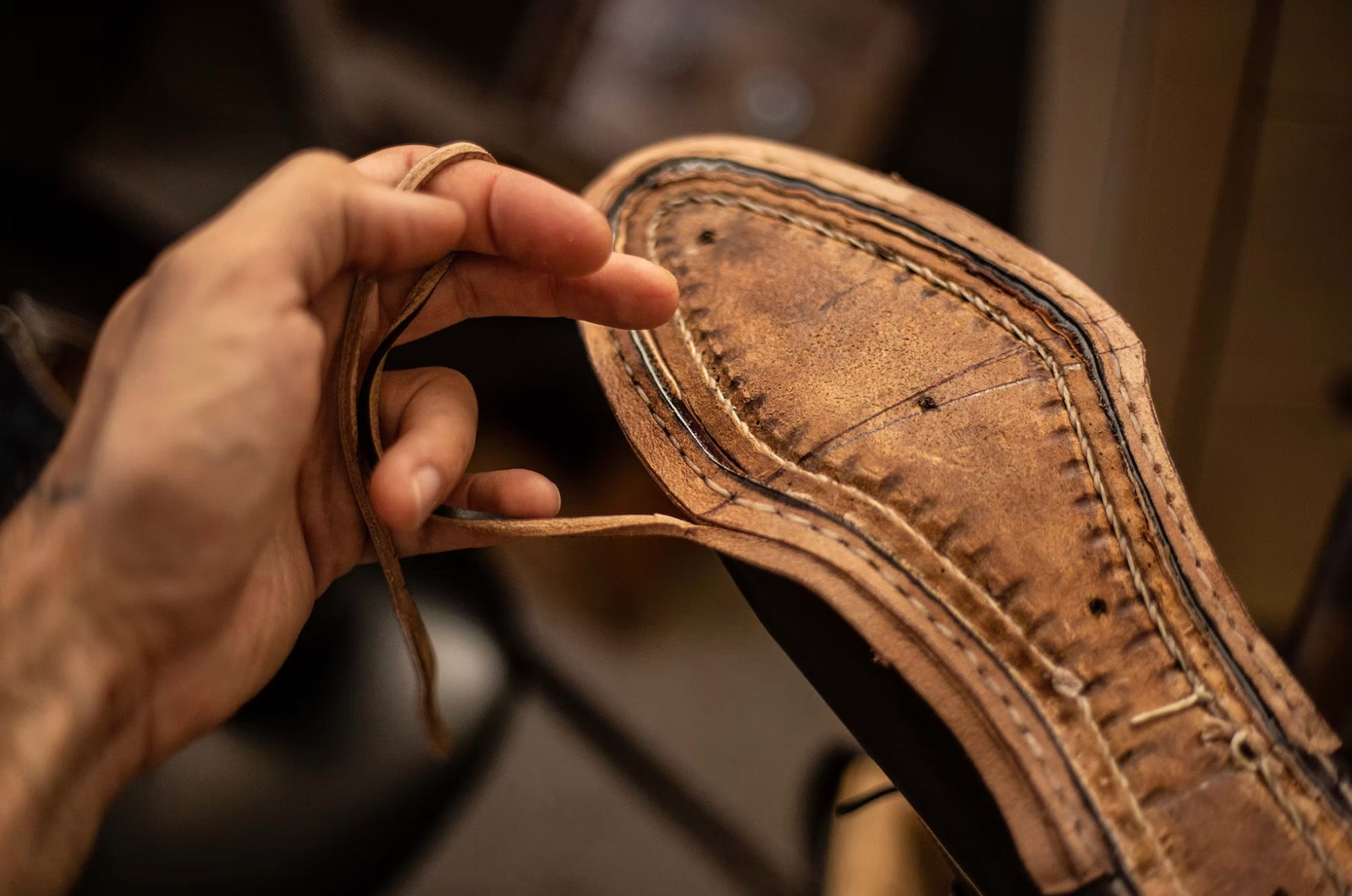
But first, let’s reframe the situation at hand. Previously, we’ve written about the importance of investing in your wardrobe: not simply spending more for the sake of spending more, but investing in quality materials, construction build, etc. Our article on the difference between $50 and $300 shoes, for example, highlights why the latter is always a better investment (assuming you’re not simply paying for a name brand).
We’ve also written about how investing in made-to-measure or bespoke suiting is often worth the extra price as well: high-quality garments that are made for your specific body type and lifestyle needs inevitably have a far longer lifespan and get far more wear, thus making them a better choice not just for your wallet, but for the environment too.
But while it feels great to invest in a properly-fitting jacket or pair of trousers, it’s worth pointing out that a poor-fitting version of either won’t necessarily destroy your body. Sure, a poorly-proportioned jacket looks odd. An ill-fitting shirt or trousers are annoying and, in professional contexts, can undermine your credibility. But for as uncomfortable as they are, none of these will change your skeletal structure.
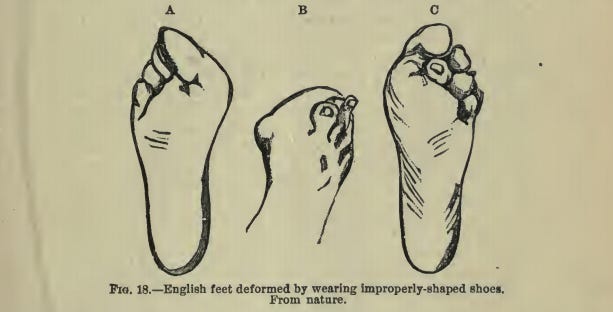
A poorly-fitting pair of shoes, on the other hand, can permanently change your body. Starting with the shape of your feet, their impact can extend to your gait, and later your posture. They can lead to bunions, hammertoes, and even knee or hip problems.
If there is one place to spend money for reasons beyond aesthetics, therefore, it is in your footwear.
This, however, is often the reverse of how most people think. It’s easy (and fun) to obsess of tailoring, fabrics, and proportions, all while your shoes remain an afterthought. But the truth is, they arguably deserve the biggest chunk of your time and attention. If you’re going to splurge on one part of your wardrobe, it should be on the part you can’t go a day without.
But of course, it’s easy to say that you should simply allocate more of your budget to footwear. The real question is, how should you go about it? Where do you go to get good-fitting shoes in a classic style? And with shoe sizes being so inconsistent, how do you avoid the constant trail-and-error of online purchases and returns? What, in other words, is the key to wearing classic footwear that doesn’t destroy your feet?
These are the questions we answer in the rest of this article, by sharing three solutions you can choose from according to the constraints of your time and budget…
