

What Clothes Did Jesus Wear?
And why it matters…


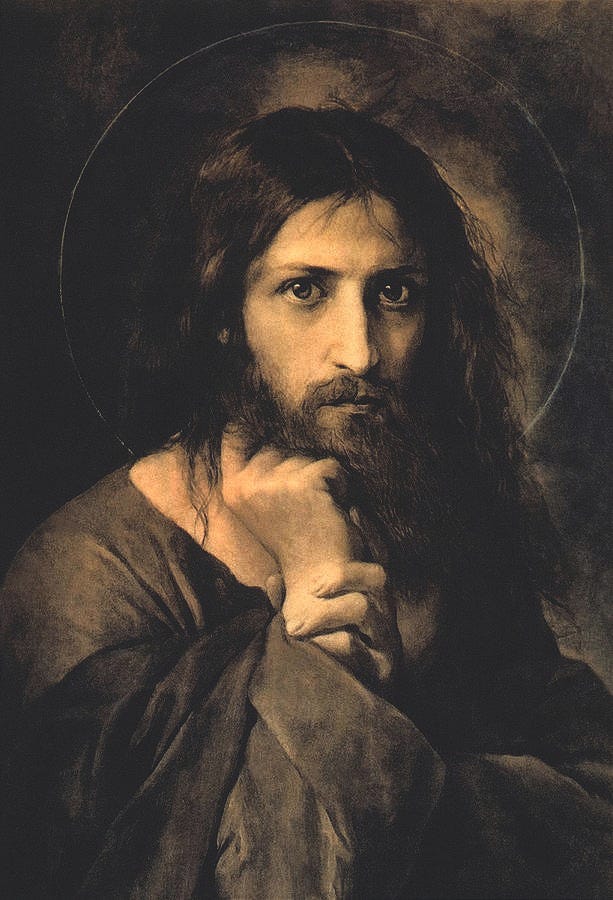
The Bible is so full of stories, motifs, symbols, and parables that it’s easy to gloss over minor details like how Jesus dressed. But while most people don’t give a thought to what biblical figures wore, there is in fact a great deal of meaning and instruction in Jesus’s garments.
What it reveals will deepen your appreciation of both the Bible and the power of clothing. That’s why today, we look at how Christ’s clothing fulfills multiple prophecies, encapsulates all of humanity in its variety, and reveals why the way you dress matters far more than you think…
Our mission here at Letters from the Old World is to share the secrets of Old World elegance, and our approach is two-fold:
1) Every Wednesday, we send a free article exploring the theology and philosophy of why beauty matters, particularly in regards to decor and dress.
2) Every Friday, we send What’s In a Fit, a members-only article exploring practical tips and guidelines for dressing well.
If this resonates with you, then subscribe below to join the aesthetic renaissance.
What Would Jesus Wear?
According to the Gospels, we know that Jesus would have worn everyday garb similar to other Jews of the era. For example, Mark 1:7 tells us he wore sandals, and John 19:23 tells us he wore a tunic. We also know he wore a fringed garment, likely a tzitzit, because Matthew 9:20-21 mentions that a woman suffering from hemorrhage is healed by touching it. Lastly, we can also infer from historical context that Christ likely wore a tallit, a large rectangular cloth wrapped around the shoulders that fell to your ankles or waist and covered your tunic.
While that description might help you visualize what Jesus wore a little better, there’s far more to some of these articles than you might imagine, since these seemingly basic items carry a surprising amount of significance. In particular, Christ’s fringed garment, seamless tunic, and what he wore – and was stripped of – during the passion deserve particular attention.
A Healing Fringe
Take for instance the fringed garment as attested to in Matthew and Luke. The fringe here are the tassels that God commanded the Israelites to wear in Numbers 15:37-39:
The Lord said to Moses, “Speak to the Israelites and say to them: ‘Throughout the generations to come you are to make tassels on the corners of your garments, with a blue cord on each tassel. You will have these tassels to look at and so you will remember all the commands of the Lord, that you may obey them and not prostitute yourselves by chasing after the lusts of your own hearts and eyes.
In the passage above, the word for corner in Hebrew also translates to “wings,” which is significant, as it coincides with a tradition that these fringes held healing powers, drawn from a prophecy found in Malachi 4:2, predicting the messiah would come “with healing in his wings.” For observant Jews, hearing of Christ’s fringe miraculously healing the woman suffering from hemorrhage in Matthew 9:20-21, this would have read like a sign of the true messiah’s arrival.
This also explains the woman’s actions, as she would have been aware of this traditional understanding of Malachi 4:2, and so her reaching out for Christ’s fringe for healing was a true act of faith.
A Tunic as Sign and Prophecy
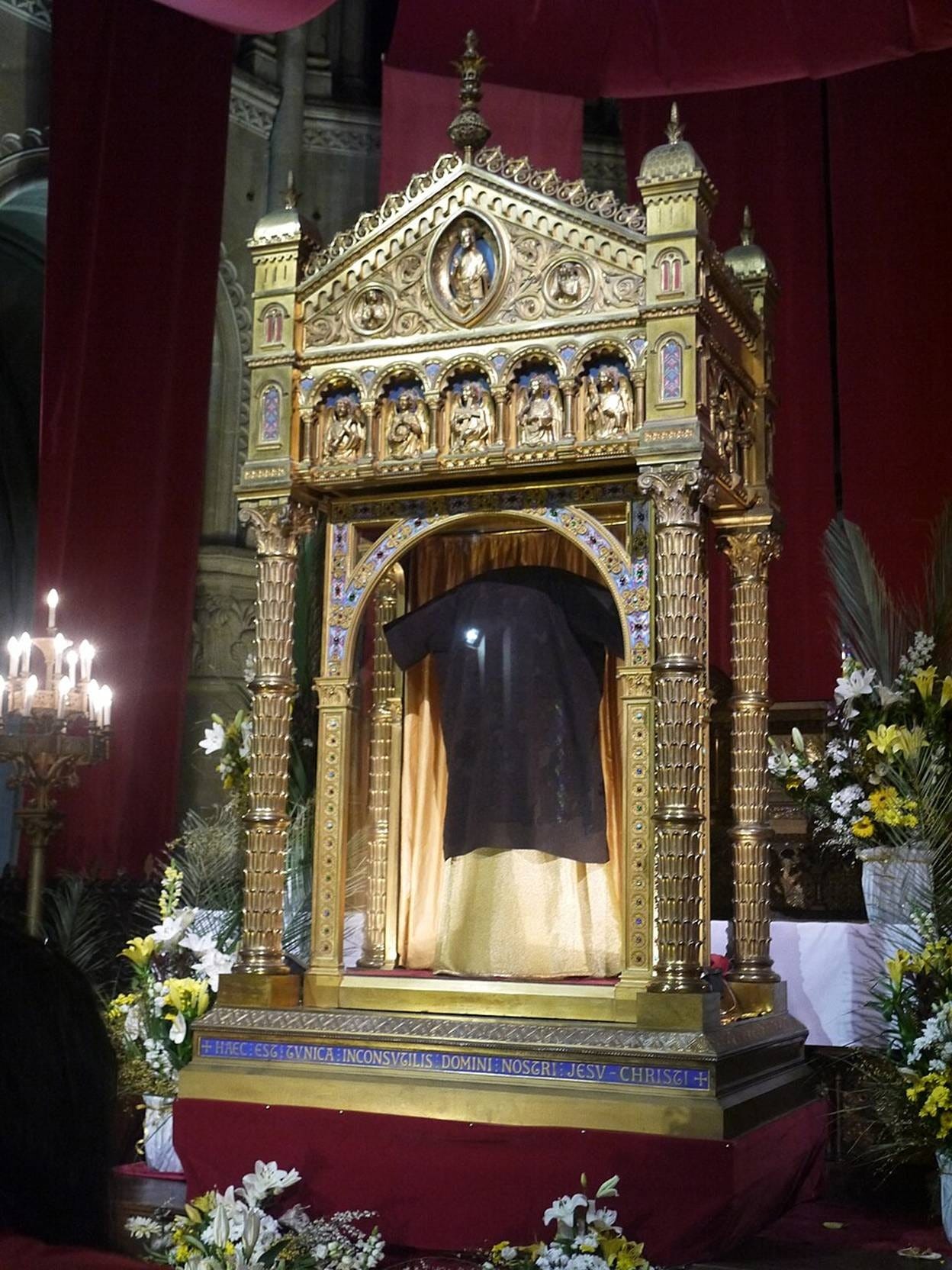
Another significant piece of clothing is Jesus’ seamless tunic. Woven in one piece, the tunic would have proven valuable to a first century Roman centurion, which is why in John 19:23, the soldiers cast lots for it rather than splitting it into pieces. This is significant, as it fulfills a prophecy from Psalm 22:18: “They divide my clothes among them and cast lots for my garment.”
In addition to prophetic fulfillment, the seamless tunic also hints at Christ’s role as spiritual leader. As Pope Benedict the XVI wrote in his two-volume Jesus of Nazareth, mentioning the seamlessness of Christ’s tunic in the Gospels signals a priestly function to its wearer, as Jewish high priests also wore seamless tunics (called chiton) under their robes:
[W]e may detect in [John] the evangelist’s passing reference an allusion to Jesus’ high-priestly dignity, which John had expounded theologically in the high-priestly prayer of chapter. Not only is this dying man Israel’s true king: he is also the high priest who accomplishes his high-priestly ministry precisely in this hour of his most extreme dishonor.
For church fathers, the oneness of the garment also symbolized the unity of Christ’s church. St. Cyprian of Carthage, a 3rd century bishop, believed as much, writing in his treatise De Unitate that the undivided nature of the robe should be understood as meaning Christ’s church could not be divided, and those who attempted to would find themselves outside of it:
When someone would be clothed with Christ, he receives a perfect suit of clothing, and an undamaged tunic. But what comes into his possession is common property […] Christ was wearing the unity that proceeds ‘from the upper part’ (that means ‘proceeding from heaven and from the Father’), which could never at all be torn apart by him who receives and possesses it, but rather with it secures for himself something that has a firm integrity. He who rends and splits Christ’s Church cannot possess Christ’s robe […]
So truly because Christ’s people cannot be torn apart, his tunic, ‘woven without seam,’ and holding fast together, has not become divided amongst its owners. The description ‘unable to be split (united, linked together),’ reveals the concord that holds together the unity of our people who have put on Christ. By the sign and seal of the tunic Christ has declared the unity of his Church.
In addition, John tells us the robe was woven from top to bottom, using the word anōthen (ἄνωθεν), a word that is repeated in a few other significant places in the Gospels.
In an article for the St. Paul Center, Fr. Thomas J. Lane expands on the significance of this term by using other examples. He notes that in John 3:31, we read that Jesus came from “above”, and in 19:11 we learn Pilate would have no power over Jesus if it had not been given from “above.” Finally, in both Matthew and Mark, we learn that the curtain in the temple was torn “top from bottom.” From this repetition, Lane writes, we can deduce that “[t]his garment is not just any garment, but is drawing attention to some divine connection.”
From Robes to Rags
What Christ was made to wear during the passion is also revealing. Herod puts him in “gorgeous apparel” as a show of contempt in Luke 23:11. Then in Mark 15:17, he is adorned in purple robes and given a crown of thorns by Pilates’ men as an ironic inversion of royal adornment, a way to mock his kingship. This is followed by the stripping down of Christ by the soldiers ahead of the crucifixion, which was a form of shaming common during this practice.
So it is that in this one series of events, Christ runs the gamut of clothing from king to governor to beggar: a symbolic representation that Christ truly died for all, regardless of their status or position.
The Lessons of Christ’s Clothes
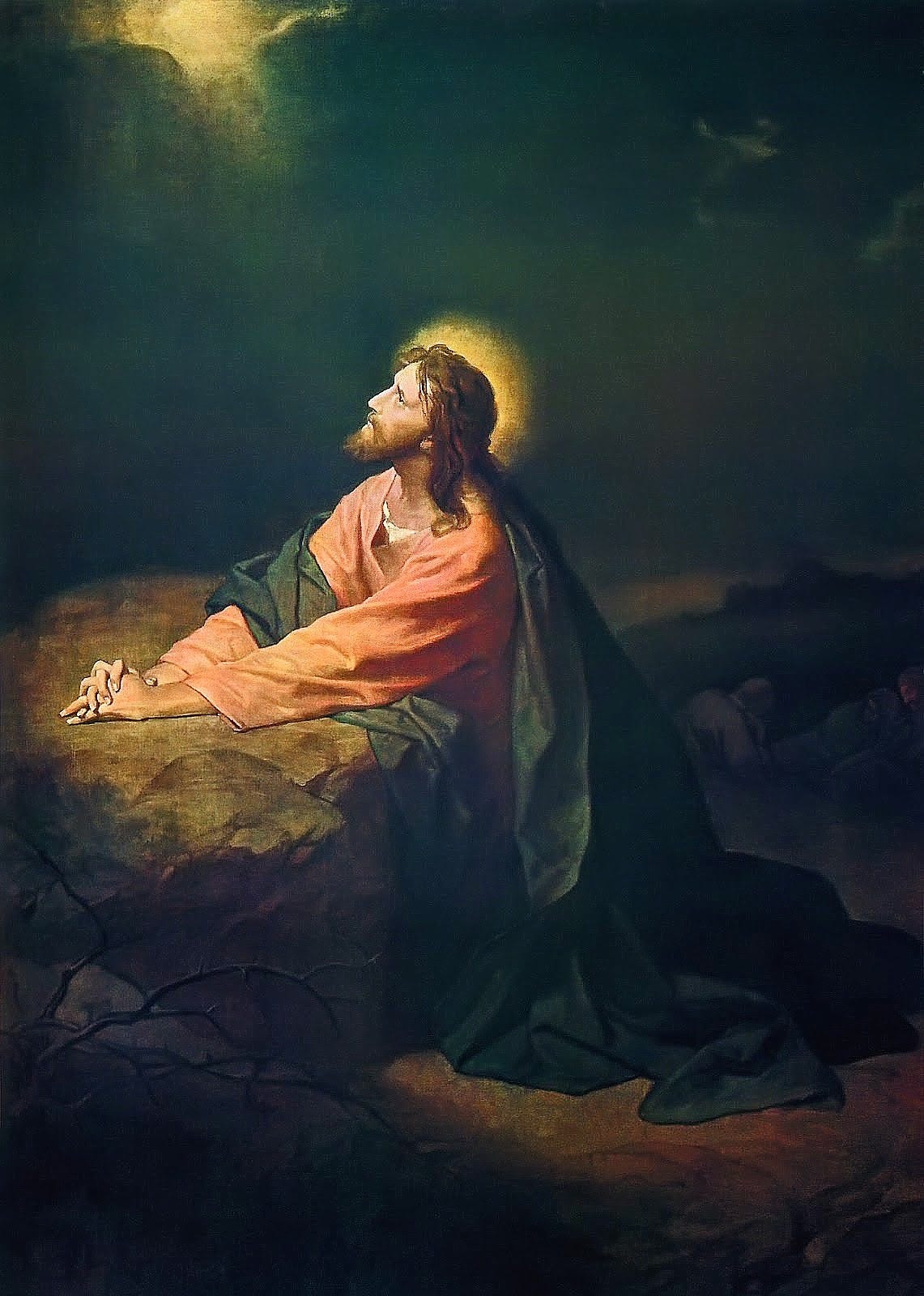
As interesting as these facts may be on their own, they also hold practical wisdom for the attentive reader.
For instance, Christ’s wearing of the fringed garment was both an act of respect of God’s law and the culture to which Jesus belonged — an observance that Christians can emulate by dressing in accordance with their own traditions. For instance, Colossians 3:12 says that, as God’s chosen people, you should “clothe yourselves with compassion, kindness, humility, gentleness and patience,” while 1 Peter 3:3-4 warns that:
Your beauty should not come from outward adornment, such as elaborate hairstyles and the wearing of gold jewelry or fine clothes. Rather, it should be that of your inner self, the unfading beauty of a gentle and quiet spirit, which is of great worth in God’s sight.
But another takeaway is that even the most mundane piece of clothing can carry immense significance, as with the seamless tunic. As we’ve previously written, the symbolic power of clothing is monumental, and it can influence both yourself and others with the signals it sends. Even if you prefer to think of your clothes as mere coverings for your body, you should always consider the message, conscious or not, that you are sending when you choose to wear a particular piece of clothing.
Finally, when Christ is mocked during his final moments, he is first dressed in wealth-coded purple with a false crown, and then completely stripped on his cross as an act of shame. This should remind you that, ultimately, no matter your station in life, clothes won’t save you from the world’s harshness, and all must endure their moments of fear and pain.
Ultimately, the fact that God’s incarnation suffused even his clothes with great meaning should be a wake-up call to those with ears to hear and eyes to see. Clothing was used in fulfillment of prophecy, as a focal point for miracles, and to symbolize the strength of the church. In other words, there is no corner of the earth so small or inconsequential that it can’t be a source of great meaning — if you make an effort to recognize it, you could make your wardrobe one too.
Great article! His garment can also be referred to as a thobe/thoab and is still worn in many cultures today. Some are quite ornate and stunning, while others are simple (like the black one in your article).
So interesting! Thanks for writing!