

Why Beauty Matters
What if it's all just vanity?



Of what importance is beauty to a Christian? What functions or purposes does it serve? The good, true, and beautiful make for a pleasant set of goals, but while the first two are inarguably of value, the beautiful has its detractors.
Ecclesiastes tells us that “all things are vanity,” and things that at first seem beautiful can certainly turn out to be snares for sin. The concern for beauty in the realm of clothing attracts many such criticisms. Most people consider the fuzzy line between material beauty and vanity to be dangerously easy to cross, and thus shy away from the one for fear of the other.
But, as we shall see, such a perspective ignores the deep value of visual beauty, and completely misses the point.
That’s why today, we look at different types of beauty, answer common objections to perceived vanity, and defend the “merely” beautiful as a positive good. Let’s begin…
Our mission here at Letters from the Old World is to share the secrets of Old World elegance, and our approach is two-fold:
1) Every Wednesday, we send a free article exploring the theology and philosophy of why beauty matters, particularly in regards to decor and dress.
2) Every Friday, we send What’s In a Fit, a members-only article exploring practical tips and guidelines for dressing well.
If this resonates with you, then subscribe below to join the aesthetic renaissance.
Metaphysical vs. Formal Beauty
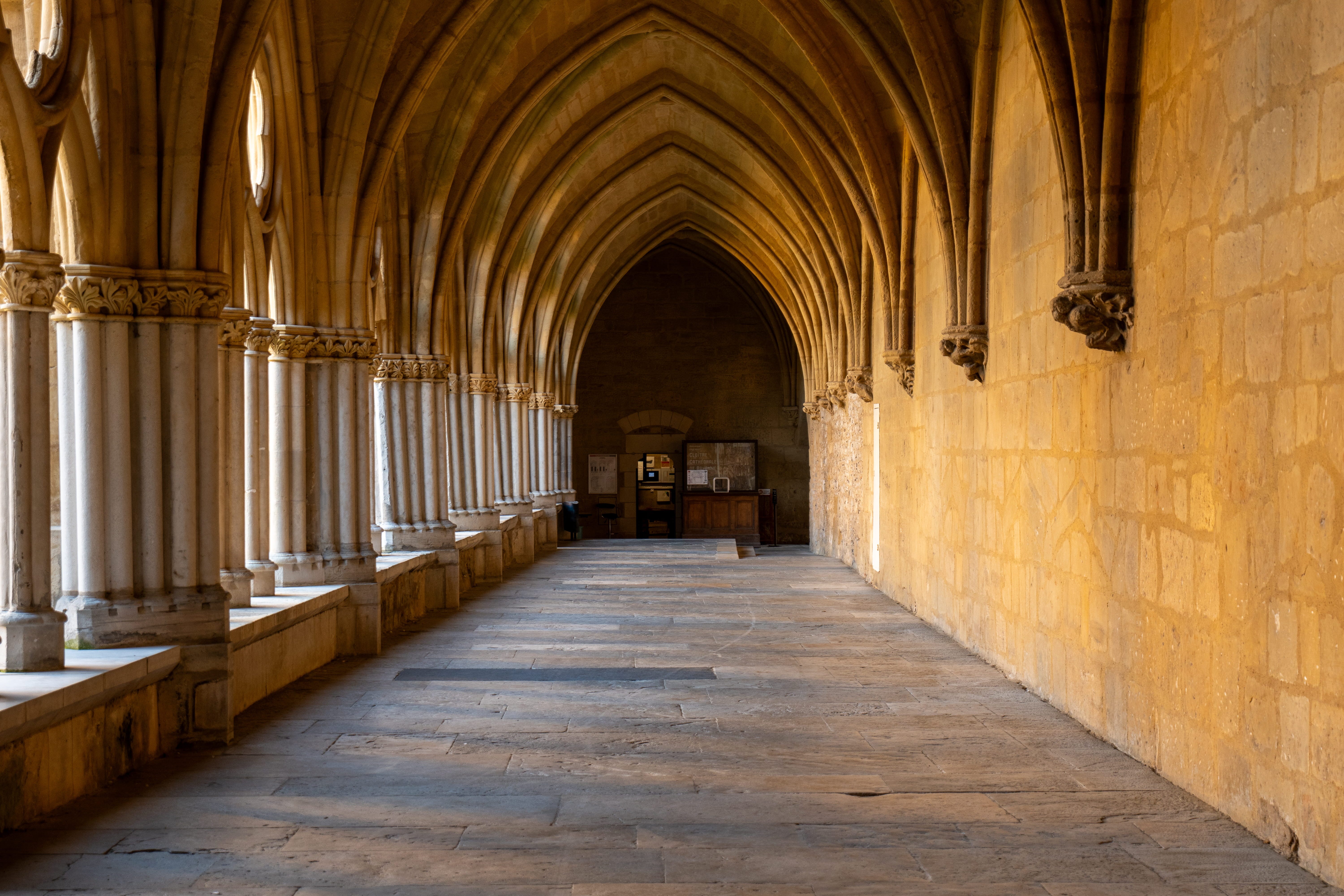
When asked whether beauty matters in a Christian context, the answer is self-evident. The beauty of God’s mercy, the beauty of redemption, of virtue, of a humble soul: all these and more are good. These are examples of metaphysical beauty, an emanation that radiates out from the inner goodness of a thing itself.
Metaphysical beauty is qualitative, and is a product of the greatness from which it proceeds. This is the type of beauty of the Lord described in Zechariah 9:17: “For how great is his goodness, and how great his beauty!” Few people take issue with this form of beauty in Christian thought. Indeed, much of the faith is built upon divine beauty in some form or another.
In contrast, there is the beauty of form, that which you encounter in nature, art, architecture and, yes, clothes. Nature’s beauty, evidence of the intentions of its creator, can be appreciated outside of the questions of morality. But the closer the idea of beauty gets to the person, the more it elicits suspicion.
In his Confessions, St. Augustine asks a question that is deceptively simple:
Do we love anything but the beautiful? What, then, is beautiful? And what is beauty? What is it that allures and unites us to the things we love; for unless there were a grace and beauty in them, they could by no means attract us to them? And I marked and perceived that in bodies themselves there was a beauty from their forming a kind of whole, and another from mutual fitness, as one part of the body with its whole, or a shoe with a foot, and so on.
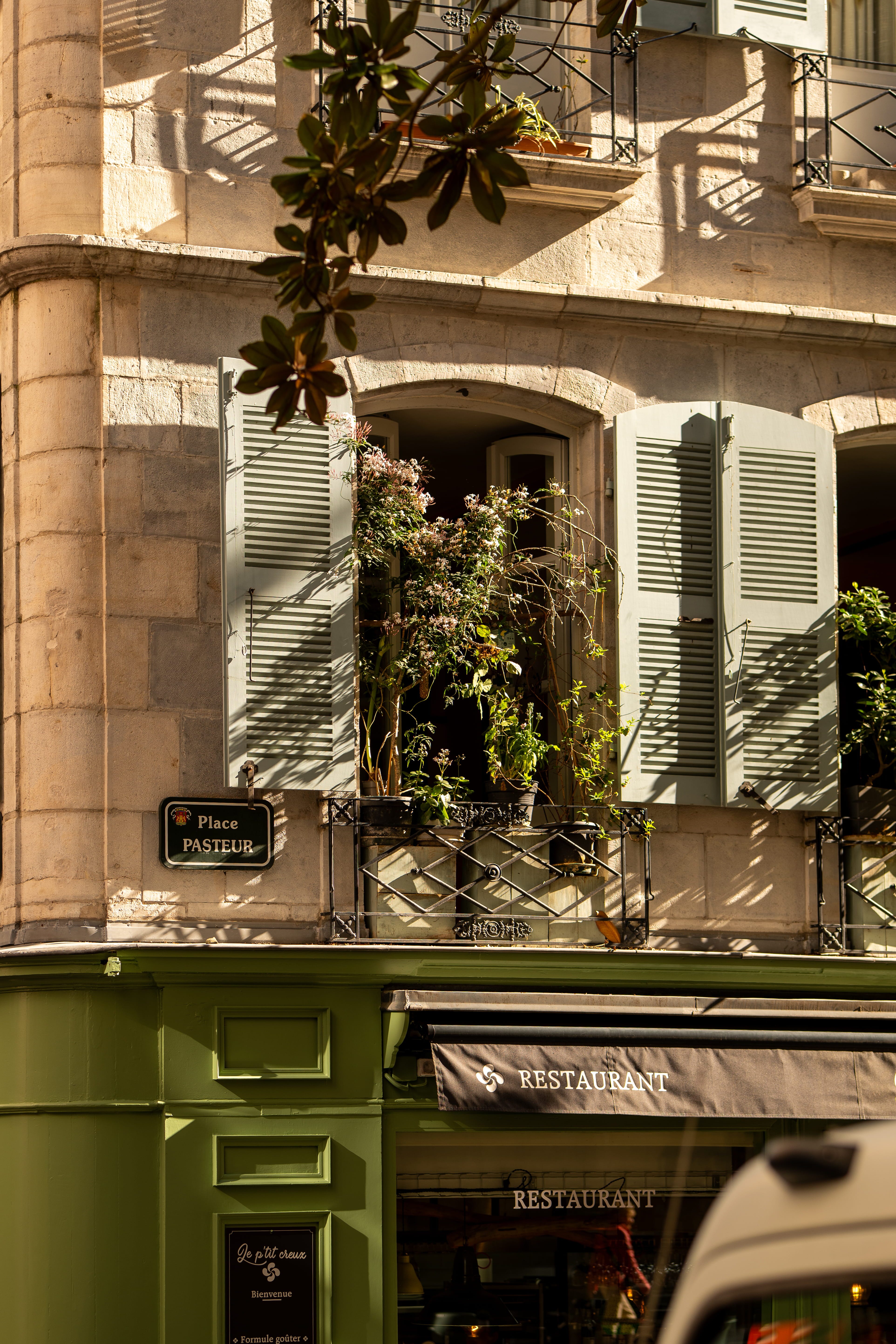
Notice the use of a mundane example in the shoe in relation to the foot. Beauty, Augustine says, can be found even in these material things. Yet the alluring nature of this beauty which Augustine identifies is what makes certain Christians approach it with unease. The beauty of a sunset or a bird’s call is exterior to you and doesn’t run the risk of flattering your ego, whereas a well-put together outfit does.
There is a long tradition within Christian thought that treats this issue with caution. Monastic practices of asceticism, along with passages such as 1 Peter and 1 Timothy, urge believers not to ground their sense of worth in outward adornment, but in “the unfading beauty of a gentle and quiet spirit” and in “good deeds”. While these sources stop short of condemning beauty itself, they consistently redirect attention away from external display and toward interior virtue.
Such concerns are not restricted to the realm of beauty. Food, money, and relationships all run the risk of being misused. Beauty tied to the self does pose a particular risk, but this greater risk of self-referentialism does not mean it is inherently disordered. As we’ve covered elsewhere, it simply requires a greater awareness of intention.
Ultimately, the question is not whether beauty can be a disordered attachment, but what it looks like when properly ordered. And since metaphysical beauty is rarely the concern, a deeper look at how to correctly order formal beauty is in order.
Utility Is Not Superior

In an attempt to skirt around the danger of misuse, one path is to regard beauty of form as inconsequential — at best a neutral thing, not evil, but of little consequence to a life lived for God. The things of great value are those which are of a moral or spiritual concern. For a certain kind of person, even beyond these higher concerns, the functional or practical should take precedent; it is more important that a house not leak from its roof than that it be wonderful to look at.
In his book Beauty: What It Is and Why It Matters, John-Mark Miravalle writes responding to this contention that it does not address the fullness of the problem, namely that humans aren’t wired that way:
We could, and most of us probably would, describe the nature and purpose of a house, or clothing, or food, without making any reference to beauty. And yet we don’t want these things merely to fulfill their material function. We don’t want just shelter, or something we can wear to keep us from being exposed, or raw nutrition. We want to be delighted by more than just the satisfaction of our material needs.
Miravalle asserts that this need for delight is a reality of the human experience, not some malfunction of its faculties, and as such seeks to draw you closer to God. The draw to beauty of form is therefore not bait to fall into sin; it functions instead as a compass towards the good and true.
Admittedly, there is truth that beauty of form is a secondary concern in the Christian mind (“seek ye first the kingdom of God…”), but this does not render the utilitarian approach to the material a superior one. If you are to argue that the useful is more important than the beautiful in the physical world, does this not run contrary to Christ’s admonishment that you should not concern yourself with “what you will eat or what you will drink, nor about your body, what you will put on”?
This often misunderstood passage shows that even necessary concerns — such as where to food, drink, and clothing — are secondary to seeking the kingdom of God. If even these practical necessities can be set aside in this way, then beauty cannot be dismissed as mere frivolity by comparison. By that standard, all things are frivolous next to the pursuit of the kingdom. And yet, formal beauty is not just a secondary concern; it actually fulfills a great purpose, one that becomes clear when you understand what an encounter with it can do to you.
The Goodness of Formal Beauty

As an embodied creature, you exist in the realm of the physical and the real. A realm that God populated with a kaleidoscopic variety of beautiful forms. This decision was deliberate, and as Genesis indicates this creation was indeed “good,” it can be inferred that there is value to the numerous, beautiful forms within it.
For Catholic Theologian Hans Urs Von Balthasar, it is precisely through these forms that you can better know the higher manifestation of beauty:
Only that which has form can snatch one up into a state of rapture. Only through form can the lightning-bolt of eternal beauty flash. There is a moment in which the bursting light of spirit as it makes its appearance completely drenches external form in its rays.
There is a saying in Zen Buddhism which provides a useful illustration here: “Do not mistake the finger pointing at the moon with the moon.” This means you should not mistake the thing directing you towards something with the thing itself. In Von Balthasar’s example, beautiful forms are not merely fingers pointing at the transcendent, they are more like a channel or vessel through which the transcendent, otherwise far off in the distance, can finally be seen from the physical world. It is this characteristic that explains why the various forms which beauty takes, from cathedrals to poetry, direct your thoughts beyond the world they inhabit.
The implications of this for humans is profound. When you attempt to craft beautiful forms, be it a building, a garden or an outfit, you participate in some small way in the same act that first brought beauty into the world. Such creations are not guaranteed vessels of transcendence, and beauty of form of personal creation depends entirely on how it is intended. As Dietrich Von Hildebrand writes in Beauty in the Light of Redemption:
All possessions that appeal to our pride and our sensual appetites, indeed, all that are subjectively gratifying, lose their radiance for the redeemed, for the man, who has found the pearl of great price of the Gospel. All possessions, however, that have real value, that in themselves are honorable, excellent, significant, that fall like dew from above and ascend to God like incense, achieve a higher and new radiance in Christ.
Think of the Pure, Lovely and Admirable
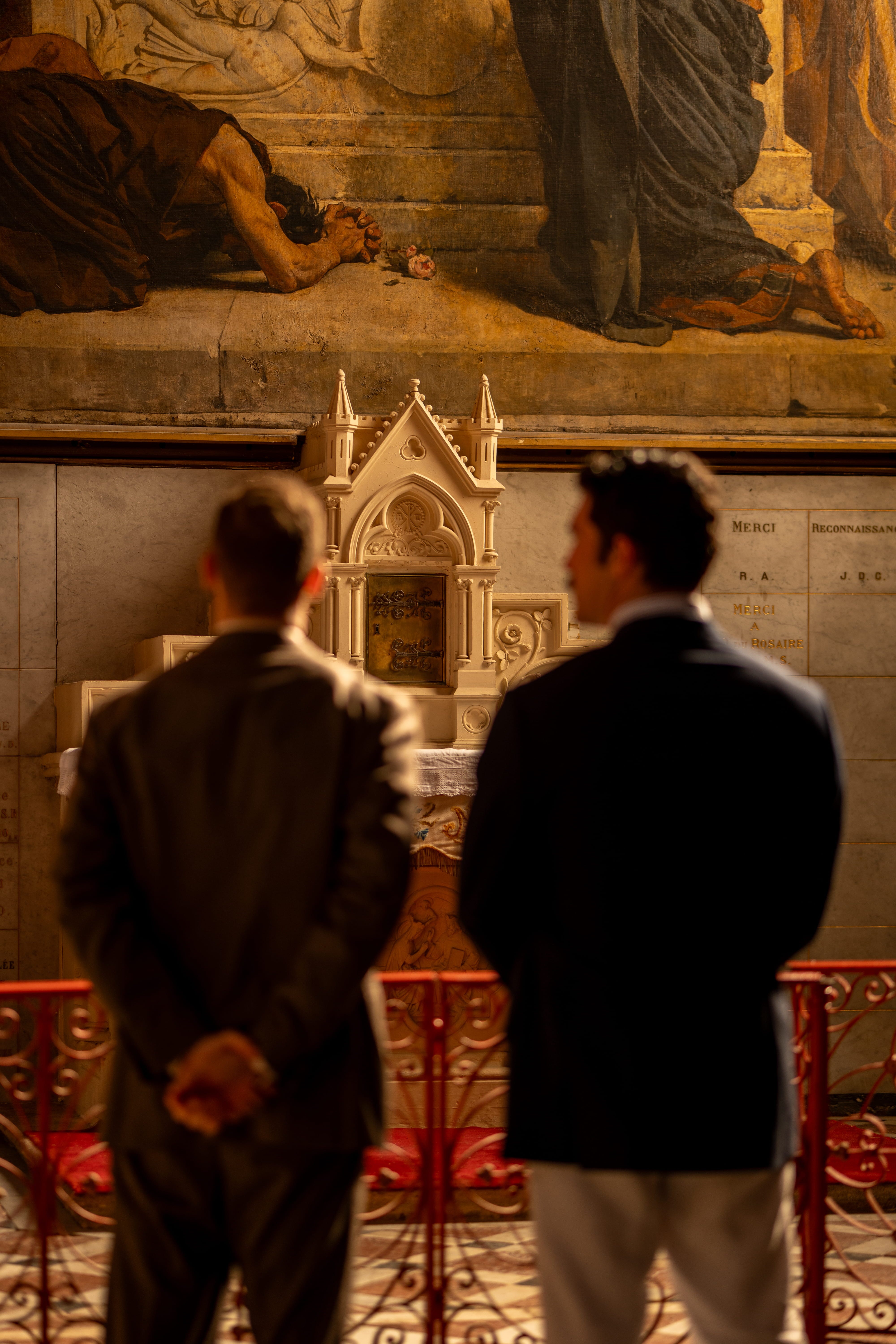
Beauty of form is not meant as a trap (though it can ensnare the unwary). It is not a thing that you must suppress to be righteous, and it is not something to be shunned because of its proximity to your self. As Augustine observed, beauty calls to you, and that calling is no mistake. The beautiful in form is not a distraction or hindrance, but a direction towards something greater.
This is why the two forms of beauty mentioned at the outset, the metaphysical and the formal, are not either/or propositions, but instead are links in a chain between heaven and earth. This is why, when formal beauty is pursued for the right reasons, no matter what medium you choose, it leads to something greater than the sum of its parts.
So take heart that the beautiful in form and the divine need not be at odds with each other. They are two parts of a greater whole, working in tandem for the good. Instead of causing concern, the former should call you to contemplation of the latter. As Paul wrote to the Philippians:
Finally, brothers and sisters, whatever is true, whatever is noble, whatever is right, whatever is pure, whatever is lovely, whatever is admirable—if anything is excellent or praiseworthy—think about such things.
That's a wonderful article! And a great apologetic for living life beautifully. I guess it's easy for people to go to either extremes -hate beauty or love it too much. But as always, the virtue is in the mean. Thanks 😊
Dare I say 'beautiful piece,' because in reading it my thoughts have extended further into the mysterious garden of existence, just as you mentioned gazing at a cathedral might.