

Your Body Is a Canvas
Don't let others paint it.


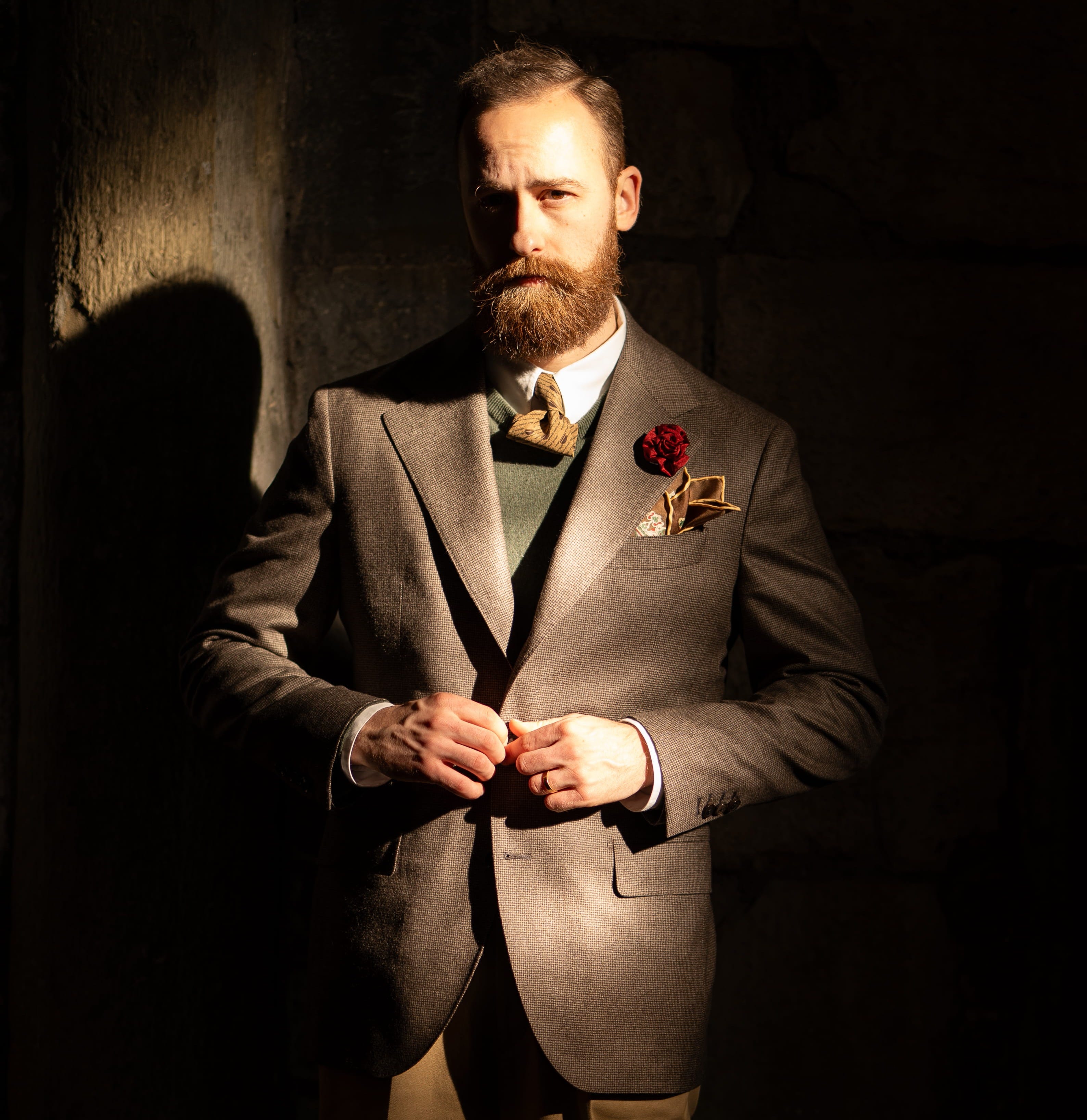
When you look into the mirror in the morning, you are faced with a number of choices: What shirt do I wear? What colors or patterns are appropriate for where I’m going? Most people think this is mere necessity, what must be done to account for the day’s weather and what propriety demands.
Perhaps for those who think that way, this is true. But there is a deeper process at play if you’re willing to see it. Once you understand that your wardrobe is a palette and your body a canvas, you’ll never see your morning routine the same way again.
Today, we tackle some of the arguments for and against personal style as art, explore how your intentions can make or break an outfit, and show why thinking of your style as an artistic signal will transform the way you interact with the world.
Our mission here at Letters from the Old World is to share the secrets of Old World elegance, and our approach is two-fold:
1) Every Wednesday, we send a free article exploring the theology and philosophy of why beauty matters, particularly in regards to decor and dress.
2) Every Friday, we send What’s In a Fit, a members-only article exploring practical tips and guidelines for dressing well.
If this resonates with you, then subscribe below to join the aesthetic renaissance.
How Can Style Be Art?

One should either be a work of art or wear a work of art.
–Oscar Wilde
A philosophical definition of style as art has to confront the nebulousness of “art” as a term. Common definitions in a post-Duchamp, banana-duct-taped-to-the-wall world are a challenge. Abstract painter Jackson Pollock, in the middle of a conversation on the subject, once drove a nail into his living room floor and declared “Damn it, that’s art!” to make his point.
Nearly a century before him, painter George Seurat said that “art is harmony” and left it at that. But such approaches don’t tell you much. If “everything is art” or “all that is harmonious is art” then there’s hardly a discussion to be had.
A good definition should be workable, and post-modern approaches don’t tell you much. A more useful definition (though not the only useful one) comes from the American Heritage Dictionary, which says that art is:
The conscious use of the imagination in the production of objects intended to be contemplated or appreciated as beautiful, as in the arrangement of forms, sounds, or words.
Taking the criteria from this definition, we see that style, as an imaginative, conscious creation of an outfit by an individual using the forms and pieces in a collection, results in an ensemble that is meant to be appreciated as beautiful. In this way, style conforms to this workable definition of art.
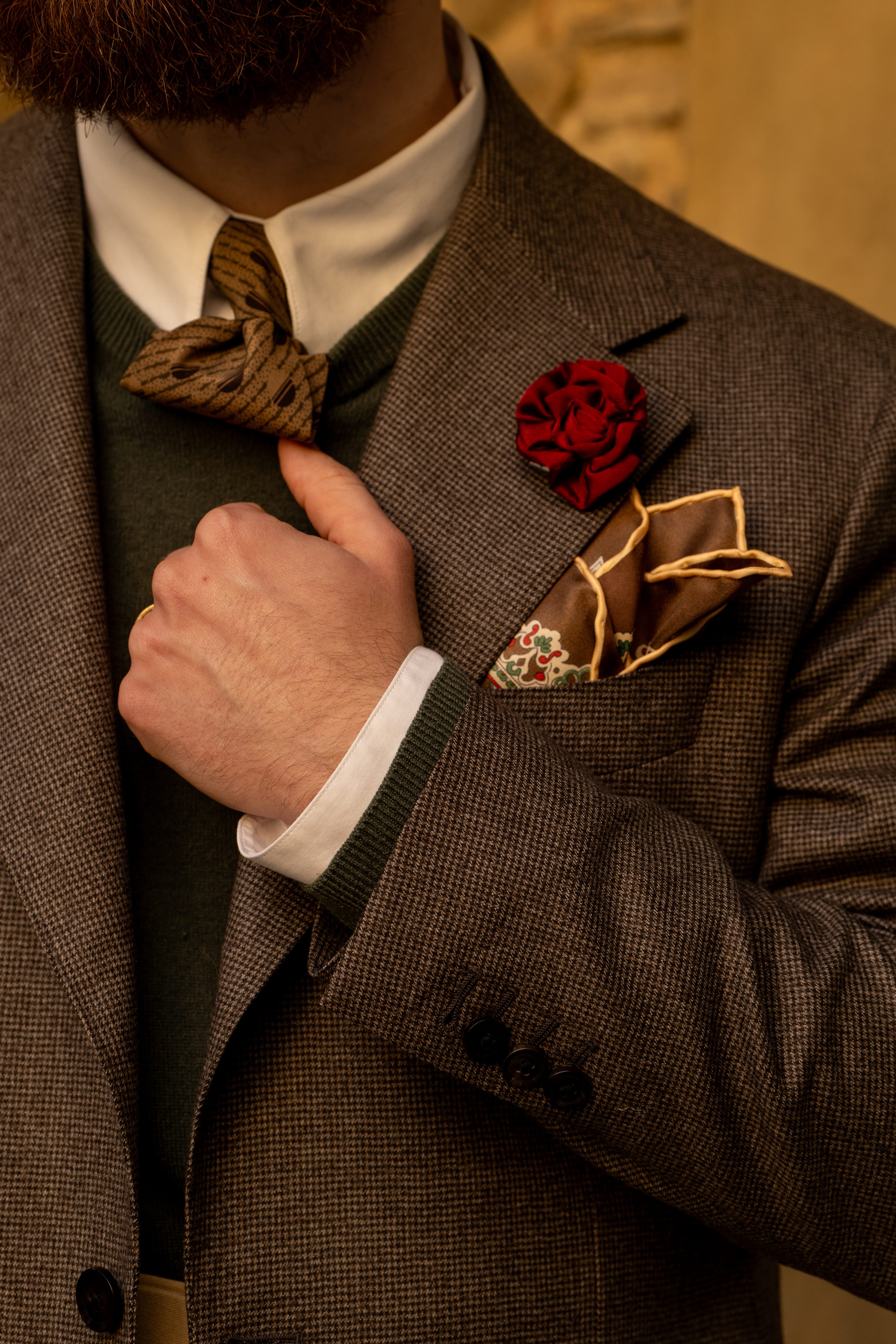
A standard argument against style as art is that it merely uses articles of clothing; it does not create anything new. But the outfit as medium requires you to be aware of lines, shapes, color theory, the interplay of textures, patterns, and proportions. It requires an imagination honed through experience with the material to produce beauty.
Another counterargument is that clothes are meant to be functional and for this reason should be discounted as art. The theory goes that clothes cover and protect as a primary function, and any other purpose is merely ornamental. While an argument from functionality seems compelling, to accept it would exclude artistic mediums like pottery or architecture, which both have utility but are still generally recognized as artistic mediums.
Additionally, within the medium of clothing itself, we often find details created for utilitarian purposes morphing over time to become something more. In her book Seeing Through Clothes, art historian Anne Hollander writes that the stylistic elements of dress often eclipse the practical:
It is obvious that certain details of dress have originally been invented for utilitarian purposes. But it is equally obvious that the desire for a satisfying-looking style in dress is stronger than any need for useful arrangements, since the looks of such arrangements have often proved much more enduring than their use. Also, their utility has often been quickly sacrificed to stylistic considerations.
The lapels on early military uniforms, for example, which were intended to cross over and keep the chest warm, were speedily atrophied into decorative flaps, worn buttoned open to show the color of the facing. They could still button across, too, but they were never worn so.
In this way, while dress, like architecture, does fulfill a primary purpose, it can be elevated from practical necessity into the realm of art. To say art must be solely for the purposes of contemplation or aesthetic appreciation argues that cathedrals or didactic poetry lose artistic merit due to their practicality. That is an absurd conclusion.
And when you consider just how much can be expressed through the medium of dress, it only heightens the absurdity of rejecting it as art.
From the Practical to the Ineffable
Style is what combines the clothes and the body into the accepted contemporary look not of chic, not of ideal perfection, but of natural reality.
–Anne Hollander, Seeing Through Clothes
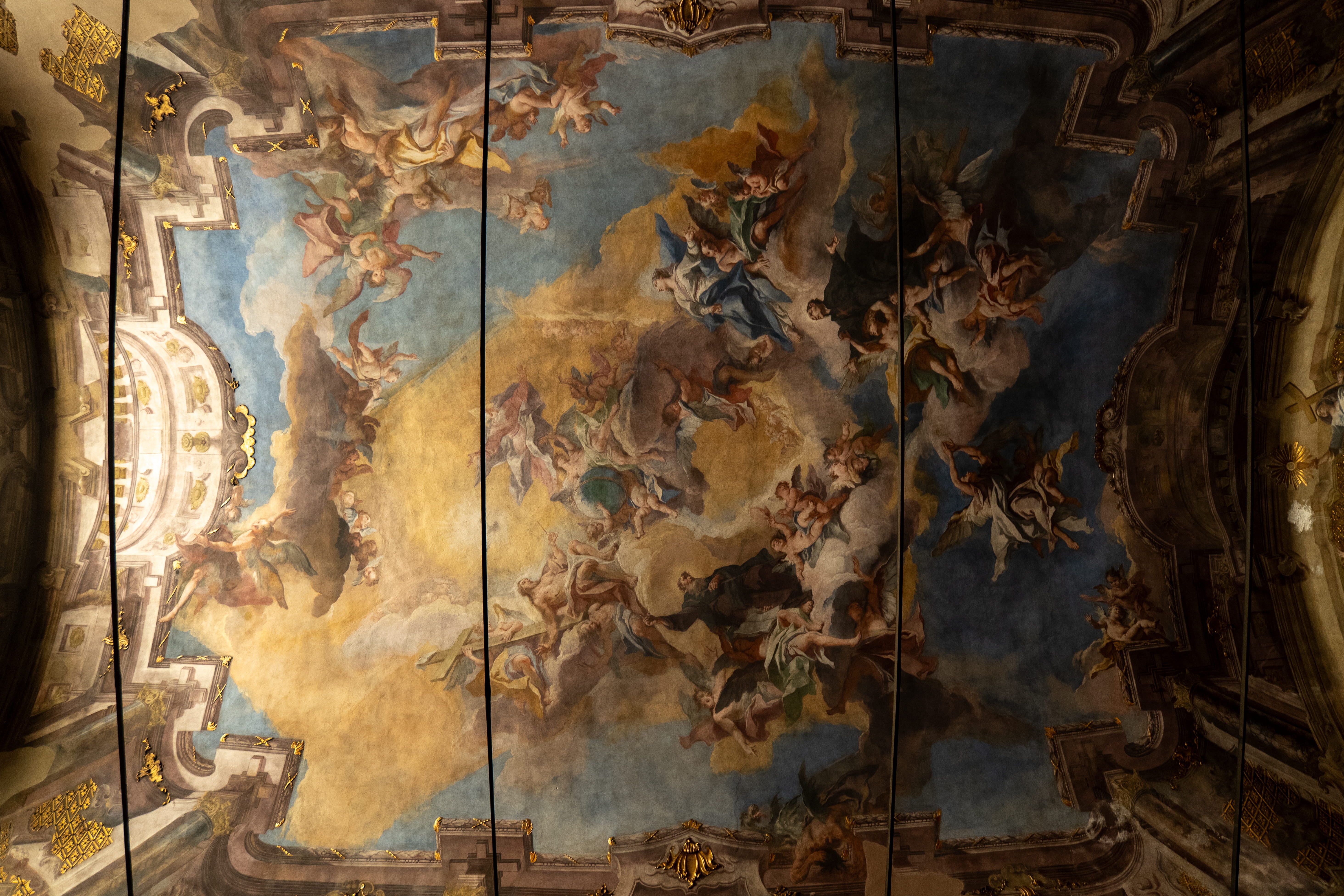
One of the purposes of art is to express what normal channels of communication can’t. The painter Georgia O’Keeffe said that abstractions in her work were the easiest way for her to communicate what was intangible within herself. “I found I could say things with color and shapes that I couldn’t say any other way— things I had no words for.”
Likewise, the way you pick an outfit, the colors, patterns, and pieces, don’t say things as straightforwardly as literally words could. Clothing is not a representational art most of the time. But the expression of clothing is not meant to be communicated in words (and hopefully you can forgive the irony of having to write that sentence). Style is an abstraction of feeling, and it loses something when translated into language.
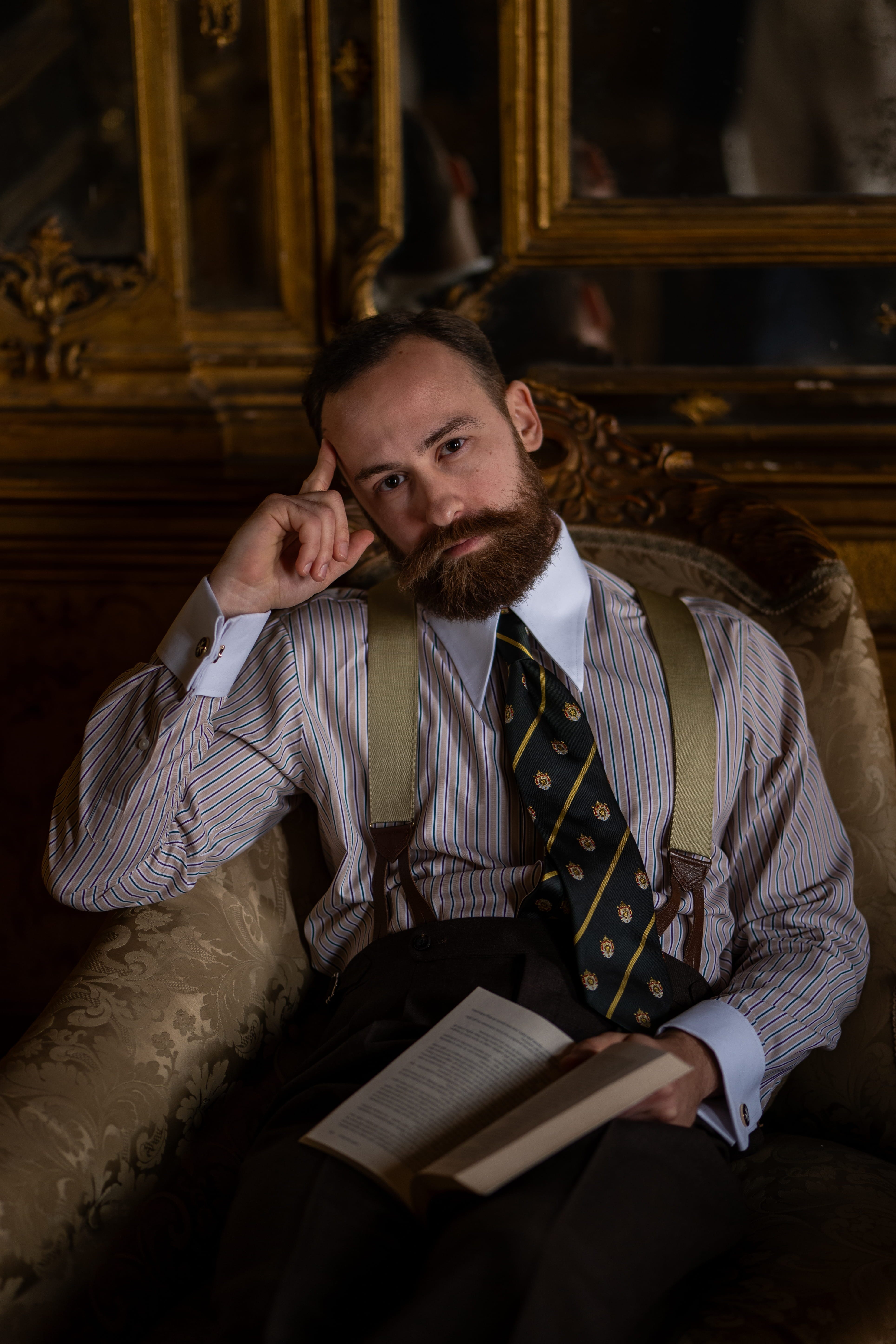
A style can be joyful, dark, intense, or erratic, but those words fail to give the full impression that seeing the outfits would bring. Such impressions often invoke sentiments before they prompt spoken reactions. Where words fail us in the presence of great art, so too do they prove insufficient when witnessing a crowd of well-dressed people. Especially in an age where culture makes few demands on public dress, there is something striking about the man or woman who has made an outfit that brings elements of style, color, and material into harmony on their person, something that the words “beautiful” or “well-dressed” fail to communicate.
But if the choice of outfit a person brings into the world is an artistic act, then what happens when that choice is not intentional?
You’re an Artist, Whether You Like it or Not
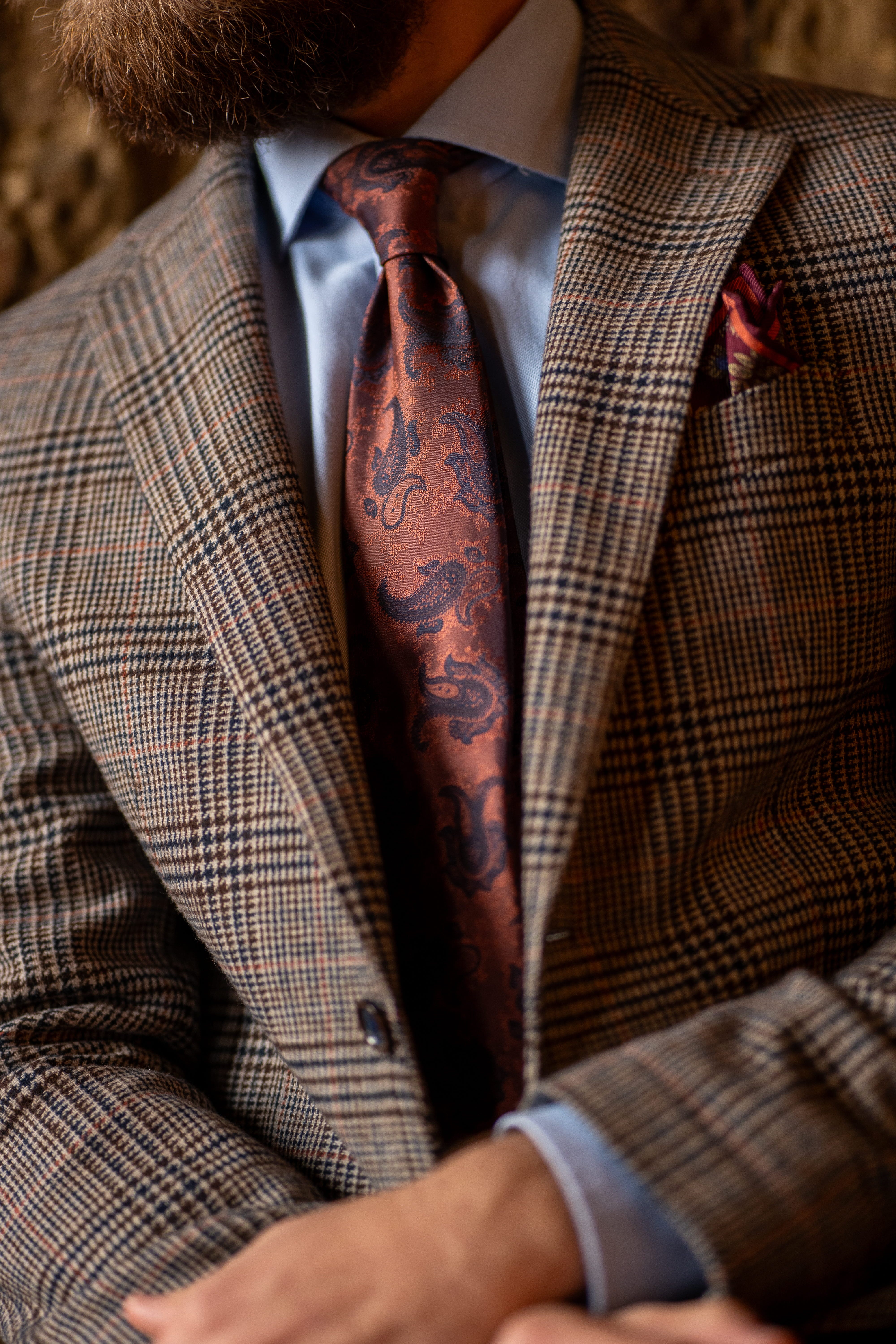
Dress is a form of visual art, a creation of images with the visible self as its medium.
–Anne Hollander, Seeing Through Clothes
Even if you believe your clothes aren’t expressing something, they are. Semiotician and philosopher Roland Barthes viewed fashion as a sign system, a structured means of communication where “signs” carry inherent meaning. That the meaning is inherent implies that you cannot “opt out” of this mode of communication. At best, you can decide to ignore what you are communicating. As painter Desmond Morris wrote “It is impossible to wear clothes without transmitting social signals.”
This is why a laissez-faire approach to what you wear equates to acting as a canvas for someone else’s designs. When you are not intentional with your choice of style, you are often buying and wearing whatever happens to come your way. Rather than seek out colors, forms, and materials with which to communicate your message, you passively transmit what others have to say.
When the clothes on offer at the store are there by virtue of advertisers or fashion cycles, wearing them without much thought is letting others use your body for their own purposes. To make matters worse, items like fast fashion are, by their cheapness and transient nature, rarely signaling anything meaningful. At best, they are echoes of better items, inferior copies made to be sold quickly before fashions change.
To accept this reality is the first step in the artistry of style. Style always speaks, but it becomes a genuine artistic expression when it evidences an individual’s intentionality. Whether that intentionality is yours or someone else’s depends on how much of you went into your outfit.
The Artist in the Mirror
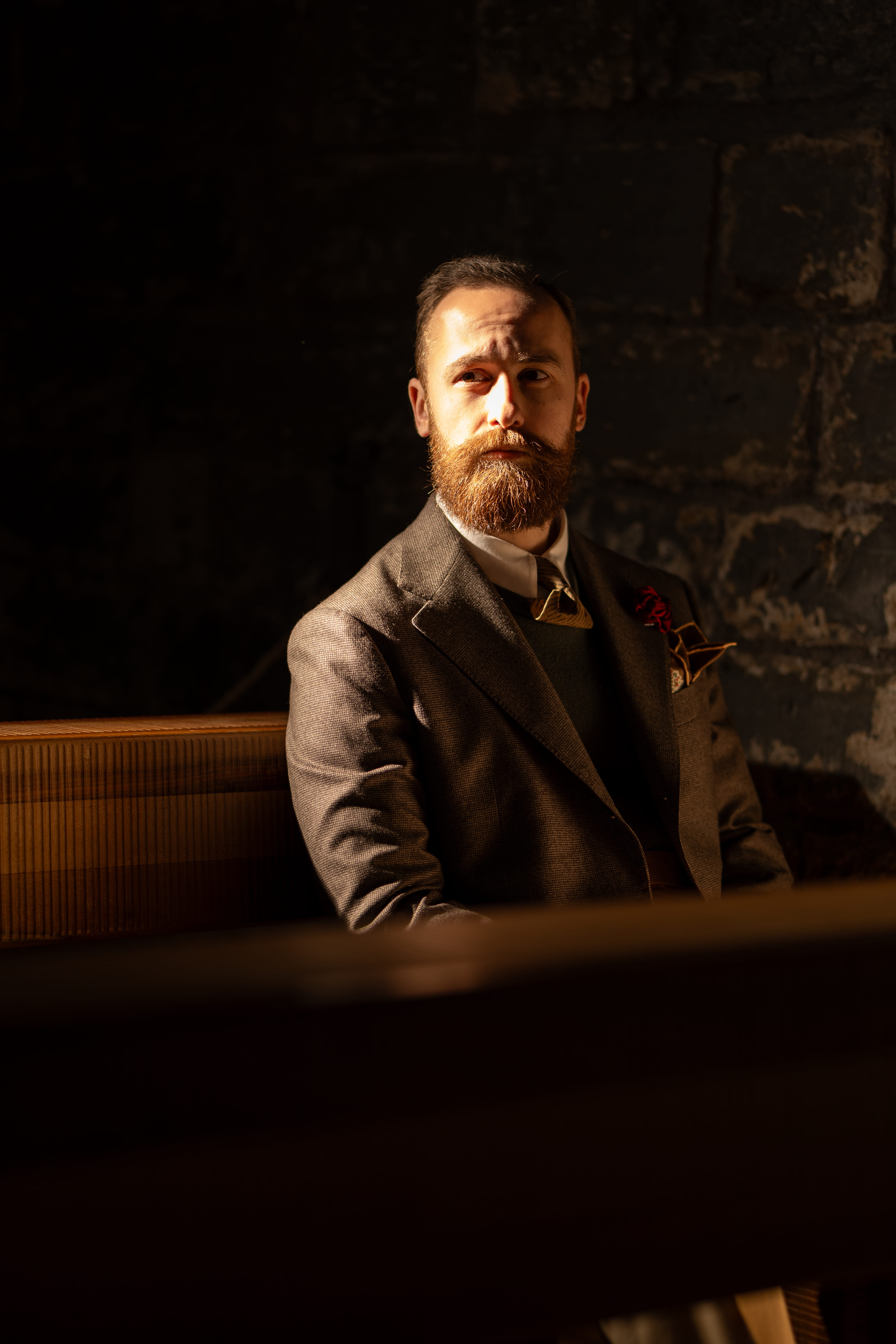
The artist’s first creation is himself.
–Harold Rosenberg
If all this sounds exhausting — like a call to master color theory and learn about textiles before you get dressed tomorrow — rest assured it’s nothing of the sort. Rather, it is a call to awareness, to recognize that you too are a participant in art form.
Whether you are paying attention to what you wear, or passively wearing whatever has found its way to your dresser, you are making a profound statement. Your body isn’t just a receiver for the experiences in the world, it is also a place from which you announce your presence. How that presence is conveyed can aspire to beauty or fall short: it can express what words cannot say, or say nothing at all.
When you understand that your style is an art, dressing yourself is more than a perfunctory act. It is a chance to create, to signal something to the world, and populate it with more of what you would like to see there. Even with your newfound appreciation, there will be off days. But there will be far more days of inspiration. Days where you see your body as the canvas it is, waiting for you to work your magic.
Like it or not, you’ll be painting that canvas every day for the rest of your life. Whether it becomes a beautiful work of art or not is up to you.
It would be interesting to read your thoughts on social class and the practice of dress as art. There is an easy assumption that the attention to dress that you promote is a kind of luxury available to those with the leisure to think about such things, not to mention the financial means to finance such experimentation. There is certainly truth in this, yet it is also true that one can have money and dress poorly - that is to say, tastelessly. But also, with the right sensibility and attention to detail, one can make much of relatively little. It would be interesting to read your thoughts about working class, or even proletarian, style in dress.